fufufafa
Across the windswept shores and mist-shrouded forests of ancient Éire, where the veil between worlds was said to be thin, stories were woven into the very fabric of existence. Among these treasured narratives, passed down through generations by the flickering light of peat fires, is the tale of "The Sword of Nuada: Curse of Arawn." This is not a historical account or a divine revelation, but a traditional story, a piece of imaginative folklore crafted by the ancient Celtic peoples, offering insights into their worldview and cultural values. It serves as a window into the rich tapestry of human storytelling, where mythical figures and magical artifacts embodied the hopes, fears, and wisdom of a bygone era.
Origins and Cultural Background
This particular myth finds its roots deep within the heart of ancient Celtic culture, specifically drawing upon elements reminiscent of the traditions associated with the Tuatha Dé Danann and the Welsh legends of Annwn. These were societies flourishing in Iron Age Europe, characterized by their tribal structures, reverence for the natural world, and a sophisticated oral tradition. Life for these ancient people was intrinsically linked to the land—its forests, rivers, mountains, and the shifting seasons. They perceived the world as a complex tapestry, vibrant with unseen forces and potent spirits, where gods and goddesses, fae folk, and formidable creatures coexisted with humanity, often influencing daily life.
Their worldview was cyclical, marked by the eternal rhythm of birth, death, and rebirth. They believed in a liminal space, an Otherworld (often called Annwn in some traditions), a realm simultaneously separate from and intertwined with the mortal world. This Otherworld was a place of magic, spirits, ancestors, and sometimes, formidable deities who held dominion over life, death, and fate. Heroes were not just warriors; they were individuals who navigated both worlds, facing challenges that tested their courage, wisdom, and understanding of the delicate balance between realms. Myths like "The Sword of Nuada: Curse of Arawn" served not only as entertainment but as moral guides, explanations for natural phenomena, and a means to transmit cultural identity and values.
Character Descriptions
At the heart of this narrative stand two powerful, symbolic figures and a legendary artifact.
Nuada Airgetlám (Nuada of the Silver Hand): A revered king of the Tuatha Dé Danann, a mythical race of divine beings in Irish mythology. Nuada is often depicted as a just, wise, and noble leader, embodying the ideal of kingship. He is a formidable warrior whose original hand was lost in battle, later replaced by a magical silver (or sometimes golden) hand crafted by the healer Dian Cécht and the smith Goibniu. In this story, he represents righteous authority, the burden of leadership, and the potential for both greatness and vulnerability. His actions, even when well-intentioned, carry profound consequences.
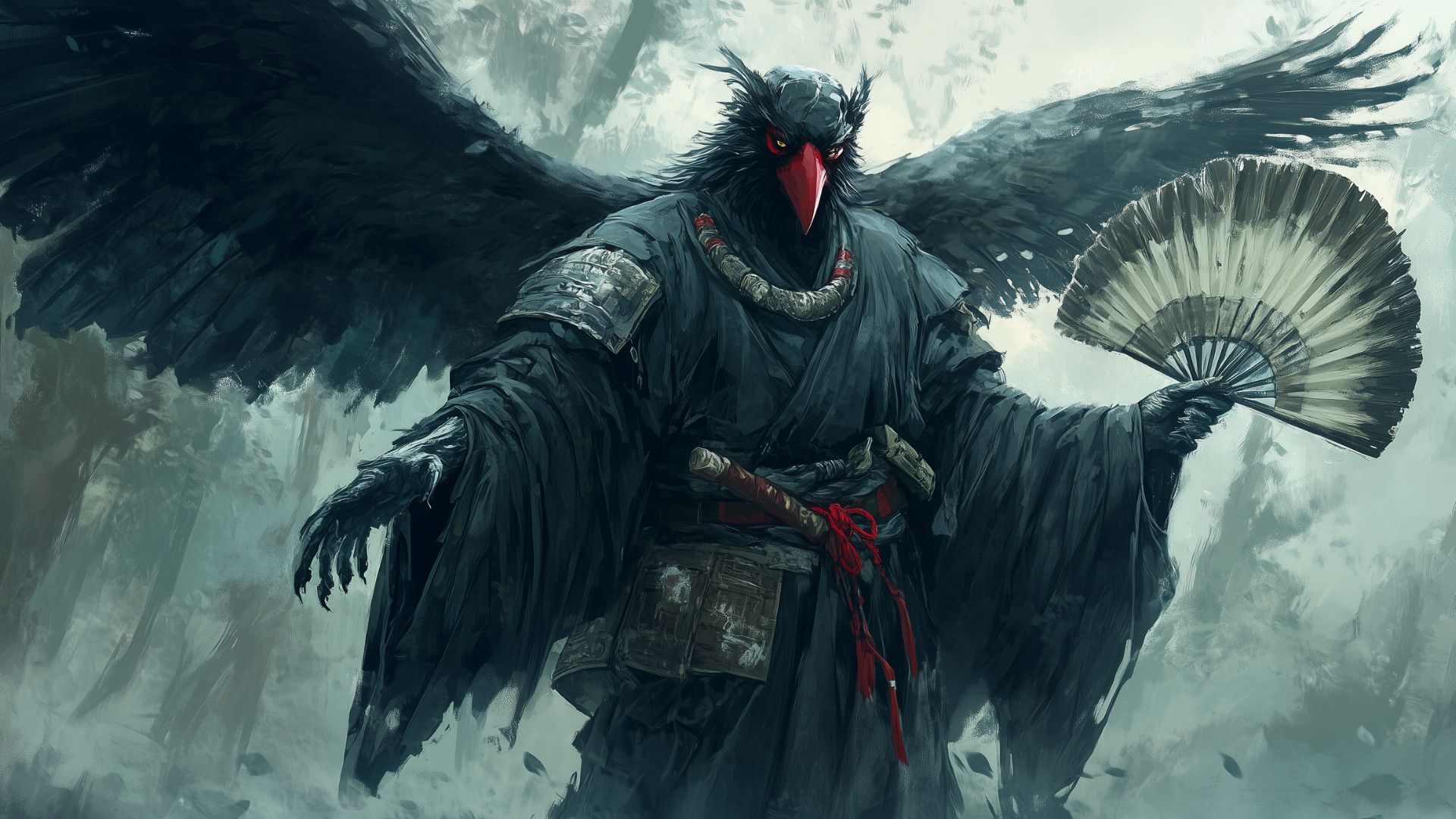
Arawn, Lord of Annwn: A powerful and enigmatic figure drawn from Welsh mythology, Arawn is the sovereign of Annwn, the Otherworld or Underworld. He is often associated with death, the hunt, spirits, and the unknown depths of existence. Arawn is not inherently evil, but a force of nature, representing the boundaries of life and death, the wildness of the unseen realms, and the consequences of transgressing sacred borders. His power is ancient, profound, and demands respect, embodying the untamed and mysterious aspects of the cosmos.
Claíomh Solais (The Sword of Light): Nuada’s legendary sword, one of the Four Treasures of the Tuatha Dé Danann. This magnificent blade was said to glow with an inner light, blinding its enemies and ensuring victory in battle. It was a symbol of Nuada’s righteous rule and the invincible might of his people. In this myth, it transcends being a mere weapon; it becomes an extension of Nuada’s will and destiny, capable of both immense power and unforeseen peril when touched by the forces of the Otherworld.
Main Story: The Shadow of Annwn
In an age when the Tuatha Dé Danann reigned supreme, their luminous cities nestled amidst verdant hills, King Nuada wielded Claíomh Solais, the Sword of Light. Its brilliance was a beacon of hope and a harbinger of victory, a testament to Nuada’s just rule and the divine favor bestowed upon his people. Yet, even in this golden age, shadows stirred. Whispers began to spread of strange blights afflicting the edges of the mortal realm, inexplicable sorrows creeping into the hearts of the people, and dark creatures, never before seen, emerging from ancient places.
Nuada, ever vigilant, perceived these as trespasses from the dreaded Annwn, the realm of the mighty Arawn. He believed a dark sorcerer, one who had allied himself with rogue spirits of the Otherworld, was siphoning energy from the mortal lands, seeking to corrupt its vitality. Driven by a king’s duty to protect his people, Nuada took up Claíomh Solais, its light blazing defiantly, and pursued the encroaching darkness. His quest led him to a forgotten cairn, shrouded in an unnatural gloom, a place where the veil between worlds was perilously thin. Here, he confronted the source of the blight: not a sorcerer, but a monstrous entity, a manifestation of forgotten fears, its essence interwoven with the very fabric of Annwn.
In the ensuing battle, Nuada fought with unparalleled valor. He plunged Claíomh Solais deep into the heart of the shadow-beast. The sword’s divine light ripped through the darkness, vanquishing the creature and seemingly lifting the blight. But as the monster dissolved into wisps of shadow, a low, resonating hum echoed from the depths of the cairn. It was the voice of Arawn, ancient and filled with a cold fury.
"King of the Surface," the voice boomed, "you have crossed a boundary not meant for mortals. You have plunged your shining blade into a creature born of my domain, a being that, though dark, was a part of Annwn’s delicate balance. You have severed a strand of the Otherworld’s tapestry without understanding its weave. For this transgression, your sword, Claíomh Solais, shall forever bear the mark of Annwn. It shall still grant victory, but at a cost. Each triumph it brings shall be shadowed by a slow, creeping decay, a subtle erosion of joy, a whisper of dread that clings to your kingdom. The light of your sword shall now carry a fragment of my realm’s eternal gloom, a constant reminder of the unseen price of interfering with what lies beneath."
From that day forward, Nuada found that while Claíomh Solais still shone brightly and brought victory, its light felt colder, less comforting. The celebrations of triumph were often tinged with an unexplained melancholy, minor misfortunes began to plague the land, and a pervasive unease settled upon his people. The king, though victorious, carried a heavy heart, understanding the terrible curse Arawn had laid upon his most potent symbol. The Sword of Light had become the Sword of Shadowed Victory, a testament to the unforeseen consequences of even the most righteous actions when they disregarded the sacred boundaries of the Otherworld. The curse was not one of immediate destruction, but a slow, insidious erosion, reminding Nuada and his people that some realms were best left undisturbed, and some powers, though vanquished, could leave an indelible mark.
Symbolism and Meaning
To the ancient Celts, this myth would have resonated deeply, conveying multiple layers of meaning. Nuada, the just king, represents the aspiration for ideal leadership, but also the inherent fallibility of even the noblest intentions. His actions, though aimed at protecting his people, inadvertently disturbed a sacred balance, illustrating the consequences of hubris or ignorance regarding spiritual boundaries. Claíomh Solais, initially a symbol of divine power and righteous authority, becomes tainted, signifying the double-edged nature of power and the idea that even the most potent tools can be cursed or misused. It might also reflect the idea that true power is not just about strength, but also about wisdom and restraint.
Arawn and Annwn embody the unknown, the mysteries of death, and the powerful, untamed forces of nature and the spirit world. The curse itself symbolizes the concept of karmic consequence, the idea that actions have repercussions that may not be immediately apparent but slowly unfold over time. It underscores the belief in the interconnectedness of all realms and the respect due to the unseen powers that govern existence. The story served as a cautionary tale, reminding people to honor the boundaries between worlds, to respect the wildness of nature, and to understand that not all problems can be solved by brute force or even well-intentioned intervention without a deeper understanding of the spiritual landscape.
Modern Perspective
Today, "The Sword of Nuada: Curse of Arawn" continues to fascinate and inspire, though its interpretation has evolved. In modern literature, this type of narrative trope—the cursed artifact, the hero’s burden, the consequence of tampering with ancient powers, or the journey into an underworld realm—is ubiquitous. Fantasy novels and epic sagas frequently draw upon these themes, exploring the complexities of power, morality, and destiny. From J.R.R. Tolkien’s "One Ring" to the magical items in "The Witcher" series, the concept of an object carrying a powerful, often negative, enchantment due to its origin or past use is a compelling narrative device.
In cinema, these mythological archetypes appear in films that delve into ancient curses, magical weapons, and confrontations with otherworldly forces. Video games, particularly role-playing games (RPGs), are replete with cursed equipment, quests into underworlds, and moral choices that have far-reaching consequences, echoing the dilemmas faced by Nuada. Academically, scholars of folklore and mythology study such tales for their insights into ancient belief systems, human psychology, and the universal patterns of storytelling. This myth, like many others, provides a rich source for understanding how different cultures grappled with questions of good and evil, fate and free will, and humanity’s place in a mysterious universe.
Conclusion
"The Sword of Nuada: Curse of Arawn" is a captivating example of the rich mythological heritage of ancient Celtic cultures. It is a story, a product of human imagination and the oral tradition, passed down not as a factual account but as a narrative imbued with cultural significance, moral lessons, and a profound sense of wonder. As Muslims, we recognize that only Allah is the true Creator and Sustainer of all existence, and our faith guides us to believe in the singular truth of His divine power. We understand that these ancient myths are cultural artifacts, expressions of historical societies attempting to comprehend the world around them through storytelling. They stand as enduring testaments to the power of human imagination, the timeless art of narrative, and the shared heritage of cultural expression that connects us across millennia.