fufufafa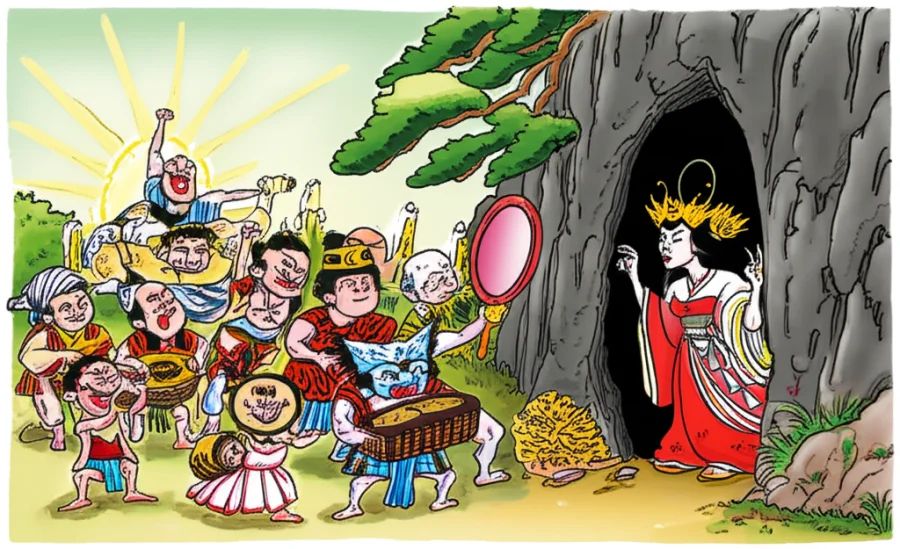
In the tapestry of ancient Japanese lore, woven from threads of nature’s power and the human desire for order, lies the captivating tale of Amaterasu’s Cave. This is not a historical account in the modern sense, but a foundational myth, a narrative passed down through generations, offering a glimpse into the worldview of early Japanese people. It is a story that explains not only the genesis of one of Japan’s most sacred sites, the Ise Grand Shrine, but also reflects the profound connection these ancient peoples felt with the celestial realm and the natural world.
Echoes of a Primordial World: Origins and Cultural Background
The origins of this myth can be traced back to the Kojiki and Nihon Shoki, ancient Japanese chronicles compiled in the 8th century CE. These texts, though written later, are believed to record oral traditions and belief systems that had been evolving for centuries, likely taking root during the Yayoi period (300 BCE – 300 CE) and solidifying in the Kofun period (300 – 538 CE). This was an era when society was largely agrarian, deeply intertwined with the cycles of the seasons, the fertility of the land, and the awe-inspiring forces of nature. The world was perceived as animated by spirits (kami) residing in mountains, rivers, trees, and the very heavens. Natural phenomena were not merely observed but interpreted as manifestations of these powerful, often capricious, divine entities. Leadership and societal structure were often legitimized through connections to these spiritual forces, and the imperial lineage, in particular, claimed descent from the sun goddess herself, further cementing the importance of such myths.
Amaterasu: The Celestial Luminosity
At the heart of this narrative is Amaterasu Ōmikami, the sun goddess. In this mythological context, she is not a physical being in the way we understand it today, but a powerful, radiant entity embodying the sun’s life-giving warmth and light. Her symbolic attributes are manifold: she represents illumination, clarity, and the dawn that dispels darkness. She is the source of all prosperity, the celestial matriarch whose presence ensures the bounty of the harvest and the order of the cosmos. Her radiance is often depicted as overwhelming, her power immense, a force that can both nurture and, if angered, cast a chilling shadow. She is the supreme deity within the Shinto pantheon, representing the ultimate authority and benevolent oversight of the natural and human realms.
The Shadow of Discord: Amaterasu’s Retreat
The tale begins with a period of profound disruption. While the exact cause varies slightly in different retellings, the core of the story involves a violent act perpetrated by Amaterasu’s impetuous brother, Susanoo-no-Mikoto, the god of storms and the sea. Driven by jealousy or rage, Susanoo commits a series of destructive deeds, culminating in a particularly heinous act: he defiles Amaterasu’s sacred weaving hall, even going so far as to kill a celestial horse and fling its hide into the room while Amaterasu was engaged in her divine weaving.
The shock and disgust at this violation are so profound that Amaterasu, the very embodiment of light and order, withdraws from the world. She retreats into a celestial cave, sealing its entrance with a boulder. The moment she disappears, the world plunges into an unimaginable darkness. The sun, her radiant presence, is extinguished. Days turn into nights, and an eternal twilight descends. Life falters. Crops wither, animals languish, and humanity is plunged into despair and fear. The cosmic balance is shattered, and the world teeters on the brink of oblivion.
The other gods, witnessing the devastation and the growing chaos, realize the dire consequences of Amaterasu’s absence. They convene, their discussions filled with urgency and desperation, to find a way to coax the sun goddess back from her self-imposed exile. Countless plans are devised and discarded. They try to lure her out with promises, with pleas, with threats, but the cave remains sealed, its darkness an impenetrable shroud.
It is the cleverness of the goddess Uzume-no-Mikoto, a spirited and jovial deity of merriment, that finally offers a glimmer of hope. She devises a plan that taps into the primal human – and indeed, divine – need for celebration and diversion. Uzume begins to dance with wild abandon outside the cave, her movements uninhibited and provocative. The other gods join in, creating a cacophony of music and laughter, stomping their feet and banging their drums with infectious energy.
The sheer audacity and boisterousness of this revelry pique Amaterasu’s curiosity. Peeking through a tiny crack in the boulder that seals the cave, she hears the joyous commotion. Intrigued by this display of lightheartedness and revelry in the midst of the pervasive gloom, she asks what is happening. The gods, seizing the moment, proclaim that they are celebrating the discovery of a new, even more radiant goddess. This declaration further ignites Amaterasu’s pride and curiosity.
As Amaterasu pushes the boulder aside slightly to see this purported new deity, the strong god Ame-no-Tajiboma pushes against it from the outside, forcing the entrance wider. Simultaneously, another god, Ame-no-Koyane, holding a sacred mirror, presents it to Amaterasu. The mirror, reflecting her own glorious radiance, creates an illusion of an even brighter, more powerful goddess. Captivated by her own dazzling reflection, Amaterasu steps out of the cave, drawn by the illusion of her own brilliance and the allure of the celebratory atmosphere.
The moment she emerges, light floods back into the world. The sun shines once more, and life begins to return to its former vigor. The cosmic order is restored, and the gods rejoice. In gratitude for her return and to ensure she would never again withdraw in such a manner, the gods decree that a sacred place be established where her presence can be honored and where the rituals of her worship can be performed. This sacred place, the Ise Grand Shrine, becomes the most revered sanctuary in Japan, dedicated to the sun goddess.
Echoes of Meaning: Symbolism and Significance
For the ancient people who shared this myth, Amaterasu’s Cave held profound symbolic meaning. The story can be interpreted as a metaphor for the cyclical nature of life, death, and rebirth. The darkness of Amaterasu’s retreat represents periods of hardship, despair, or social upheaval, while her return signifies renewal, hope, and the restoration of order. The sun goddess herself embodies the life-giving power of nature, essential for agriculture and the survival of the community.
Susanoo’s destructive actions symbolize the forces of chaos that threaten societal harmony, and Amaterasu’s withdrawal highlights the profound impact of leadership’s absence or disillusionment. Uzume’s ingenious plan represents the power of creativity, joy, and communal effort in overcoming adversity. The mirror symbolizes self-awareness and the potential for pride or vanity to be a catalyst for action. Ultimately, the myth reinforces the importance of appeasing and honoring celestial powers to maintain cosmic and earthly balance. It also served to legitimize the authority of the imperial family, who claimed Amaterasu as their divine ancestor, thus imbuing their rule with sacred significance.
Amaterasu in the Modern Imagination
Today, the myth of Amaterasu and her cave continues to resonate, albeit in different forms. In literature and academic studies, it is a cornerstone of understanding Japanese mythology, Shinto beliefs, and the historical development of Japanese culture. Anime and manga often draw inspiration from these ancient stories, reimagining Amaterasu as a powerful, often stoic, deity with a deep connection to the natural world. Video games, too, frequently incorporate elements of Japanese folklore, and Amaterasu, with her luminous presence and celestial powers, is a recurring figure or motif. These modern interpretations, while often fictionalized, keep the essence of the narrative alive, allowing new generations to engage with these ancient tales of gods, heroes, and the fundamental forces of existence.
A Legacy of Storytelling
In conclusion, the narrative of Amaterasu’s Cave is a powerful and enduring myth from Japanese tradition. It is a testament to the imagination and worldview of ancient peoples, offering insights into their understanding of the cosmos, their reverence for nature, and their quest for order. As Muslims, we recognize that only Allah is the true Creator and Sustainer of the universe, the ultimate source of all power and light. This ancient story, however, serves as a valuable window into the cultural heritage of Japan, demonstrating the universal human impulse to explain the inexplicable, to find meaning in the cycles of life, and to weave narratives that connect us to something larger than ourselves. It is a reminder of the richness of human storytelling traditions and the enduring power of imagination to shape our understanding of the world and our place within it.