fufufafa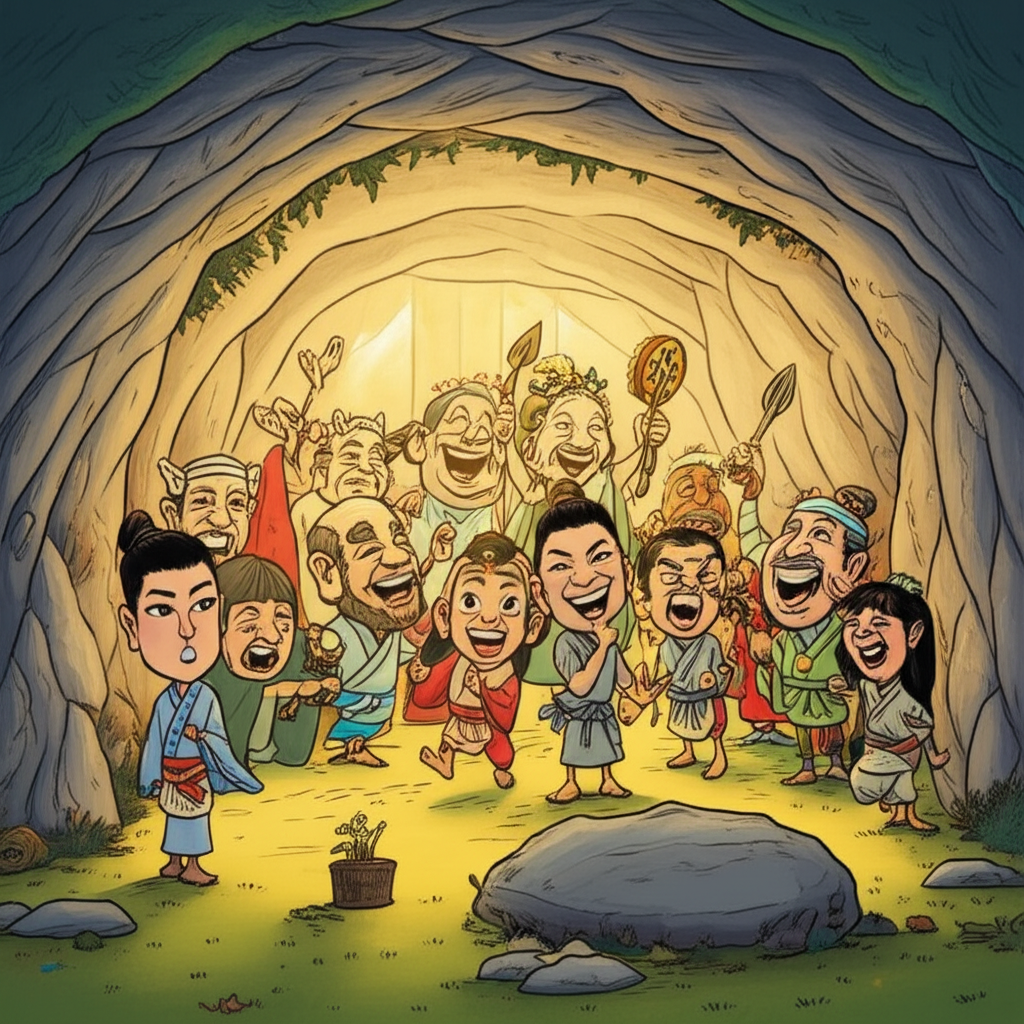
The tapestry of human history is woven with threads of imagination, myth, and legend. Among these vibrant narratives, the stories originating from ancient Japan offer a unique glimpse into the worldview of a society deeply connected to the natural world and its powerful forces. One such foundational tale, central to Japanese mythology, is the story of Amaterasu, the sun goddess, and her dramatic retreat into a cave, an event that profoundly shaped the celestial realm and the lives of the deities. This narrative, preserved through generations, provides insights into the ancient Japanese understanding of balance, the cycles of light and darkness, and the societal importance of harmony.
The myths surrounding Amaterasu are primarily found in the Kojiki (Record of Ancient Matters) and the Nihon Shoki (Chronicles of Japan), the oldest written histories of Japan, compiled in the early 8th century CE. These texts emerged during a period when Japan was solidifying its national identity and developing a more centralized governance. The society of that era was largely agrarian, with life intimately tied to the changing seasons and the rhythms of nature. The sun, a paramount source of life and warmth, was naturally revered, and the concept of divine beings overseeing natural phenomena was commonplace. People viewed the world as an interconnected web of spirits and deities, each with their own domains and influences. Natural disasters, celestial events, and the bounty of the harvest were all understood through the lens of these divine interactions. The myths served as a way to explain the inexplicable, to establish social order, and to offer a framework for understanding their place in the cosmos.
At the heart of this particular legend is Amaterasu Ōmikami, often translated as "The Great August Kami Who Shines in the Sky." In these ancient tales, Amaterasu is depicted as a benevolent and radiant deity, the ruler of Takama-ga-hara, the High Plain of Heaven. She embodies the sun, its life-giving warmth, and its illuminating power. Her symbolic attributes are directly linked to the sun itself: brightness, purity, order, and the vital energy that sustains life. She is often described with regal bearing, a leader among the gods, responsible for bringing light and order to the world. Her divine essence represents the fundamental force of light that dispels darkness and chaos.
The narrative of Amaterasu’s retreat into the cave begins with an act of profound disruption, orchestrated by her younger brother, Susano’o no Mikoto. Susano’o, a tempestuous and often destructive deity associated with storms and the underworld, harbored a deep-seated jealousy and resentment towards his luminous sister. Driven by his turbulent nature, he committed a series of heinous acts against Amaterasu and her heavenly domain. The most egregious of these was the destruction of her sacred rice paddies, a symbolic attack on the sustenance and prosperity of the celestial realm. He also desecrated her weaving hall, a place of creation and divine artistry.
Overwhelmed by grief, despair, and the sheer audacity of her brother’s actions, Amaterasu, the radiant goddess of the sun, withdrew herself from the world. She sought refuge in a celestial cave, a place of utter darkness, sealing the entrance behind her with a boulder. The moment Amaterasu, the source of all light, entered the cave, the world was plunged into an unprecedented and terrifying darkness. The High Plain of Heaven, and by extension the mortal realm below, was cast into an eternal twilight. Plants withered, the seasons faltered, and despair settled upon the gods and humans alike. The absence of Amaterasu’s light meant the absence of life, growth, and order.
The other deities of Takama-ga-hara were thrown into a panic. Without the sun’s warmth and illumination, existence became unbearable. They gathered in desperate council, their celestial home rendered bleak and desolate. Numerous attempts were made to coax Amaterasu out of her self-imposed exile, but she remained resolute in her sorrow. It was the cunning and ingenuity of Ōmohikane, the god of wisdom, that eventually devised a plan. They decided to hold a grand festival outside the cave, a spectacle designed to lure the goddess out with the promise of something even more alluring than the sun itself.
The deities gathered all the roosters in Takama-ga-hara and had them crow in unison, their collective calls attempting to mimic the dawn. Then, Uzume, the goddess of mirth and revelry, began a wild and captivating dance, her movements energetic and her laughter infectious. The other goddesses joined in, their joyful sounds and vibrant presence creating an atmosphere of boisterous celebration. Finally, a mirror was crafted and hung at the entrance of the cave, reflecting the light of a torch, an artificial illumination that hinted at a brilliance perhaps even greater than the sun itself.
Hearing the commotion and the revelry, and intrigued by the reflected light, Amaterasu’s curiosity finally overcame her despair. She cautiously peeked out from behind the boulder. As she emerged, one of the stronger deities, Ame-no-tajikarawo, the god of strength, seized the opportunity and pulled the boulder completely away from the cave entrance, forever barring Amaterasu from hiding again. The moment she stepped fully back into the world, light flooded Takama-ga-hara and the mortal realm. The darkness receded, and life began to flourish once more. The cyclical nature of day and night was thus re-established, a testament to the importance of balance and the return of light after periods of darkness.
This myth, when examined through the lens of ancient Japanese society, offers profound symbolic meaning. Amaterasu’s retreat can be interpreted as a representation of the vulnerability of even the most powerful forces of nature. It speaks to the delicate balance between light and darkness, order and chaos, and the essential role of harmony in maintaining existence. Susano’o’s destructive actions embody the forces of chaos and disruption that threaten to plunge the world into despair. Amaterasu’s withdrawal highlights the impact of such disruptions and the deep need for their resolution. The eventual return of light, orchestrated by the collective effort of the gods and the ingenuity of wisdom, underscores the importance of community, resilience, and the power of joy and celebration to overcome adversity. It also emphasizes the fundamental reliance of the world on the sun for life and prosperity.
In contemporary times, the legend of Amaterasu continues to resonate, finding new life in various forms of media and cultural expression. She is a prominent figure in anime, manga, video games, and literature, often portrayed as a powerful and iconic character. Her story serves as a rich source of inspiration for creators exploring themes of divinity, heroism, and the eternal struggle between good and evil. In academic circles, the myth is studied for its insights into ancient Japanese religion, social structures, and early concepts of cosmology. It is a vital component of Japanese cultural heritage, offering a window into the imaginative landscape of a distant past.
It is important to reiterate that the story of Amaterasu and her cave is a traditional narrative, a product of ancient storytelling and a cultural artifact. It is not a factual account, nor is it intended to be believed as divine truth. As Muslims, we recognize that only Allah (God) is the true Creator and Sustainer of all that exists, the ultimate source of light, life, and order. These ancient myths, however, offer a fascinating glimpse into the human capacity for storytelling, imagination, and the enduring quest to understand the world around us. They remind us of the rich diversity of human cultural heritage and the power of narratives to shape understanding and connect us to our past. The tale of Amaterasu’s cave, like countless other myths from around the globe, stands as a testament to the enduring power of human imagination and the timeless tradition of sharing stories.