fufufafa
The mists of time often shroud the origins of a people’s deepest narratives, yet their echoes persist, shaping understanding and identity across generations. Among the rich tapestry of ancient Irish folklore and mythology, tales of gods, heroes, and sacred objects abound. This article delves into one such traditional story, presenting it purely as a cultural and historical artifact: the legend of the Stone of Fal, also known as the Lia Fáil, and its enigmatic connection to a figure as revered as Lugh, often interpreted as the "Curse of Lugh." It is crucial to understand from the outset that this is a story, a product of ancient human imagination, not a reality to be believed, worshipped, or practiced, but rather a fascinating window into the worldview of a bygone era.
Origins and Cultural Background
This particular myth originates from the vibrant cultural landscape of pre-Christian Ireland, deeply embedded within Celtic mythology. Envision a society nestled amidst verdant hills, ancient forests, and rugged coastlines, where the cycles of nature dictated life and the unseen world held profound sway. The people of this era, spanning from the Iron Age into the early medieval period, were largely agrarian, living in tribal communities, their lives intricately linked to the land and its rhythms.
Their worldview was animistic and polytheistic, populated by a pantheon of powerful deities, spirits, and mythical beings. They perceived the world as a living entity, imbued with sacred energy, where gods and goddesses actively participated in human affairs, influencing harvests, battles, and the very destiny of the land. Lineage, honor, and the deep connection between a king and the prosperity of his domain were paramount. Their stories served not only as entertainment but also as moral guides, explanations for natural phenomena, and validations of social order and leadership, reflecting a profound reverence for both the visible and invisible forces that governed their existence.
The Sacred Stone and the Shining God
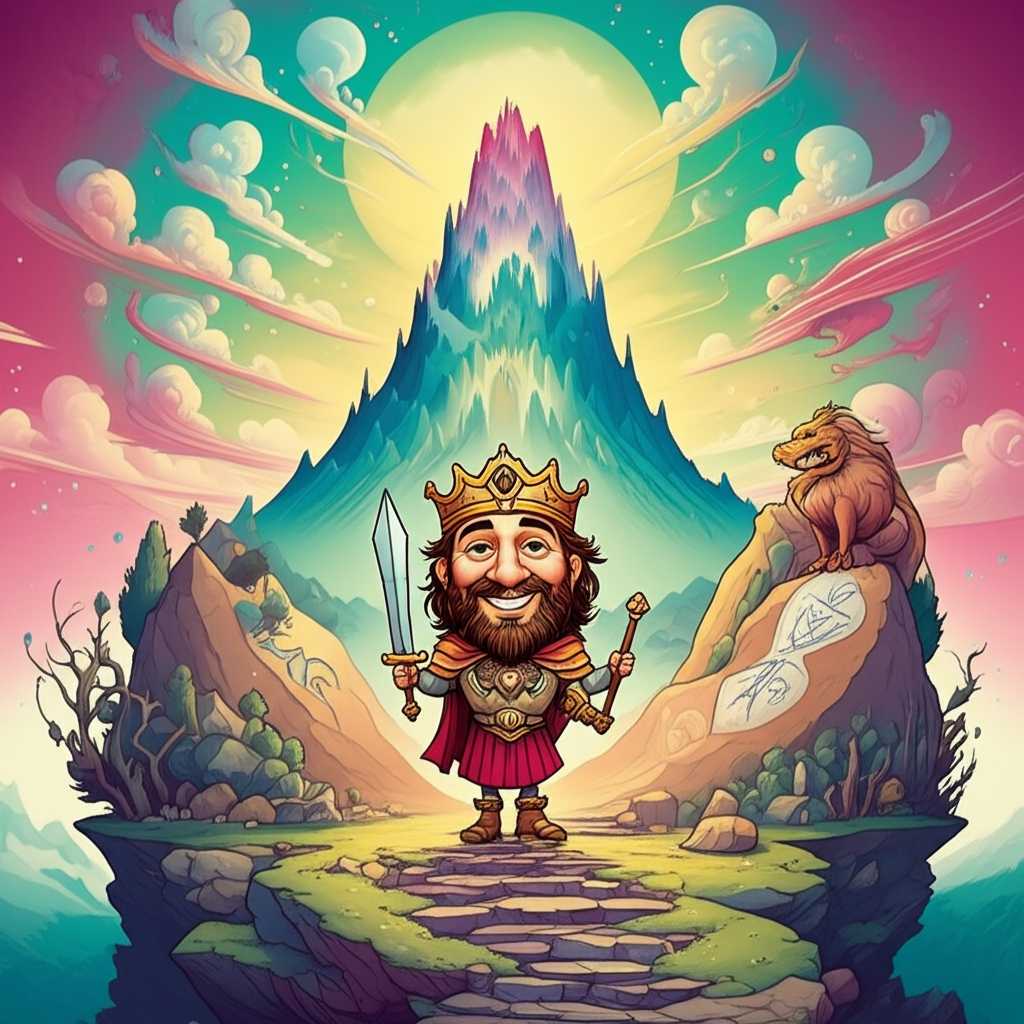
At the heart of our narrative stands the Lia Fáil, the Stone of Fal. It is not described as a thing of intricate beauty or precious material, but rather a simple, rough-hewn standing stone, perhaps an unassuming granite pillar. Yet, its apparent plainness belied its immense power. It was one of the four legendary treasures brought to Ireland by the Tuatha Dé Danann, a divine race of skilled artisans, poets, and warriors who, in the mythological cycles, ruled Ireland before the arrival of the Milesians (the ancestors of the modern Irish). The Lia Fáil’s symbolic attribute was its ability to roar aloud when touched by the rightful High King of Ireland, thus validating his sovereignty and ensuring the prosperity of the land. It was the very voice of divine authority, a conduit between the heavens and earthly rule.
Central to the era of the Tuatha Dé Danann was Lugh Lámhfhada, or Lugh of the Long Arm. Lugh was a figure of unparalleled skill and brilliance, often associated with the sun, light, and various crafts. He was a master of every art – a warrior, a smith, a carpenter, a harper, a poet, a sorcerer, a physician, and a cupbearer. His very name evokes brightness and lightning. He arrived at Tara, the ancient seat of Irish kingship, and through his formidable talents, proved himself worthy of leading the Tuatha Dé Danann against their oppressors, the Fomorians, eventually securing their rule in the legendary Second Battle of Mag Tuired. Lugh represented the ideal of a divinely sanctioned, multi-talented leader, embodying justice, wisdom, and the pinnacle of skill. The "Curse of Lugh" in this context is not a malevolent spell cast by the god, but rather a symbolic consequence or prophecy tied to the fate of the Lia Fáil and the decline of the divine order that Lugh so powerfully represented.
The Narrative of the Stone and the Fading Roar
The story of the Lia Fáil begins with the arrival of the Tuatha Dé Danann in Ireland, emerging from the northern islands, bringing with them their four great treasures. From Falias came the Lia Fáil; from Gorias, Lugh’s Spear; from Murias, the Dagda’s Cauldron; and from Finias, Nuada’s Sword. These were not mere objects, but instruments of divine power and symbols of their legitimate claim to the land.
Upon their landing, a series of battles ensued, culminating in the Tuatha Dé Danann establishing their dominion. The Lia Fáil was then erected on the sacred Hill of Tara, becoming the ultimate arbiter of kingship. For generations, whenever a true High King, divinely chosen and destined to rule, set foot upon its base or touched its surface, the stone would emit a thunderous roar that resonated across the plains of Meath. This roar was not merely a sound; it was the land itself acknowledging its sovereign, a blessing that promised fertility, peace, and prosperity under the chosen ruler. The roar of the Lia Fáil was the very sound of a golden age, an era where the divine will was clearly manifest in the selection of leaders, an age largely overseen by the powerful influence of figures like Lugh.
However, as the cycles of myth turned, so too did the fortunes of the Tuatha Dé Danann. Their era, marked by divine rule and overt magical power, began to wane, giving way to new ages and new peoples. With the eventual arrival of the Milesians, the human ancestors, the power of the Tuatha Dé Danann receded, and they ultimately withdrew into the Otherworld, the mystical sidhe mounds.
It is in this transition that the "Curse of Lugh" – or more accurately, the fading of the divine validation associated with his era – is understood. Legends tell that as time progressed, and as kingship became more human and less divinely manifest, the Lia Fáil’s voice began to falter. Some tales recount that the legendary hero Cú Chulainn, frustrated by the stone’s silence for a king he deemed worthy, struck it with his sword, splitting it in two, and from that day forward, its roaring ceased almost entirely. Other versions suggest that with the coming of Christianity, and the shift away from the old gods, the stone simply fell silent, its purpose fulfilled or rendered obsolete by a new spiritual order.
The silence of the Lia Fáil was a profound symbolic event. It signified the loss of direct divine endorsement for the kings of Ireland. It meant that the unambiguous roar of destiny, so potent in the age of Lugh and the Tuatha Dé Danann, was no longer heard. This silence, this cessation of the stone’s sacred function, could be interpreted as the "Curse of Lugh" – not a malevolent act by the god himself, but the symbolic ‘curse’ of a fading era, the diminishing of the direct, tangible divine connection to kingship that Lugh’s presence epitomized. It marked the end of a golden age where gods walked among men and their will was proclaimed through sacred stone, leaving future kings to seek legitimacy through more human, and perhaps less certain, means.
Symbolism and Meaning
To the ancient Irish, the story of the Lia Fáil and its eventual silence was rich with meaning. It served as a potent symbol of sovereignty and legitimate rule, illustrating the vital connection between a righteous king and the prosperity of his land. The roaring stone was a divine mandate, ensuring that only those truly chosen by the spiritual forces of Ireland could govern. Its silence, therefore, spoke volumes about transition and change, reflecting the perceived decline of direct divine intervention in human affairs and the shift from an overtly pagan world to one where such overt signs were no longer granted.
The stone also embodied the fate of Ireland itself, suggesting that the well-being of the land was intrinsically tied to the spiritual purity and legitimacy of its leaders. Lugh, in this context, symbolized the ideal king, the divine hero, whose multifaceted skills and wisdom brought order and victory. The "curse," or the stone’s silence, could thus be seen as the fading of the brilliance and clarity of Lugh’s age, a lament for a lost era of divine guidance and heroic clarity, leaving humanity to navigate a more complex world.
Modern Perspective
Today, the Stone of Fal and the figure of Lugh continue to resonate, albeit through a different lens. No longer believed as literal truths, these myths are cherished as vital components of Irish cultural heritage and identity. They feature prominently in modern literature, inspiring countless fantasy novels, poems, and academic studies exploring Celtic mythology. Video games and films often draw upon the rich imagery and character archetypes, adapting tales of ancient gods, heroes, and magical artifacts for new audiences.
Academically, the Lia Fáil is studied for its insights into early kingship rituals, the role of sacred sites, and the evolution of religious beliefs. Tourists visit the Hill of Tara, where a stone believed to be the Lia Fáil still stands, connecting tangibly with this ancient story. The tales serve as a powerful testament to the human imagination, our enduring quest for meaning, and the ways in which societies construct narratives to understand their world, their leaders, and their own place within the grand design.
Conclusion
The story of the Stone of Fal and the symbolic "Curse of Lugh" is a profound testament to the power of human storytelling, a narrative woven by ancient Irish peoples to articulate their understanding of divine authority, legitimate kingship, and the inexorable march of time and change. It is a cultural artifact, a vibrant thread in the tapestry of world folklore, and a window into the imaginative landscape of a distant past.
As Muslims, we recognize that the true Creator and Sustainer of all existence is Allah, the One God, unique in His power and majesty. We understand that these ancient myths, while rich in cultural and historical significance, are products of human imagination, reflecting the beliefs and inquiries of people in eras untouched by the final divine revelation. Nevertheless, they offer valuable insights into the diverse ways humanity has sought to comprehend the mysteries of life, leadership, and destiny. The enduring legacy of the Lia Fáil and the tales of Lugh remind us of the universal human capacity for imagination, the profound impact of cultural heritage, and the timeless tradition of passing stories from one generation to the next, enriching our collective human experience.