fufufafa
In the mists of time, where the emerald isle of Ireland was woven with threads of myth and magic, ancient storytellers spun tales of gods, heroes, and powerful artifacts. Among these enduring narratives is the legend of the Stone of Fal, an object deeply entwined with the mighty Dagda, a central figure in Irish mythology. This is not a tale of historical fact, but a window into the imaginative world of the ancient Celts, a people who sought to understand their universe through vibrant stories and symbolic figures.
The genesis of this legend lies within the rich tapestry of Gaelic mythology, specifically the Mythological Cycle of Irish sagas. These stories, often passed down orally for centuries before being transcribed by Christian monks, painted a vivid picture of a world populated by divine beings, the Tuatha Dé Danann (Tribe of the Goddess Danu), and their interactions with mortals. The era in which these myths likely took shape was one where nature held a profound and often awe-inspiring presence. Societies were largely agrarian, their lives dictated by the seasons, the fertility of the land, and the unpredictable forces of the elements. In such a worldview, powerful entities were often attributed to natural phenomena, and the quest for prosperity and protection was paramount. The Tuatha Dé Danann, with their extraordinary abilities and connections to the land, served as embodiments of these forces and aspirations.
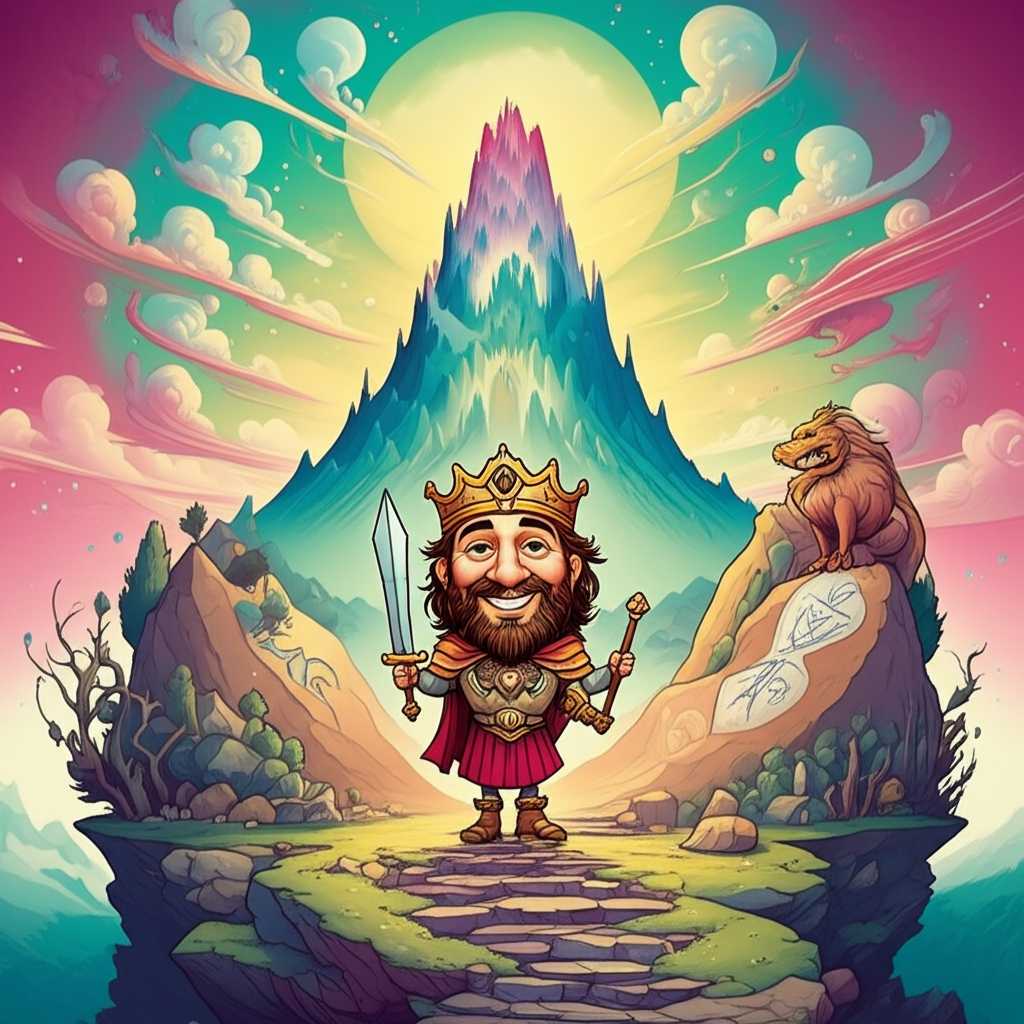
At the heart of the legend of the Stone of Fal stands Dagda, a name that translates to "the Good God" or "the Great God." He is not a singular, monolithic deity but a complex figure representing abundance, wisdom, power, and kingship. Dagda is often depicted as a benevolent but formidable leader, possessing immense strength and a deep connection to the earth. His symbolic attributes are manifold: his great club, capable of killing with one end and reviving with the other, signifies his dominion over life and death, as well as his role as a protector and provider. His cauldron, which could never be emptied and fed an entire host, symbolizes inexhaustible abundance and sustenance, a crucial concept for agrarian societies. Dagda’s harp, played by him, could evoke emotions ranging from joy to sorrow, reflecting his mastery over the spiritual and emotional realms. The Stone of Fal, in this context, represents another facet of his immense power, often associated with legitimacy, sovereignty, and the very land of Ireland itself. It is not a physical being in the traditional sense, but a sentient artifact, a symbol of rightful rule and the blessings bestowed upon a chosen leader.
The narrative surrounding the Stone of Fal often unfolds in the context of the Tuatha Dé Danann’s struggles for dominance and their eventual establishment in Ireland. Legend tells that the Tuatha Dé Danann, after a series of epic battles and migrations, sought to claim the land for themselves. It was during this period that various magical artifacts were brought forth, each holding unique significance. The Stone of Fal, according to the lore, was one of these powerful relics. Its primary function, as recounted in the sagas, was to proclaim the true High King of Ireland. When a rightful ruler, one chosen by the gods and destined to govern, would step upon it, the stone would cry out with a joyous sound, signifying their legitimacy and the land’s acceptance of their reign. Conversely, if an imposter or an unworthy individual dared to touch it, the stone would remain silent, or perhaps emit a mournful groan, betraying their false claim. This narrative highlights the ancient belief in divinely appointed rulers and the importance of a leader who was in harmony with the land and its spiritual essence. The stone acted as a cosmic endorsement, a tangible manifestation of the land’s favor.
The Stone of Fal, therefore, symbolizes far more than just a piece of rock. To the ancient Irish, it likely represented the sacred connection between the ruler and the land. It embodied the concept of legitimate kingship, a notion crucial for maintaining social order and ensuring the well-being of the community. The stone’s responsiveness to a true king could be interpreted as the land itself acknowledging and blessing its appointed steward, ensuring fertility, prosperity, and peace. It also speaks to a worldview where the divine was intimately involved in human affairs, and where symbols held potent, almost animate, power. The story of the stone’s cry served as a cautionary tale, emphasizing the consequences of usurpation and the importance of righteous leadership. It was a way to imbue the concept of kingship with a spiritual and almost magical authority, reinforcing the idea that the ruler was not merely a political figure but a divinely chosen representative.
In the modern era, the legacy of the Stone of Fal, and indeed Dagda himself, endures not as a literal object of power, but as a rich source of inspiration for literature, film, and popular culture. Authors and screenwriters draw upon these ancient myths to craft compelling narratives, exploring themes of heroism, destiny, and the clash between the mundane and the magical. The Stone of Fal might appear as a mystical artifact that determines leadership in fantasy novels or video games, its "cry" translated into a visual or auditory cue. In academic circles, it is studied as a fascinating example of early Celtic cosmology, political ideology, and the evolution of storytelling traditions. Cultural anthropologists and folklorists analyze these myths to understand the values, beliefs, and societal structures of the people who created them. The legend serves as a tangible link to Ireland’s deep cultural heritage, a testament to the enduring power of imagination and the human desire to find meaning and order in the world.
In conclusion, the legend of the Stone of Fal, and its connection to the mighty Dagda, is a profound example of the rich narrative tapestry woven by ancient Irish storytellers. It is a cultural artifact, a window into the minds of a people who sought to understand their world through myth and symbolism. As Muslims, we recognize that only Allah (God) is the true Creator and Sustainer of all existence. These ancient stories, while fascinating from a cultural and historical perspective, do not represent divine truth. They are echoes of human imagination, reflections of a society grappling with the mysteries of life, power, and the natural world. The enduring appeal of such tales lies in their ability to transport us to different times and cultures, allowing us to appreciate the vast spectrum of human storytelling and the enduring legacy of our collective heritage. The Stone of Fal, in its silence or its legendary cry, continues to resonate, not as a source of power, but as a testament to the enduring power of story itself.