fufufafa
Across the windswept emerald landscapes of Ireland, where ancient dolmens pierce the sky and mist often shrouds the rolling hills, a rich tapestry of myths and legends has been woven through the ages. Among these enduring tales, passed down through generations by word of mouth and etched into the very soul of the land, is the story of the Stone of Fal, a mythical artifact whispered to be a gift from the formidable Morrigan. This narrative, like so many from the Celtic world, is not a doctrine to be believed, but a window into the imaginative minds of ancient peoples, a reflection of their understanding of the world, their awe of nature, and their complex spiritual landscape.
The genesis of this legend lies in the Iron Age and early medieval periods of Ireland, a time when society was deeply intertwined with the natural world. Life was a delicate balance, dictated by the rhythms of the seasons, the bounty of the earth, and the ever-present mysteries of life and death. The Celts, as they are broadly known, possessed a worldview where the divine was not confined to distant heavens but permeated every aspect of existence. Spirits resided in ancient trees, rivers, and stones, and powerful, often capricious, deities held sway over mortal affairs. This was a world of constant flux, where the boundaries between the mortal and the supernatural were fluid, and where understanding the will of these potent forces was paramount to survival and prosperity. Their stories, therefore, often served to explain the inexplicable, to impart wisdom, and to forge a collective identity.
Central to the tale of the Stone of Fal is the figure of the Morrigan. This is not a single entity in the traditional sense, but rather a complex and multifaceted divine figure, or a coven of goddesses, associated with war, fate, sovereignty, and the cycles of death and rebirth. She is often depicted as a raven, a creature of ill omen and prophecy, her presence foretelling battle and bloodshed. Her symbolic attributes are not to be interpreted as literal power, but as representations of primal forces. The raven signifies her connection to the battlefield and the spectral realm, her ability to perceive the unseen unfolding of destiny. Her association with sovereignty points to her role in legitimizing rulers and influencing the fate of kingdoms. The Morrigan embodies the wild, untamed aspects of nature and the inevitable march of time, a potent force that demands respect and understanding.
The narrative of the Stone of Fal unfolds like a somber, evocative poem. In the ancient mists of Ireland, it is said, the land itself was once a wild and untamed entity, its destinies shaped by forces beyond human comprehension. It was during a time of great upheaval, when kingdoms clashed and the fate of the island hung precariously in the balance, that the Morrigan, the phantom queen, the weaver of war and destiny, cast her gaze upon the land. She, who saw the threads of fate in the flight of ravens and the glint of steel, recognized a need for a tangible anchor, a point of truth upon which true leadership could be built.
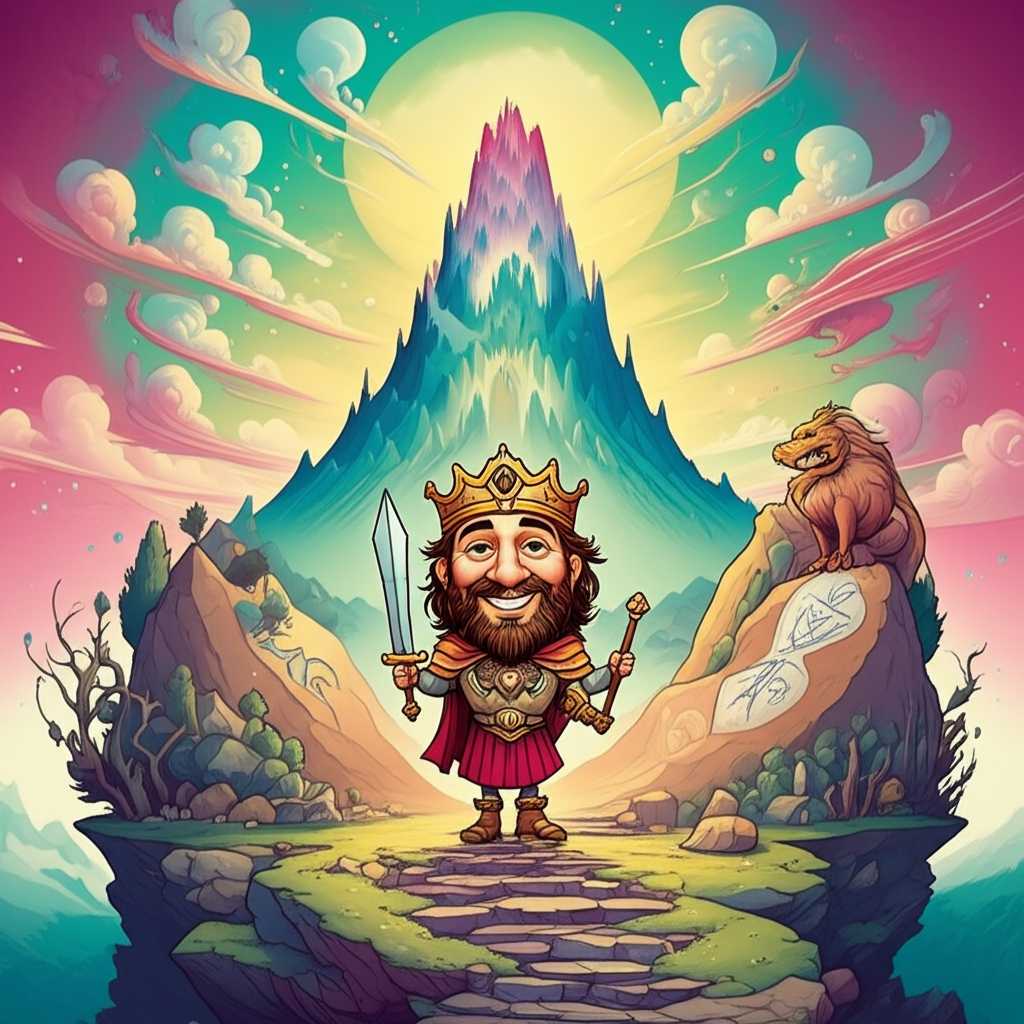
From the very heart of the earth, a stone of immense power and deep, resonant energy was said to have been born. Not a gem of sparkling beauty, but a rough-hewn, unyielding stone, imbued with an ancient magic. This was the Stone of Fal. The Morrigan, in her inscrutable wisdom, decreed that this stone would serve as a divine oracle, a silent arbiter of legitimate rule. It was not a stone that spoke with a voice, but one that responded to the touch of the rightful High King of Ireland. When such a king, chosen by destiny and blessed by the land itself, placed his hand upon its surface, the Stone of Fal would cry out. Its cry was not a sound of pain, but a powerful, resonant roar that echoed across the plains and mountains, a declaration that resonated with the very soul of Ireland. This cry confirmed his authority, his rightful place as the guardian of the land and its people.
However, should an impostor, a usurper, or one whose claim was not blessed by the ancient powers, dare to touch the Stone of Fal, it would remain silent, a stark testament to their illegitimate claim. The absence of its cry was a damning indictment, a silent condemnation that would weaken their reign and sow seeds of doubt among their followers. Thus, the Stone of Fal became a symbol of divine sanction, a physical manifestation of the land’s approval, and a silent warning to those who sought power through deceit or brute force. It represented the unseen forces that shaped the destiny of the land, a reminder that true leadership was not merely a matter of might, but of being in harmony with the ancient currents of existence.
The symbolism embedded within the Stone of Fal is rich and layered. It likely represented the concept of divine right and legitimate sovereignty, a way for ancient societies to legitimize their rulers and ensure stability. The stone’s silence or cry could have symbolized the land’s acceptance or rejection of a leader, reflecting a deep reverence for the natural world and its perceived influence on human affairs. The Morrigan’s involvement further emphasizes the connection between power, fate, and the often harsh realities of war and leadership. The stone, in its unyielding nature, might have also symbolized the enduring spirit of Ireland, its ability to weather storms and endure through the ages. It could have represented the importance of truth and authenticity in leadership, where a ruler’s legitimacy was not just declared but divinely affirmed.
In the modern world, the legend of the Stone of Fal continues to resonate, albeit in different forms. It appears in literature, often as a mystical artifact sought by heroes or a symbol of lost kingship. In video games, it might be a quest item or a powerful relic granting boons to the player. In cultural studies, it serves as a valuable artifact for understanding ancient Celtic beliefs, their social structures, and their relationship with the spiritual realm. These interpretations acknowledge the imaginative power of the myth, its capacity to inspire stories and explore themes of leadership, destiny, and the enduring connection between humanity and the forces we perceive beyond ourselves.
It is crucial to reiterate that the Stone of Fal is a product of ancient storytelling, a testament to the rich tapestry of human imagination and the ways our ancestors sought to understand their world. As Muslims, we recognize that only Allah, the Creator of all, is the true Sustainer and the ultimate source of all power and authority. This story, like all myths and legends, offers a fascinating glimpse into the cultural heritage of a people, a tradition of storytelling that continues to shape our understanding of history, mythology, and the enduring power of the human spirit to create and to dream. The whisper of the Stone of Fal, carried on the winds of Ireland, reminds us of the enduring legacy of human imagination and the profound narratives that connect us to our past.