fufufafa
In the emerald heart of Ireland, where ancient winds carry the echoes of forgotten tales, lies a rich tapestry of mythology woven by the hands of its earliest inhabitants. Among these countless threads, one particular narrative speaks of a sacred artifact and the mysterious intervention of a powerful deity: The Stone of Fal and the Curse of Manannán mac Lir. This is not a historical account, nor a divine revelation, but a traditional story, born from the imaginations and wisdom of ancient people, passed down through generations around flickering hearth fires. It is a myth, a cultural artifact, offering a window into the worldview of those who first walked these lands.
Origins and Cultural Background: A World Alive with Wonder
To truly appreciate the tale of the Stone of Fal, one must step back into the pre-Christian era of Ireland, a time when the veil between the mundane and the magical was thin. This was an age of tribal societies, deep reverence for nature, and an oral tradition that preserved history, law, and spiritual beliefs through epic poems and sagas. The landscape itself was considered sacred, imbued with spirits, gods, and ancestral power. Every hill, river, and ancient stone held a story, a connection to the unseen forces that governed life and death, fortune and fate.
For the ancient Irish, the world was not a sterile, mechanical place, but a vibrant, animate realm. They believed in a pantheon of gods and goddesses, often associated with natural phenomena, war, fertility, and sovereignty. These deities, sometimes benevolent, sometimes fearsome, were thought to interact directly with mortals, shaping their destinies and demanding respect. The "Otherworld" – a mystical realm co-existing with the mortal one – was a central concept, a place of timeless beauty, magic, and powerful beings, often accessible through specific sacred sites or under certain conditions. Within this rich spiritual landscape, tales of magical artifacts, heroic deeds, and divine interventions were not mere entertainment but served as explanations for the unknown, guides for moral conduct, and affirmations of cultural identity.
Manannán mac Lir and the Lia Fáil: Guardians of Sovereignty
At the heart of this particular myth stand two significant entities. First, Manannán mac Lir, the majestic and enigmatic god of the sea. Son of Lir, the Sea, Manannán was a prominent figure among the Tuatha Dé Danann, the divine race said to have ruled Ireland before the coming of mortals. He was not merely a deity of the waves; Manannán was a master of illusion, a weaver of mists, and the guardian of the Otherworld, particularly the timeless realm of Tír na nÓg. He possessed extraordinary magical treasures: a boat called Scuabtuinne (Wave-Sweeper) that required no sails, a cloak of invisibility, and a horse named Aonbharr that could traverse both land and sea. Manannán embodied the unpredictable power and profound mystery of the ocean, a force that could grant bounty or unleash destruction, and he was deeply associated with the very essence of sovereignty and divine wisdom. His presence in a tale often signified a pivotal moment, a test, or a judgment from the unseen powers.
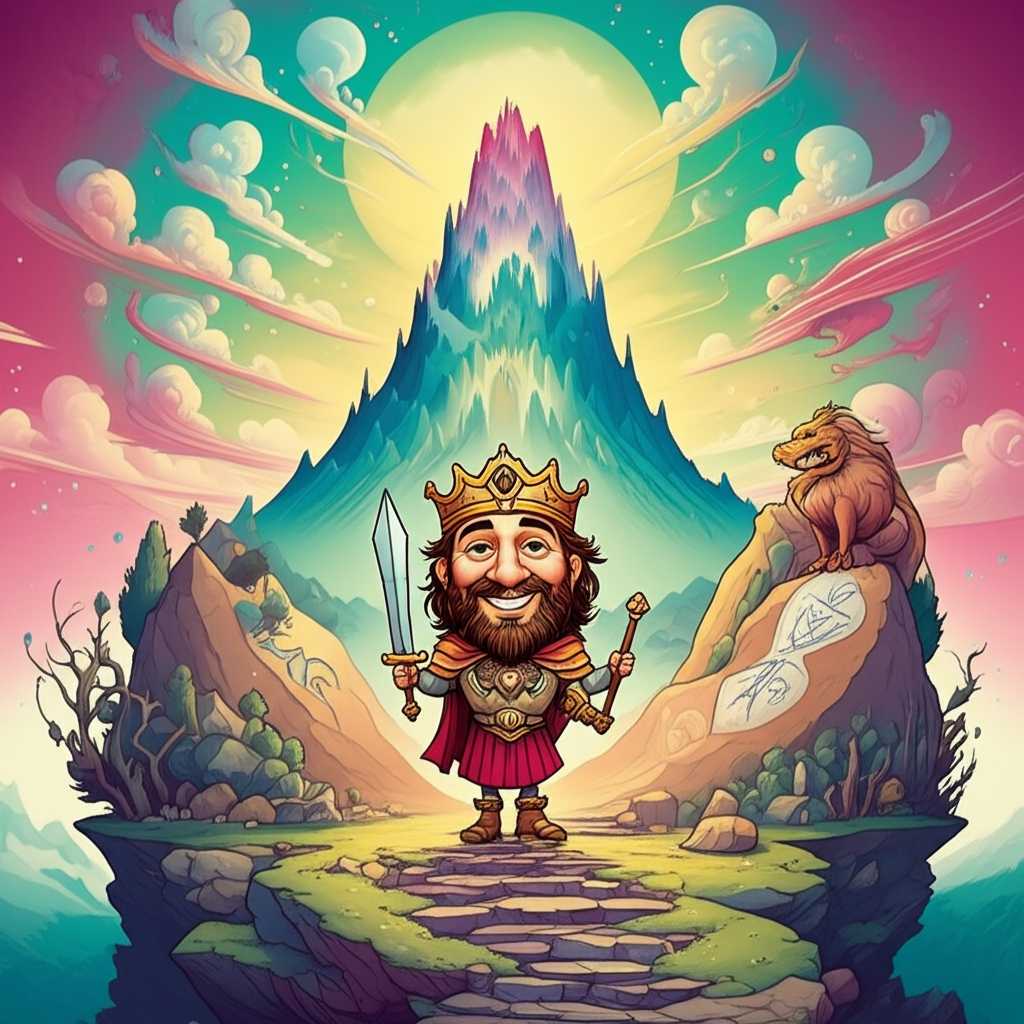
The second key element is the Lia Fáil, or the Stone of Fal. This was one of the four legendary treasures brought to Ireland by the Tuatha Dé Danann from their mythical northern cities. The Lia Fáil was a powerful artifact, a coronation stone placed upon the sacred Hill of Tara, the ancient seat of the High Kings of Ireland. Its unique property was said to be its ability to roar aloud whenever the rightful High King of Ireland stood upon it. This roar was not just a sound; it was a divine affirmation, a cosmic validation of a ruler’s legitimacy, signifying that the gods themselves had chosen him to lead. The Lia Fáil thus symbolized ultimate sovereignty, the sacred bond between the land, its people, and its divinely appointed leader.
The Narrative Retelling: The Stone’s Silence and the Sea God’s Scrutiny
The story, as it might have been told, begins in the mythic dawn of Ireland. When the radiant Tuatha Dé Danann first arrived, bringing with them their unparalleled crafts and wisdom, they established their dominion. At the heart of their realm, on the windswept Hill of Tara, they placed the Lia Fáil. For generations, the stone performed its sacred duty. When a chieftain laid claim to the High Kingship, he would ascend Tara, and if he possessed the true spirit of leadership, a pure heart, and the favor of the land, the Lia Fáil would emit a thunderous roar, echoing across the plains, affirming his divine right to rule. The land prospered under these affirmed kings, their reigns blessed with peace and fertility.
However, as generations passed, a shadow began to creep into the hearts of mortals. Ambition grew, intertwined with greed and a thirst for power. The roar of the Lia Fáil became less about the inherent worthiness of a king and more about a mere magical endorsement. Chieftains, less concerned with justice and more with personal gain, began to scheme, to manipulate, and to make false claims, hoping the stone’s magic alone would elevate them. They forgot that the roar was a reflection of divine favor, not a magic trick to be exploited.
From his shimmering halls beneath the waves, Manannán mac Lir, the watchful god, observed this growing dissonance. He saw the sacred Stone of Fal, once a beacon of truth, being treated as a mere tool, its spiritual significance diminishing. He witnessed kings ascending, their hearts heavy with avarice, yet still expecting the stone to validate them. The very concept of sovereignty, which he, as a powerful deity, deeply understood to be a sacred trust, was being corrupted.
Displeased by this disrespect, and perhaps sensing a looming era of strife that would be fueled by illegitimate rule, Manannán decided to intervene. He did not seek to destroy the Lia Fáil, for it was a treasure of his own kin, the Tuatha Dé Danann. Instead, he sought to teach a profound lesson, to remind mortals that true kingship came from within, from a connection to the land and its people, not merely from a stone’s magical affirmation.
One fateful day, as another ambitious chieftain, whose heart was known to be cold and his motives selfish, ascended the Hill of Tara, the assembled crowds held their breath, awaiting the customary roar. The chieftain stood upon the Lia Fáil, a smirk of anticipated triumph on his face. But silence descended. A profound, unsettling silence. The stone, which had once thundered with divine approval, remained mute. Again and again, unworthy claimants stood upon it, yet the Lia Fáil remained stubbornly, unnervingly silent. The roar, once a clear voice of divine will, had become capricious, or even entirely ceased for those who sought to exploit its power.
This was Manannán’s curse: not a destructive act, but a profound withdrawal of consistent divine affirmation. The Lia Fáil would no longer roar for every king, particularly not for those whose hearts were impure or whose intentions were corrupt. Its power became veiled, its roar unpredictable, or it would simply remain silent, forcing mortals to look beyond mere magic for true leadership. Confusion and strife ensued as the clear sign of legitimacy vanished. Kings were now forced to prove their worth through their actions, their wisdom, and their dedication to their people, rather than relying solely on the stone’s pronouncement. The "curse" was a divine challenge, compelling humanity to redefine and earn true sovereignty.
Symbolism and Meaning: A Mirror to Humanity
For the ancient Irish, this myth likely held deep symbolic weight. The Lia Fáil, initially a symbol of divine legitimacy and sovereignty, represented the ideal connection between a ruler and the cosmic order. Manannán’s "curse" then became a powerful commentary on human hubris and the consequences of misusing sacred power. It illustrated the idea that divine blessings are not to be taken for granted or manipulated; they are conditional upon purity of intent and righteous conduct.
The unpredictable silence of the stone would have represented the mystery and unknowable nature of divine will, reminding people that the gods could not be controlled or coerced. It taught that true leadership stemmed not from a magical artifact, but from a leader’s character, wisdom, and ability to serve their people and the land justly. It was a moral tale, cautioning against greed and ambition, and underscoring the spiritual responsibility that came with power. In essence, the myth explored the tension between human ambition and divine judgment, urging a return to virtue and authentic connection to the sacred.
Modern Perspective: Echoes in Contemporary Culture
While no longer a belief system, the myth of the Stone of Fal and the implied judgment of Manannán mac Lir continues to resonate in modern culture. In literature, themes of rightful kingship, the burden of leadership, and the quest for legitimate authority, often tied to magical artifacts, appear frequently in fantasy novels. The idea of a sacred object testing a leader’s worth is a powerful narrative trope.
In cultural studies and folklore research, this myth, like many others, provides invaluable insight into the values, fears, and aspirations of ancient societies. It helps scholars understand how pre-Christian Irish people conceived of power, morality, and their relationship with the divine. The Hill of Tara itself remains a potent archaeological and cultural site, drawing visitors who connect with the deep history and mythical significance of the place. Though perhaps not directly depicted in major movies or games, the broader themes of Celtic mythology, magical stones, and sea deities often inspire elements within these forms of entertainment, contributing to a rich tapestry of fantasy worlds.
Conclusion: A Legacy of Imagination
The Stone of Fal and the Curse of Manannán mac Lir stands as a testament to the enduring power of human imagination and the profound desire to understand the world through storytelling. It is a vibrant piece of Irish cultural heritage, a narrative crafted by ancient minds to explain the complexities of leadership, the consequences of human ambition, and the majestic, often inscrutable, forces believed to govern existence.
As Muslims, we recognize that Allah (God) alone is the true Creator, Sustainer, and ultimate Source of all power and wisdom, and that only His divine revelation guides us to truth. We affirm that there is no deity worthy of worship except Him. However, understanding myths like this allows us to appreciate the rich tapestry of human cultures, to learn about the historical and social contexts in which people sought meaning, and to marvel at the universal human impulse to create narratives that explore morality, power, and our place in the cosmos. These stories, though not factual, remain invaluable as reflections of the human spirit, passed down through generations, enriching our collective understanding of cultural diversity and the timeless art of storytelling.