fufufafa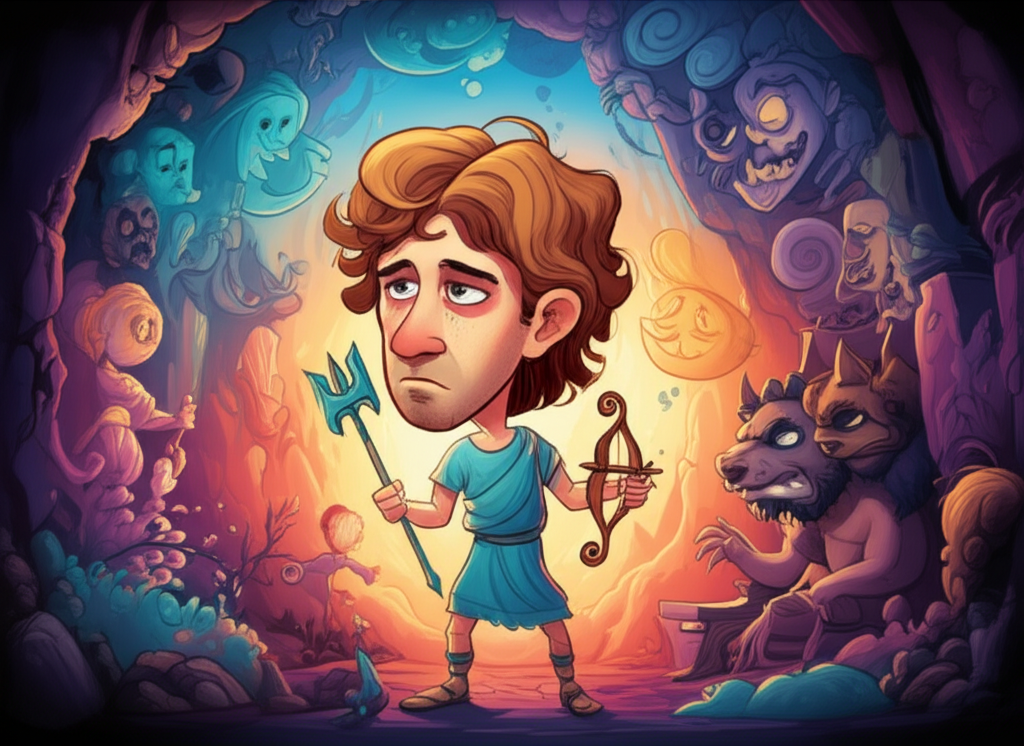
From the sun-drenched shores of ancient Greece, a tapestry of myths and legends was woven, stories passed down through generations, shaping the understanding of the world and the human condition. Among these enduring tales is that of Orpheus, the legendary musician whose lyre could charm the very stones, and his heart-wrenching quest into the shadowy realm of Hades, the underworld. This narrative, like countless others from antiquity, offers a glimpse into the cultural landscape, the fears, and the aspirations of a people who sought meaning in the mysteries of life and death.
The era in which these stories flourished was one of profound intellectual and artistic development. Ancient Greece, a collection of independent city-states, was a crucible of philosophy, drama, and art. Their worldview was often anthropomorphic, imbuing natural forces and abstract concepts with human-like qualities and personalities. Gods and goddesses presided over the heavens and the earth, while a complex, often grim, underworld existed as the destination for all mortals upon their demise. This was a world where the boundaries between the divine, the mortal, and the spectral were fluid, and where the power of art and music was seen as a force capable of influencing even the most formidable powers.
At the heart of this particular myth lies Orpheus, a figure often depicted as the son of a Muse and a Thracian king. His primary attribute was his unparalleled musical talent. His lyre, crafted by Apollo himself, was no ordinary instrument. Its melodies possessed a magical quality, capable of captivating not just humans, but also wild animals, trees, and even the inanimate elements. This power, however, was not merely for entertainment; it represented the profound human capacity for expression, for evoking deep emotion, and for finding beauty even in the face of profound sorrow. He was a symbol of the transformative power of art, a conduit for universal feelings.
The tragic catalyst for Orpheus’s descent was the untimely death of his beloved wife, Eurydice. She was a nymph of exceptional beauty and grace, and their love was a beacon of light in Orpheus’s life. While walking through a meadow, Eurydice was bitten by a venomous serpent, and her life was extinguished in an instant. The grief that consumed Orpheus was absolute, a chasm of despair that no earthly solace could fill. It was this unbearable sorrow, this yearning for what was lost, that propelled him to undertake a journey of unimaginable peril: to venture into the underworld and plead with its rulers for Eurydice’s return.
Armed with nothing but his lyre and his grief-stricken voice, Orpheus made his way to the dark and foreboding entrance of Hades. The journey itself was fraught with challenges, guarded by fearsome creatures and beset by the chilling aura of death. Upon arriving at the gates, he was confronted by Cerberus, the monstrous, three-headed dog that guarded the entrance. Yet, as Orpheus began to play his lyre, the beast was lulled into a peaceful slumber, its ferocity momentarily tamed by the melancholic strains.
His path then led him to the desolate banks of the river Styx, where the ferryman Charon grudgingly agreed to carry him across, moved by the haunting beauty of his song. Finally, Orpheus stood before the formidable rulers of the underworld: Hades, the grim god of the dead, and his queen, Persephone. In their somber, cavernous hall, surrounded by the spectral shades of those who had passed, Orpheus poured out his heart. His music, imbued with the raw agony of his loss and the depth of his love, resonated through the eternal darkness. He sang of Eurydice’s beauty, of their shared joy, and of the unbearable emptiness her absence had left.
The tale recounts that the gods of the underworld, accustomed to the mournful silence of their domain, were deeply affected. Even Hades, the implacable lord of the dead, and Persephone, who had herself known the pangs of separation, were moved to tears. They agreed to Orpheus’s plea: Eurydice would be allowed to return to the land of the living, with one crucial condition. Orpheus must walk ahead of her, and under no circumstances was he to look back until they had both emerged into the sunlight.
With a fragile hope rekindled in his heart, Orpheus began his ascent. The journey back through the underworld was agonizingly slow. Every rustle, every whisper in the shadows, fueled his growing anxiety. The silence behind him was more terrifying than any roar. Doubt gnawed at him. Was she truly there? Was this a cruel trick? The weight of his love and his fear became an unbearable burden. As he neared the exit, the faint glow of daylight beckoning him forward, the unbearable tension finally snapped. He turned.
In that fleeting instant, he saw her – a faint, ethereal form, her eyes filled with sorrow and understanding. Then, as the condition was broken, Eurydice was inexorably pulled back into the abyss, her fading form a testament to the immutable laws of the underworld. Orpheus was left alone, his heart shattered once more, the melody of his lyre now a lament for his ultimate failure.
This myth, while a narrative of profound loss and a failed quest, offered much for the ancient Greeks to ponder. Orpheus’s descent into Hades can be seen as a powerful metaphor for confronting the ultimate unknown – death. His journey symbolizes humanity’s struggle to comprehend mortality and the desire to reclaim what has been lost, even when faced with insurmountable odds. The power of his music represents the enduring strength of love and art to transcend earthly boundaries and to evoke deep emotional responses. Eurydice’s return, contingent on trust and faith, highlights the fragility of hope and the consequences of doubt. The story also speaks to the strict boundaries between the realms of the living and the dead, suggesting that some separations are absolute and irreversible.
In the modern world, the myth of Orpheus and Eurydice continues to resonate, finding new life in various artistic expressions. It has been retold in countless poems, plays, operas, and novels, each offering a unique interpretation of its themes. Films like Jean Cocteau’s "Orphée" and the animated "Hercules" have brought the story to new audiences, exploring its emotional depth and symbolic resonance. In video games and contemporary literature, the narrative of a descent into a metaphorical underworld for love or redemption remains a powerful archetype. It serves as a testament to the enduring human fascination with themes of love, loss, the afterlife, and the redemptive, or destructive, power of art.
It is crucial to reiterate that the story of Orpheus and his journey into Hades is a product of ancient imagination and cultural storytelling. It is a narrative that has been passed down through generations, offering insights into the beliefs and perspectives of a bygone era. As Muslims, we recognize that the sole Creator and Sustainer of all existence is Allah (God), and that all power and authority reside with Him alone. These ancient stories, while rich in cultural heritage and capable of sparking imagination, do not represent any divine truth. They are, rather, a testament to the enduring human impulse to create, to explore, and to share tales that reflect our deepest hopes, our most profound fears, and our eternal quest for understanding in the vast tapestry of human experience.