fufufafa
The mists of ancient Eire, a land of emerald hills and shadowed glens, cradle a wealth of stories that speak of powerful beings and deeds of old. Among these narratives, woven into the very fabric of early Celtic tradition, is the captivating tale of Nuada, a king whose resilience became legendary, and the fabled "Eternal City" – a sanctuary of magic and timeless wisdom. This is a traditional story, passed down by ancient people, a testament to their rich imagination and deep connection to the mystical world they perceived around them.
Origins in the Emerald Isle: A World Steeped in Wonder
The myth of Nuada and the Tuatha Dé Danann, the people he led, originates from the vibrant tapestry of Irish mythology, specifically within the cycles of tales concerning the early inhabitants of Ireland. This lore took shape during a pre-Christian era, likely flourishing through the Iron Age and early medieval periods, a time when the Celtic peoples of Ireland viewed their world as a place teeming with unseen forces and profound magic.
For these ancient communities, the natural world was not merely a backdrop but a living entity, imbued with spirits and deities. Groves, rivers, and mountains held sacred significance, believed to be gateways to an "Otherworld" – a parallel realm inhabited by powerful, often beautiful, and sometimes fearsome beings. Their worldview was cyclical, marked by the turning of seasons, the rise and fall of heroes, and a profound respect for lineage and honor. They celebrated feats of courage, wisdom, and artistic skill, often attributing these qualities to their legendary ancestors or the powerful entities from the Otherworld who were said to have once walked among them. Storytelling was not just entertainment; it was a means of preserving history, conveying moral lessons, and understanding their place in a complex, enchanted cosmos.
Nuada: The King of the Silver Hand and His People
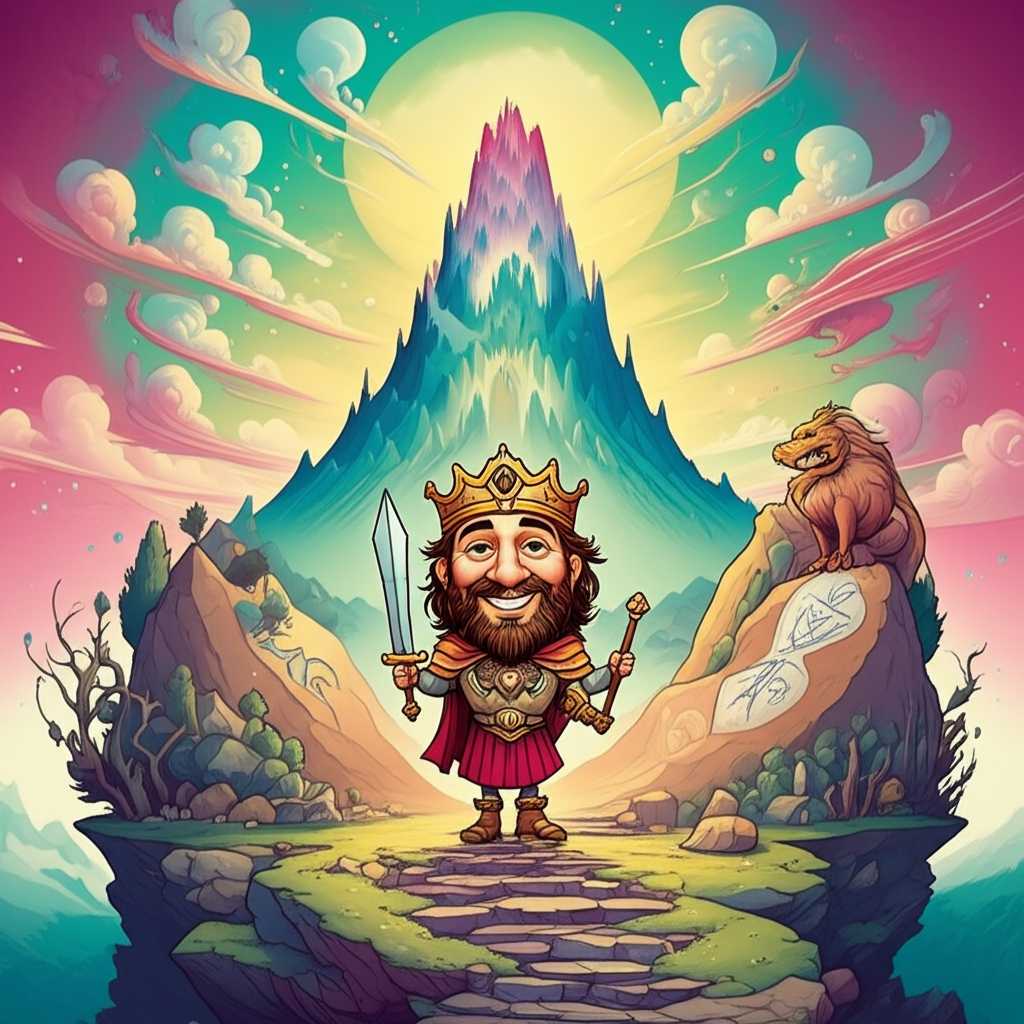
At the heart of this mythology stands Nuada Airgetlám, meaning "Nuada of the Silver Hand." He is depicted as a revered king of the Tuatha Dé Danann, a semi-divine race of beings often described as skilled in magic, poetry, and craftsmanship. Unlike mortal men, the Tuatha Dé Danann possessed extraordinary abilities, wisdom, and a profound connection to the mystical energies of the land. They were not worshipped in the same way modern religions define deities, but rather respected and held in awe as powerful, ancestral figures who once governed Ireland.
Nuada himself embodies several symbolic attributes. He represents just and wise leadership, the willingness to sacrifice for his people, and the profound importance of physical wholeness in a monarch – a societal ideal reflected in the narrative of his temporary dethronement. His silver arm, a miraculous prosthetic, symbolizes resilience, ingenuity, and the ability to overcome adversity, transforming a weakness into a unique mark of distinction. He is a figure of sovereignty, whose fate is intrinsically linked to the well-being of his realm.
The "Eternal City," while not explicitly named in all traditional texts as a singular place, represents the ultimate sanctuary and enduring legacy of the Tuatha Dé Danann. It embodies their mastery of magic, their artistic brilliance, and their desire for a timeless haven, untouched by the strife and impermanence of the mortal world. It is a concept born from the yearning for an ideal, perfect realm, a place where their wisdom and culture could flourish eternally.
The Saga of the Tuatha Dé Danann and the Eternal City
The tale begins with the arrival of the Tuatha Dé Danann in Ireland. They did not come by ship like ordinary mortals, but descended from the sky in a magical mist, or perhaps sailed in on clouds, landing on the peaks of the Slieve an Iarainn mountains. With them, they brought four magical treasures: the Stone of Fál, the Spear of Lugh, the Sword of Light of Nuada, and the Cauldron of the Dagda. They were a people of unparalleled skill, possessing arcane knowledge and mastery over the elements, having journeyed from four mythical cities – Falias, Gorias, Murias, and Findias – where they had perfected their arts.
Their arrival was met with resistance from the Fir Bolg, the existing inhabitants of Ireland. The ensuing conflict, the First Battle of Mag Tuired (Moytura), was a brutal clash where the very fate of Ireland hung in the balance. It was here, in the midst of the swirling chaos of battle, that King Nuada, wielding his Sword of Light, fought with valiant ferocity. However, in a tragic turn, he lost his right hand in combat against the Fir Bolg champion, Sreng.
According to the laws of the Tuatha Dé Danann, a king must be physically perfect and unblemished. A sovereign with a physical defect could not rule. Thus, despite his bravery, Nuada was forced to abdicate his throne. Bres, a half-Fomorian prince known for his beauty, was chosen as his successor. However, Bres proved to be a tyrannical and oppressive ruler, plunging the land into hardship and disrespecting the Tuatha Dé Danann.
Meanwhile, Nuada, humbled but not broken, sought healing. The skilled physician Dian Cécht fashioned a silver arm for him, a marvel of craftsmanship that functioned as perfectly as his original limb. With this new, shining hand, Nuada was whole once more. Seeing Bres’s misrule, and with Nuada’s physical integrity restored, the Tuatha Dé Danann called for the return of their true king. Bres was deposed, and Nuada Airgetlám once again took his rightful place on the throne, his silver hand a gleaming testament to his ordeal and recovery.
But the peace was short-lived. Bres sought aid from his Fomorian kin, a monstrous race from the sea, leading to the Second Battle of Mag Tuired. This was a battle of epic proportions, a cosmic struggle between light and darkness, order and chaos. Though Nuada fought bravely, he ultimately fell in this conflict, slain by the venomous eye of Balor of the Evil Eye. His death marked a turning point, paving the way for the rise of the brilliant hero Lugh Lámhfhada (Lugh of the Long Arm), who would ultimately defeat Balor and lead the Tuatha Dé Danann to victory.
Following this climactic battle and the subsequent arrival of the Milesians (the ancestors of the modern Irish), the Tuatha Dé Danann, rather than being annihilated, retreated. They did not vanish, but instead withdrew into the sidhe – the fairy mounds and hidden places beneath the earth, transforming these ancient burial sites and natural features into their magnificent, unseen dwellings. It is within this concept of the sidhe that the "Eternal City" finds its most poignant expression. No longer ruling openly, the Tuatha Dé Danann established a network of hidden, timeless sanctuaries, magical cities beyond the ken of mortals, accessible only to those with the right knowledge or spirit.
Nuada, even in his passing, remained a foundational figure, his legacy inspiring the very creation of these hidden realms. The "Eternal City" thus became the collective dream of the Tuatha Dé Danann – a place of enduring beauty, wisdom, and peace, where time flowed differently, and their culture could thrive eternally, unmarred by the passage of mortal ages. It was a city not built of stone and mortar in the conventional sense, but woven from magic, light, and the very essence of their ancient power, protected by intricate enchantments and accessible through gateways known only to them. It was the heart of their new, hidden existence, a beacon of their undying spirit.
Symbolism and Enduring Meaning
The legend of Nuada and the concept of the Eternal City resonate with deep symbolic meaning for the ancient Celts. Nuada’s loss of his arm and subsequent return to power speaks to the theme of resilience and the cyclical nature of leadership and destiny. It highlighted the importance of a king’s physical and spiritual wholeness, yet also celebrated the ability to overcome perceived flaws through ingenuity and inner strength. His story reflects ancient societal values of honor, justice, and the sacrifices demanded of those in power.
The Tuatha Dé Danann’s retreat into the "Eternal City" or the sidhe symbolizes the transition from an older, magical age to a newer, mortal one. It represents the preservation of culture, knowledge, and spiritual power in the face of change. The Eternal City itself embodies the enduring hope for a sanctuary, a place where ideals can be kept pure, beyond the ravages of time and conflict. It is the mythical "Otherworld," a place of profound wisdom and magic that co-exists with the mundane, reminding mortals that there are deeper, unseen dimensions to reality. It speaks to the human longing for an ideal society, a perfect realm where harmony reigns.
Modern Interpretations and Cultural Echoes
Today, the legend of Nuada and the Tuatha Dé Danann continues to captivate imaginations across various mediums. In modern literature, Nuada often appears as a wise but embattled king, a tragic figure, or a symbol of enduring magic in fantasy novels drawing on Celtic mythology. He has been reinterpreted in popular culture, notably as Prince Nuada in Guillermo del Toro’s film Hellboy II: The Golden Army, though this portrayal is a distinct, creative adaptation of the original myth, focusing on a more antagonistic role. Video games and role-playing games frequently feature characters, artifacts, or hidden realms inspired by the Tuatha Dé Danann and their magical cities.
Academically, the myth provides rich material for cultural studies, exploring themes of sovereignty, disability, mythology’s role in nation-building, and the transition of religious beliefs. It stands as a testament to the power of storytelling to shape identity and preserve cultural memory, even as societies evolve.
A Legacy of Imagination, Not Belief
The Legend of Nuada and the Eternal City, like countless myths from cultures across the globe, is a profound expression of human imagination, a cultural artifact from a bygone era. It offers a window into the worldview of ancient peoples, their values, their fears, and their dreams. It is not meant to be believed, worshipped, or practiced as a religion.
As Muslims, we recognize that only Allah is the true Creator and Sustainer of all existence. Our faith teaches us that He alone is worthy of worship, and that His power encompasses all things, seen and unseen. The stories of Nuada and the Tuatha Dé Danann are therefore appreciated for their cultural and historical significance, as products of human creativity and early attempts to explain the mysteries of the world. They stand as a beautiful testament to the universal human impulse to tell stories, to weave narratives that entertain, teach, and connect us to our shared heritage, reflecting the diverse tapestry of human thought and imagination throughout history.