
 fufufafa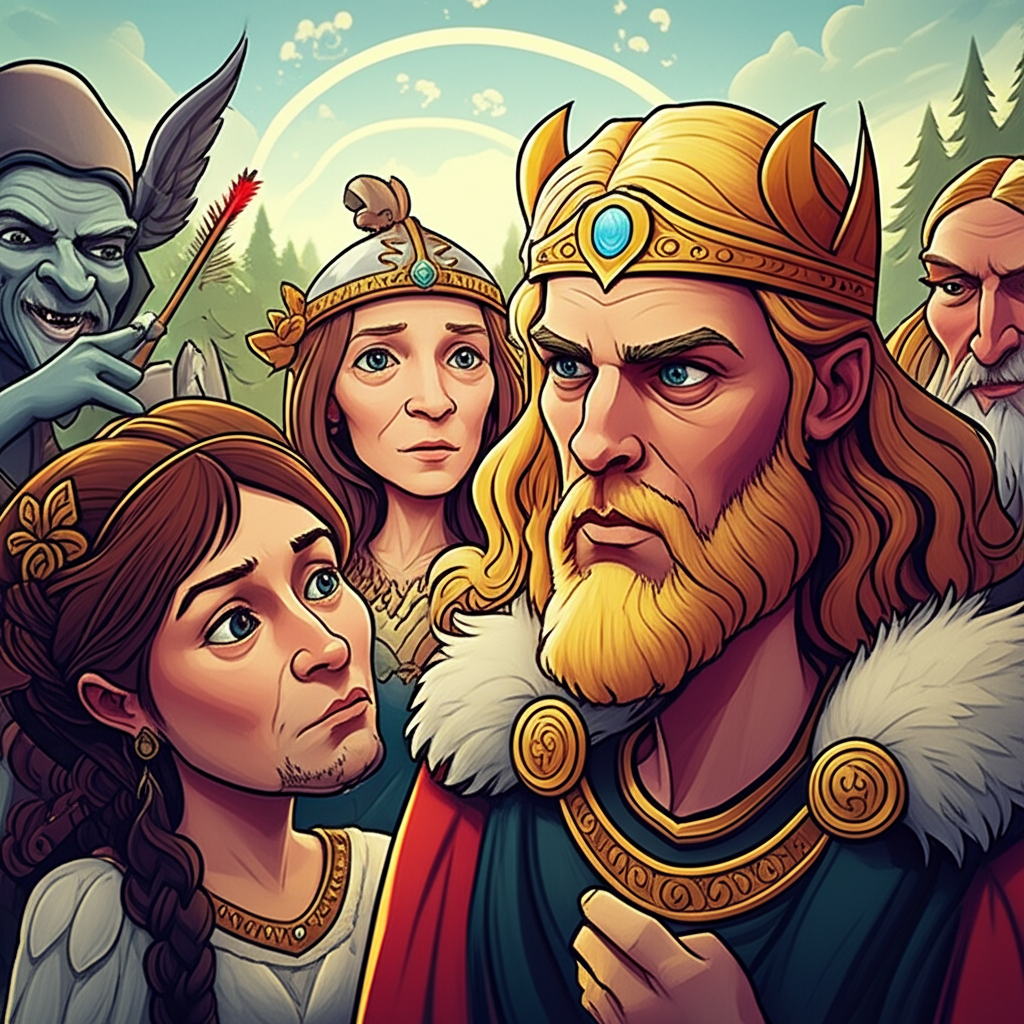
The chilling tale of Baldr’s death is one of the most poignant and pivotal narratives within Norse mythology, a rich tapestry of stories woven by the ancient Germanic peoples of Scandinavia and Iceland. These are traditional accounts, passed down through generations, offering insights into how ancient communities perceived the cosmos, their gods, and the inexorable march of fate. This particular myth, recounted in various Eddic poems and sagas, serves not as a historical event, but as a profound cultural artifact—a story told by ancient people to make sense of their world and the forces they believed governed it.
Origins and Cultural Background
Imagine a world carved by ice and fire, where towering fjords met stormy seas, and dense forests whispered secrets of old. This was the backdrop for the Viking Age, roughly from the late 8th to the mid-11th century, a period when these myths flourished. For the Norse, life was often harsh, shaped by the unforgiving elements and the constant struggle for survival. Their worldview was inherently cyclical, marked by creation and destruction, life and death, culminating in the prophesied twilight of the gods, Ragnarök. They believed in a cosmos comprised of Nine Realms, interconnected by the colossal World Tree, Yggdrasil. Asgard, home of the Æsir gods; Midgard, the realm of humankind; and Vanaheim, the mystical domain of the Vanir gods, were among these vital planes.
People of this era viewed the world through a lens of polytheism, where a pantheon of gods and goddesses, giants, dwarves, and other beings actively influenced their lives. Fate, or wyrd, was a powerful, often inescapable force, yet courage and honor in the face of it were paramount virtues. These myths provided not only entertainment but also a moral framework, explaining natural phenomena, societal roles, and the consequences of actions, both divine and mortal. They were deeply intertwined with their daily lives, their rituals, and their understanding of destiny.
Key Figures and Their Symbolic Attributes
At the heart of this tragedy stands Baldr, the radiant son of Odin and Frigg, the very embodiment of light, beauty, joy, and purity among the Æsir. He was so fair that light seemed to emanate from him, and his presence brought warmth and happiness to all. Baldr represents all that is good and untainted, a symbol of hope and the natural order. His mother, Frigg, the queen of Asgard, is a goddess associated with foreknowledge, motherhood, and protection. Her actions in the story highlight maternal love and the desperate, yet ultimately futile, attempt to defy destiny.
Then there is Loki, the trickster god, a complex figure of both Æsir and Jötunn (giant) lineage. Loki embodies chaos, deception, and the disruptive force that often precipitates major changes. He is not merely evil, but a catalyst, an agent of fate whose actions, however malevolent, drive the narrative towards its inevitable conclusion. Finally, Hǫðr, Baldr’s blind brother, serves as an unwitting tool of fate and Loki’s malice, symbolizing ignorance and vulnerability to manipulation. The figures in these myths are not merely characters but archetypes, representing fundamental aspects of existence and human experience.
The Main Story: A Cosmic Shadow
The peace of Asgard was shattered by a series of ominous dreams plaguing the beloved Baldr. Each night, visions of darkness, cold, and his own demise haunted his slumber. Troubled by these premonitions, Baldr shared his anxieties with his mother, Frigg, and his father, Odin, the Allfather. Understanding the gravity of these dreams, and fearing the loss of her cherished son, Frigg undertook a monumental task. She journeyed across the Nine Realms, pleading with every creature, every plant, every stone, and every element to swear an oath never to harm Baldr. From fire and water to iron and wood, disease and poison, beasts and birds, all pledged their solemn word. All, that is, save for one seemingly insignificant sprig: the mistletoe, which Frigg deemed too young and harmless to extract an oath from. With these vows secured, Baldr became invulnerable, a source of great joy and entertainment for the Æsir, who delighted in throwing weapons and striking him, watching them harmlessly bounce away.
Yet, this merriment was anathema to Loki. The trickster, seething with envy and mischief, observed the gods’ sport. Disguising himself as an old woman, he approached Frigg and cunningly extracted the secret of the mistletoe – the one thing that had not sworn an oath. Armed with this knowledge, Loki sought out the tender mistletoe, fashioned it into a dart, and returned to the celebratory gathering.
He found Hǫðr, Baldr’s blind brother, standing apart from the revelry, unable to participate. With a feigned gesture of kindness, Loki offered Hǫðr the mistletoe dart, guiding his hand and assuring him it would be an honorable contribution to the sport. Unknowing of the deadly potential he held, Hǫðr hurled the dart. It flew true, piercing Baldr’s heart. The god of light, purity, and joy fell dead, a cosmic shadow instantly falling over Asgard. The gods were plunged into unspeakable grief, their laughter silenced, replaced by wails of sorrow.
In their despair, the gods sought a way to retrieve Baldr from Hel, the realm of the dead. Hermod the Swift, another son of Odin, volunteered for the perilous journey, riding Odin’s eight-legged steed, Sleipnir, for nine days and nights. He reached Hel’s gloomy halls and pleaded with the formidable goddess Hel, ruler of the underworld, to release Baldr. Hel, cold and unyielding, agreed on one condition: if every single living thing, and every inanimate object, across all Nine Realms, wept for Baldr, then he would be returned.
The gods sent messengers far and wide, and indeed, all creation mourned Baldr. Trees wept sap, stones wept dew, and every living creature shed tears for the fallen god. But as the messengers returned, they found one lone giantess, named Thökk, sitting in a cave. When asked to weep for Baldr, she scoffed, "Thökk will weep dry tears for Baldr’s pyre. Let Hel hold what she has!" The gods suspected, and it is widely believed, that Thökk was Loki in disguise. Due to this single refusal, the condition was not met, and Baldr remained in Hel, a harbinger of the approaching Ragnarök, the final doom of the gods.
Symbolism and Meaning
To the ancient Norse, Baldr’s death was far more than a simple tragedy; it was a profound commentary on the nature of existence. Baldr, the embodiment of light and goodness, represented the precariousness of purity in a world susceptible to malice. His death symbolized the intrusion of darkness and chaos into the cosmic order, marking the beginning of the end for the Æsir. It reflected the fear that even the most beloved and seemingly protected elements could be undone by the seemingly insignificant, highlighting the idea of a single, overlooked flaw leading to monumental catastrophe, much like the mistletoe.
Frigg’s desperate efforts underscore the power of maternal love and the human (or divine) desire to avert fate, yet ultimately emphasize the belief in wyrd—an inescapable destiny that even the gods cannot fully circumvent. Loki, as the instigator, embodies the destructive power of envy, deception, and unchecked chaos, a necessary force that breaks down the old order to usher in the new. Hǫðr’s blindness symbolizes the dangers of ignorance and being an unwitting pawn in a larger, darker scheme. The refusal to weep, orchestrated by Loki, further illustrates the malicious nature of those who resist empathy and solidarity, thereby solidifying the inevitability of Baldr’s permanent absence and the ensuing cosmic decay. The prophecy, understood through the ancient wisdom often attributed to realms like Vanaheim, speaks to the deep, interconnectedness of all realms and the universal repercussions of such a profound loss. It wasn’t just Asgard that felt the loss, but all of creation, signaling a disruption that touched even the ancient, fertile wisdom of the Vanir.
Modern Perspective
Today, the myth of Baldr’s death continues to resonate, transcending its ancient origins to find new life in contemporary culture. It is a recurring theme in fantasy literature, often exploring concepts of vulnerability, fate, and the trickster archetype. Video games, such as the critically acclaimed God of War series, feature Baldr as a central figure, reinterpreting his story for a modern audience. Marvel Comics and the cinematic Marvel Cinematic Universe have also drawn inspiration from Norse mythology, albeit with significant adaptations, bringing characters like Loki and Thor to global prominence.
Academically, this myth is studied for its rich symbolism, its contribution to comparative mythology, and its insights into the worldview of ancient Scandinavian societies. It offers a powerful narrative about the loss of innocence, the inevitability of tragic fate, and the profound impact of individual actions on the cosmic balance. It reminds us that even in narratives of divine power, there are poignant lessons about human emotions—love, grief, envy, and the struggle against forces beyond our control.
Conclusion
The death of Baldr, woven into the fabric of Norse mythology, stands as a testament to the enduring power of storytelling. It is a cultural narrative, not a belief system, passed down through centuries, offering a window into the imagination and wisdom of ancient peoples. As Muslims, we recognize that only Allah is the true Creator and Sustainer, and we understand that these narratives are human attempts to comprehend the mysteries of existence and the forces that shape our world.
This poignant myth, with its tales of gods and fate, sorrow and deception, serves as a rich part of our shared human cultural heritage. It highlights the universal themes of purity lost, the struggle against destiny, and the profound consequences of actions, reminding us of the timeless nature of imagination and the tradition of storytelling that binds generations across diverse cultures.


