
 fufufafa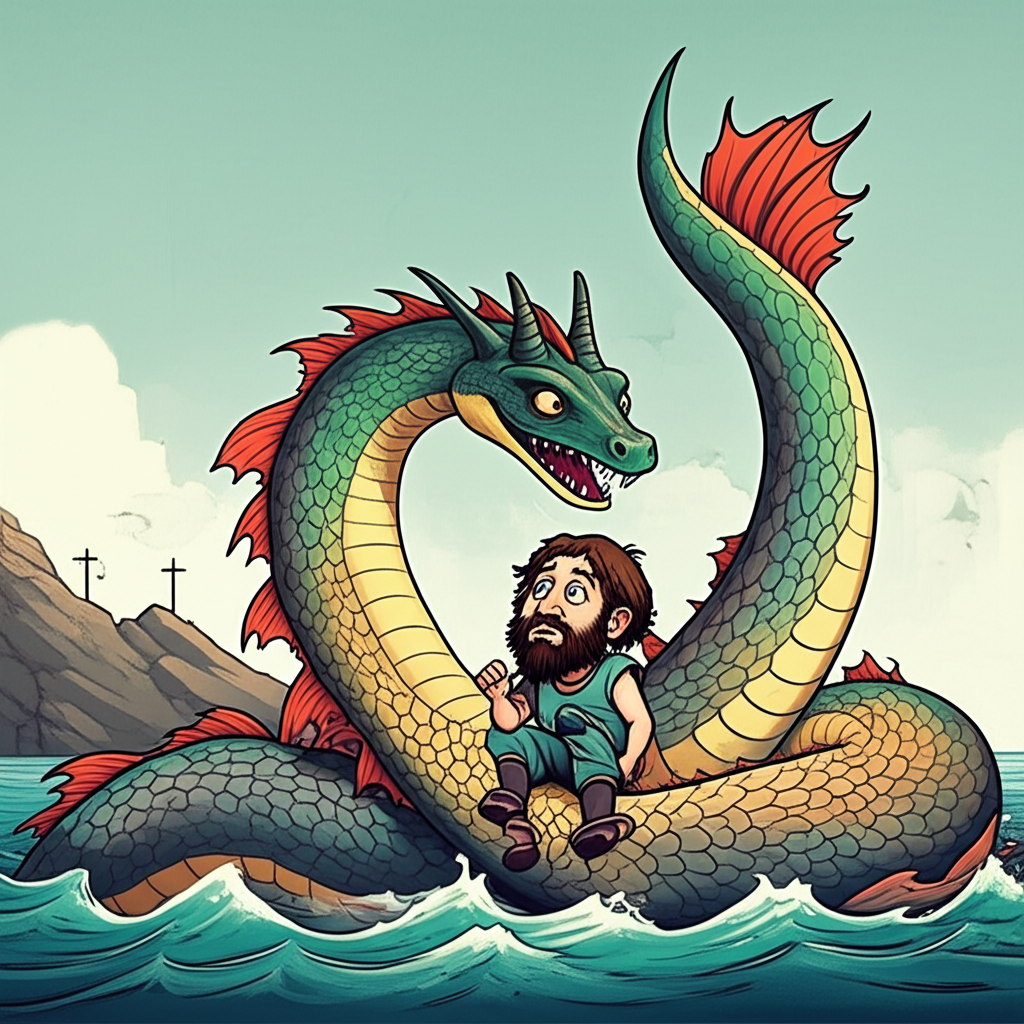
The whispers of ancient sagas, carried on the winds of the North, speak of a world woven from fire and ice, of gods and giants, and of a serpent so vast it girdles the entirety of human existence. This is the realm of Norse mythology, a tapestry of tales born from the rugged landscapes and the harsh realities faced by the Germanic peoples of Scandinavia and their descendants. These are not historical accounts of verifiable events, but rather the profound narratives conceived by ancient minds to grapple with the mysteries of the cosmos, the forces of nature, and the human condition. The story of Jörmungandr, the Midgard Serpent, is one such potent legend, a testament to their worldview and a window into their imagination.
The cultural milieu from which these myths emerged was one shaped by the unforgiving beauty of the Nordic lands. Imagine a society where long, dark winters demanded resilience and communal strength, where the crashing waves of the unforgiving sea were a constant presence, and where the raw power of volcanic activity and glacial shifts were undeniable forces. This was a world where the natural order, often violent and unpredictable, could easily be personified. The people of this era viewed the world as a dynamic, often perilous place, governed by powerful, often capricious, forces. Their stories reflected this understanding, populating their cosmos with deities who embodied aspects of nature and beings who represented fundamental existential threats. The concept of a cosmic struggle, a constant tension between order and chaos, was central to their understanding of reality.
At the heart of our narrative lies Jörmungandr, the World Serpent. This is not a creature of flesh and blood as we understand it, but a monumental entity described as a colossal sea serpent, so immense that it coils around the entire world, its tail clasped in its own jaws. It is one of the monstrous offspring of the trickster god Loki and the giantess Angrboða. Jörmungandr is not depicted as a being with discernible emotions or personal motivations in the human sense. Instead, it embodies a primal, overwhelming force – the boundless, untamed power of the ocean, the relentless cycle of existence, and the ever-present threat of cosmic dissolution. Its symbolic attributes lie in its sheer scale, its encompassing nature, and its ultimate destiny tied to the end of days. It represents the ultimate challenge to the established order, a force of nature so vast that it could threaten to consume all.
The tale of an "encounter" with Jörmungandr is not a single, linear event, but rather a recurring theme woven into the fabric of Norse cosmology, most notably culminating in the epic Ragnarök, the twilight of the gods. Imagine a scene, perhaps during a legendary fishing expedition, where Thor, the mighty god of thunder, renowned for his strength and his hammer Mjolnir, embarks on a perilous journey with the giant Hymir. Their quest is not for mere sustenance, but for an encounter with the unfathomable. They row out into the deepest, most treacherous waters, the waves crashing against their boat, the air thick with the salty spray. Thor, with his immense strength and cunning, baits his hook with the head of a mighty bull. He casts his line into the abyss, and the struggle begins.
The sea churns violently, not with the usual fury of a storm, but with a deeper, more ancient power. The boat is pulled with unimaginable force, groaning under the strain. Thor strains against the line, his knuckles white, his muscles bulging. Then, slowly, majestically, the colossal head of Jörmungandr begins to rise from the depths. It is a sight that would dwarf any mountain, its scales like ancient, weathered stone, its eyes like twin abysses reflecting the primal darkness of the ocean floor. The sheer immensity of the creature is overwhelming, a testament to forces beyond human comprehension. The air crackles with tension, not just from Thor’s struggle, but from the raw, elemental power of the serpent itself. Thor battles the beast, his hammer poised, a desperate defiance against the inevitable. While this specific encounter is often depicted as Thor failing to fully defeat Jörmungandr and instead severing the line, it highlights the sheer magnitude of the serpent and the god’s valiant, yet ultimately limited, might against such a primordial force. The true "encounter" that seals Jörmungandr’s fate, and that of the world, is reserved for Ragnarök.
The symbolism embedded within the myth of Jörmungandr is multifaceted and deeply resonant. Primarily, it represents the immense, often terrifying, power of nature. The ocean, a source of life and sustenance, is also a force capable of immense destruction. Jörmungandr embodies this duality, a reminder of humanity’s vulnerability in the face of natural phenomena. Furthermore, the serpent’s encircling of the world signifies the cyclical nature of existence, the eternal return, and the ultimate inevitability of both creation and destruction. Its role in Ragnarök, the final battle where it poisons the skies and sea, represents the ultimate breakdown of order, the cosmic end that precedes a new beginning. It can also be seen as a personification of chaos, the primal force that constantly threatens to overwhelm the established order of the gods and the mortal realm.
In contemporary interpretations, Jörmungandr continues to fascinate and inspire. In literature, it serves as a powerful antagonist or a symbol of primal chaos. In popular culture, particularly in video games and fantasy novels, its image is frequently employed to represent immense, world-ending threats, often requiring heroes of extraordinary power to confront it. Its visual representation, a colossal serpent encircling the globe, is an enduring and iconic image. In academic circles, Jörmungandr is studied as a significant element of Norse mythology, providing insights into the ancient Scandinavians’ understanding of their world, their fears, and their hopes.
It is crucial to reiterate that the story of Jörmungandr, like all tales from ancient mythologies, is a product of human imagination and cultural storytelling. It is a testament to the ingenuity of ancient peoples in crafting narratives to explain the inexplicable and to explore profound philosophical concepts. As Muslims, we recognize that only Allah (God) is the true Creator and Sustainer of the universe, the ultimate power and authority. These ancient stories, while rich in cultural heritage and imaginative depth, do not hold divine truth. Instead, they offer a glimpse into the diverse ways humanity has sought to understand its place in the cosmos, through the enduring tradition of storytelling and the exploration of our collective cultural heritage. The legend of Jörmungandr, the serpent that encircles the world, remains a compelling example of this enduring human endeavor.


