
 fufufafa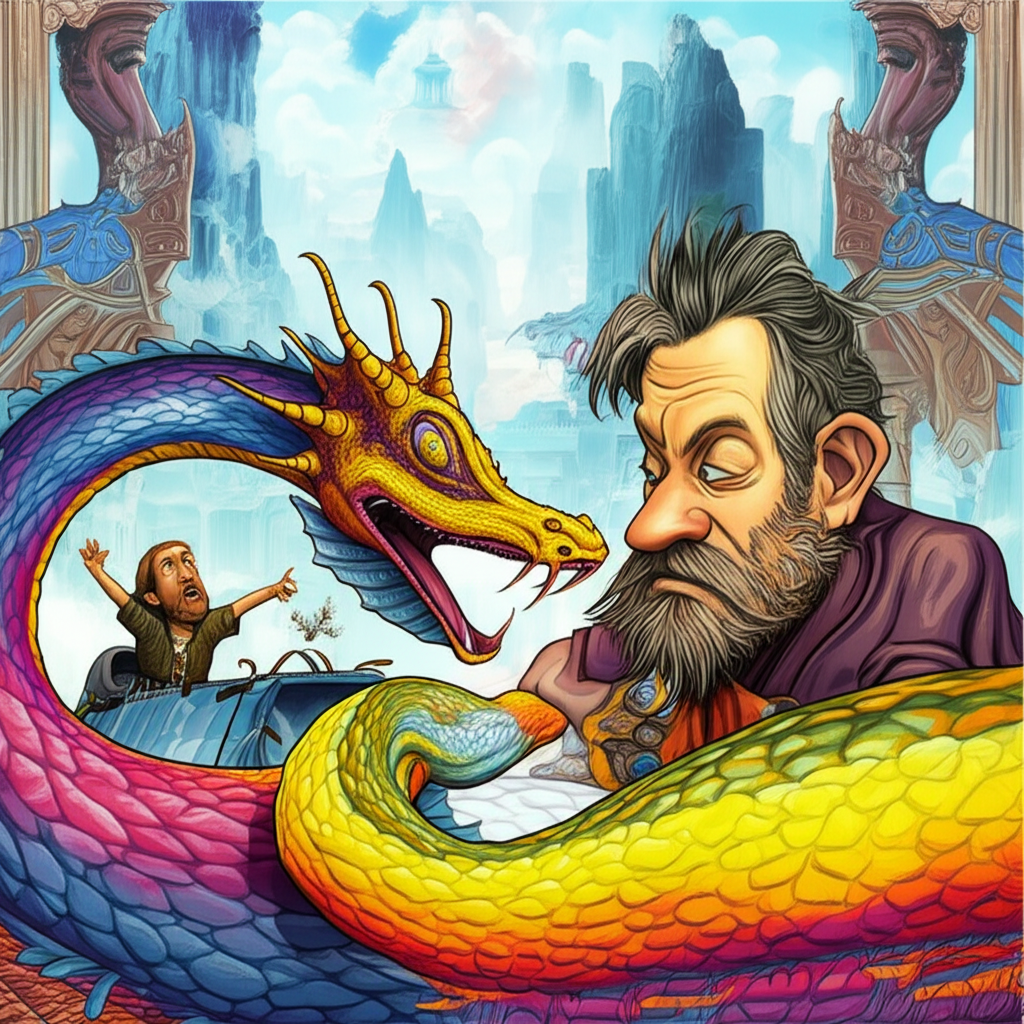
The tales of the Norse gods and their colossal conflicts have echoed through the ages, passed down through generations in the frigid landscapes of Scandinavia. These are not historical accounts in the modern sense, but rather the rich tapestry of myths and legends woven by ancient peoples to explain the world around them, their place within it, and the forces that seemed to govern their lives. Among these potent narratives, few creatures inspire as much awe and dread as Jörmungandr, the Midgard Serpent, a being of immense scale and profound symbolic weight. This article delves into the legend of an encounter with this mythical serpent, exploring its origins, its portrayal, and its enduring resonance, all within the framework of understanding ancient cultural narratives.
The world from which these myths sprang was one shaped by the harsh realities of a northern climate. The Viking Age, roughly from the late 8th to the mid-11th century, was a period of seafaring, exploration, and often, conflict. Life was precarious, dictated by the unpredictable forces of nature – the raging seas, the biting winters, the ever-present threat of famine or plague. In such an environment, it was natural for people to seek explanations for the unfathomable. They envisioned a cosmic order, with realms beyond human comprehension, populated by powerful beings who influenced the mortal world. Their worldview was often dualistic, grappling with forces of creation and destruction, order and chaos. Myths served as a vital tool for understanding this complex existence, offering frameworks for morality, social order, and even a sense of control in a seemingly chaotic universe. The stories of Odin, Thor, Loki, and the giants were not merely entertainment; they were a vital part of their cultural DNA, shaping their understanding of destiny, courage, and the inevitability of certain cosmic events.
At the heart of the Jörmungandr myth lies a creature of unimaginable proportions. Often depicted as a colossal sea serpent, its body is so vast that it encircles the entire mortal realm, Midgard, gripping its own tail within its massive jaws. This serpentine form, with its endless loop, is a potent symbol of the cyclical nature of existence, of beginnings and endings intertwined. It represents the primordial forces of chaos that lie just beyond the edges of the ordered world, a constant threat to the fragile stability maintained by the gods. Jörmungandr is not inherently malevolent in the human sense, but rather a force of nature, an embodiment of the untamed, the boundless, and the destructive potential that underpins creation. Its sheer scale suggests an ancient, primal power, predating even the gods themselves, a fundamental component of the cosmic machinery.
Imagine, if you will, standing on the precipice of the known world, where the churning, grey ocean meets a sky perpetually bruised with clouds. The air bites with a salt-laced chill, and the only sounds are the mournful cry of gulls and the relentless roar of the waves. Here, in the twilight of existence, the ancient skalds would tell of an encounter with Jörmungandr. It is said that in the time before Ragnarök, the twilight of the gods, the great serpent stirred. Not with a sudden lunge, but with a slow, ponderous shifting that sent tremors through the very bedrock of the world. The ocean, its domain, would churn with an unnatural ferocity, waves rising to impossible heights, not in a storm’s fury, but with the deliberate heave of a slumbering giant awakening.
For the ancient Norse, such an event would be a chilling omen. Sailors would speak of seeing the colossal coils of the serpent breach the surface, scales like obsidian glinting dully under the oppressive sky. These were not mere sightings of a large marine creature; these were glimpses of the world’s foundational threat. The serpent’s breath, they might whisper, was the icy wind that whipped across the desolate shores, its hiss the endless murmur of the tide. It was a creature that existed beyond the tangible, its presence felt more than seen, a constant reminder of the immense, indifferent forces that held sway over their lives. A fisherman, lost at sea, might swear he saw an eye, vast as a mountain, open from the depths, reflecting a primal, unknowable darkness. The very act of existing near the serpent’s domain was an encounter, a testament to the precarious balance of their world. The stories would emphasize the sheer futility of direct confrontation, for how does one fight the world itself?
The symbolism embedded within the Jörmungandr myth is multifaceted and deeply rooted in the Norse understanding of the cosmos. The serpent’s encircling of Midgard represents the boundaries of the known world, the limits of order and civilization. Its immensity speaks to the power of the untamed, the wildness of nature that could both sustain and destroy. The serpent’s eventual role in Ragnarök, where it battles Thor, the god of thunder and protector of humanity, signifies the ultimate clash between order and chaos, a cosmic reckoning. This encounter foreshadows the end of the current cycle of existence, a necessary destruction that paves the way for a new beginning. Jörmungandr also embodies the concept of fate and the inescapable cycles of life, death, and rebirth that were central to Norse belief.
In the modern era, Jörmungandr continues to captivate the imagination. It appears as a formidable antagonist in video games, a monstrous foe to be vanquished by heroes. In literature, it serves as a powerful metaphor for overwhelming, seemingly insurmountable challenges or the primal forces that lie dormant within the human psyche. Its image is frequently used to evoke a sense of ancient power and cosmic scale. Scholars of mythology analyze these stories for insights into the values, fears, and worldview of ancient Norse societies, understanding them as crucial components of human cultural heritage.
It is vital to reiterate that the story of Jörmungandr is a traditional narrative, a product of the imaginative minds of ancient peoples seeking to understand their world. As Muslims, we recognize that only Allah (God) is the true Creator and Sustainer of all that exists, possessing absolute power and dominion. These ancient myths, while fascinating from a cultural and historical perspective, do not reflect divine truth. They are powerful examples of human storytelling, a testament to our innate need to create meaning and grapple with the mysteries of existence. The enduring appeal of Jörmungandr lies not in any literal truth, but in its ability to evoke awe, to represent the immense forces that shape our world, and to remind us of the rich tapestry of human imagination that has been woven throughout history, passed down through generations as cultural heritage.


