fufufafa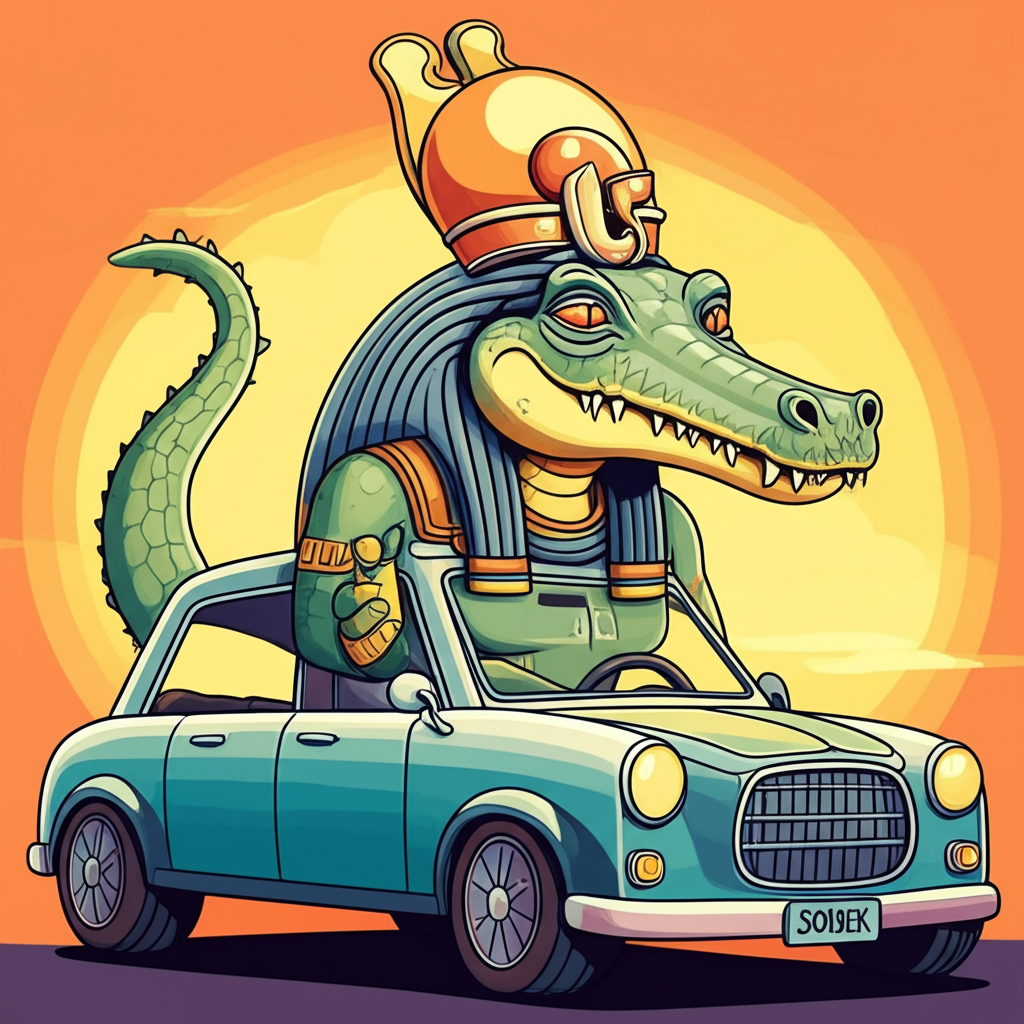
The sands of time, as vast and ancient as the desert itself, cradle a tapestry of stories woven by the hands of our ancestors. Among these, the mythologies of ancient Egypt stand as particularly vibrant threads, offering a window into their understanding of the world, the cosmos, and the forces that governed their lives. One such compelling narrative, steeped in the symbolism of the Nile and the celestial journey, involves the powerful deity Sobek, often depicted as a formidable crocodile, and his role in the Sun’s arduous passage through the underworld each night.
This tale, like countless others from antiquity, was not presented as literal truth by its tellers, but rather as a symbolic explanation of natural phenomena and the underlying order of existence. It emerged from a civilization deeply intertwined with the rhythms of the Nile River, where the annual inundation brought life and prosperity, and the relentless sun dictated the cycles of day and night.
Echoes of the Nile: A World of Sacred Cycles
The cultural milieu from which the myth of Sobek and the Sun’s Night Journey arises is that of ancient Egypt, a civilization that flourished for millennia along the fertile banks of the Nile River. This was a society that viewed the world as a grand, interconnected system, governed by divine forces and cyclical patterns. The Egyptians were keen observers of the natural world, meticulously charting the stars, the flow of the Nile, and the movement of the sun. Their worldview was characterized by a profound sense of order, known as Ma’at, which encompassed truth, justice, balance, and cosmic harmony. Disruptions to this order were often personified as chaotic forces, and the struggle to maintain Ma’at was a central theme in their religious and mythological narratives.
The Nile was the lifeblood of Egypt, a constant source of both sustenance and mystery. Its annual floods, while predictable, were powerful and awe-inspiring, and the creatures that inhabited its waters, particularly the crocodile, held a significant place in their consciousness. The sun, too, was a paramount deity, Ra, whose daily journey across the sky and descent into the underworld was a fundamental aspect of their understanding of existence. It was within this context of cyclical time, divine order, and the potent forces of nature that stories like the one involving Sobek took root.
Sobek: The Mighty Guardian of the Waters
Sobek, the divine entity at the heart of this narrative, is most famously depicted as a crocodile or a man with the head of a crocodile. This powerful imagery immediately connects him to the Nile and its inhabitants. In ancient Egyptian thought, the crocodile was a creature of immense power, embodying both the destructive potential of the river and its life-giving force. Sobek was venerated as a god of the Nile, associated with fertility, protection, and military prowess. He was believed to control the waters, ensuring their abundance and safeguarding against their dangers.
Symbolically, Sobek’s crocodile form represented his formidable strength, his keen senses, and his ability to navigate both the depths of the river and the treacherous waters of the underworld. His association with the sun’s night journey suggests a role as a powerful protector, a guardian against the perils that lurked in the darkness. He was not seen as a benevolent force in the gentle sense, but rather as a potent, awe-inspiring deity whose power was essential for maintaining cosmic order.
The Sun’s Descent: A Battle in the Underworld
As the sun, personified as Ra, completes its daily journey across the sky, it embarks on an even more perilous voyage: its descent into the Duat, the Egyptian underworld. This journey is fraught with danger, a nightly battle against the forces of chaos and darkness that seek to extinguish the sun’s light and plunge the world into eternal night. It is here, in the shadowy depths of the underworld, that Sobek plays a crucial, albeit often perilous, role.
Imagine the sun god Ra, his radiant barge, the Barque of Ra, sailing through the celestial river of the night. As darkness envelops the world, the Barque enters the Duat, a realm teeming with serpents, demons, and the specters of the deceased. The most fearsome adversary that Ra must face each night is Apep, a colossal serpent embodying chaos and darkness, whose sole purpose is to swallow the sun and bring about the end of all creation.
It is during this titanic struggle that Sobek, the formidable crocodile god, intervenes. As Apep lunges towards the Barque of Ra, aiming to consume the sun and shatter the cosmic order, Sobek, with his immense strength and ferocity, confronts the serpent. Picture the powerful jaws of the crocodile closing around the writhing form of Apep, his scaly hide a bulwark against the serpent’s venomous fangs. Sobek’s role is to physically grapple with Apep, to hold him at bay, and to prevent him from reaching the sun. This is not a gentle negotiation; it is a primal, violent struggle, a testament to the raw power required to maintain the balance of the cosmos.
Sobek’s intervention is often depicted as a fierce battle, with the crocodile god tearing at Apep, biting and thrashing, his every movement fueled by the imperative to protect the sun. The other gods and goddesses of the underworld may also assist in this struggle, but Sobek’s role as the primary physical combatant against Apep is often highlighted. Through this nightly ordeal, the sun is preserved, and the promise of a new dawn is secured. The journey through the Duat is a cyclical testament to the ongoing battle between order and chaos, light and darkness, and Sobek stands as a vital guardian in this eternal conflict.
Symbolic Resonance: Order from Chaos, Life from Darkness
To the ancient Egyptians, this narrative held profound symbolic meaning. Sobek’s role in battling Apep represented the essential struggle to maintain Ma’at against the ever-present threat of chaos. The night journey of the sun was a metaphor for the challenges and dangers inherent in existence, and Sobek’s ferocity symbolized the power and vigilance required to overcome them.
The crocodile, a creature that could be both a threat and a provider, embodied the dual nature of the forces that governed their lives. Sobek’s power was not just about brute strength; it also represented a deep understanding of the underworld’s dangers and the ability to navigate them. His victory over Apep each night was a reassurance that order would ultimately prevail, that life would continue, and that the sun would rise again. The story served as a powerful reminder of the importance of vigilance, courage, and the constant effort required to preserve the delicate balance of the cosmos.
Echoes in the Modern Imagination
While no longer part of active religious practice, the myths and legends of ancient Egypt continue to captivate the modern imagination. Sobek, with his striking crocodile form and his role in cosmic battles, has found his way into various forms of popular culture. He appears in literature, video games, and fantasy settings as a powerful, often enigmatic deity or creature, embodying primal strength and a connection to ancient forces. His story, filtered through the lens of modern storytelling, continues to explore themes of good versus evil, the struggle for survival, and the enduring power of ancient narratives. Cultural studies departments and museums worldwide continue to delve into these ancient tales, seeking to understand the worldview and symbolic language of these foundational civilizations.
A Legacy of Storytelling
In conclusion, the story of Sobek and the Sun’s Night Journey is a fascinating example of ancient Egyptian cosmology, a traditional narrative told by people of a bygone era to explain the world around them. It is a testament to their keen observation of nature, their understanding of cyclical time, and their deeply ingrained belief in the importance of cosmic order. As Muslims, we recognize that only Allah is the true Creator and Sustainer of all existence, and that all power and authority reside with Him alone. Yet, we can still appreciate these ancient stories for their cultural heritage, their imaginative power, and their contribution to the rich tapestry of human storytelling. These narratives, passed down through generations, offer valuable insights into the minds of our ancestors and remind us of the enduring human quest to understand our place in the vast and wondrous universe.