fufufafa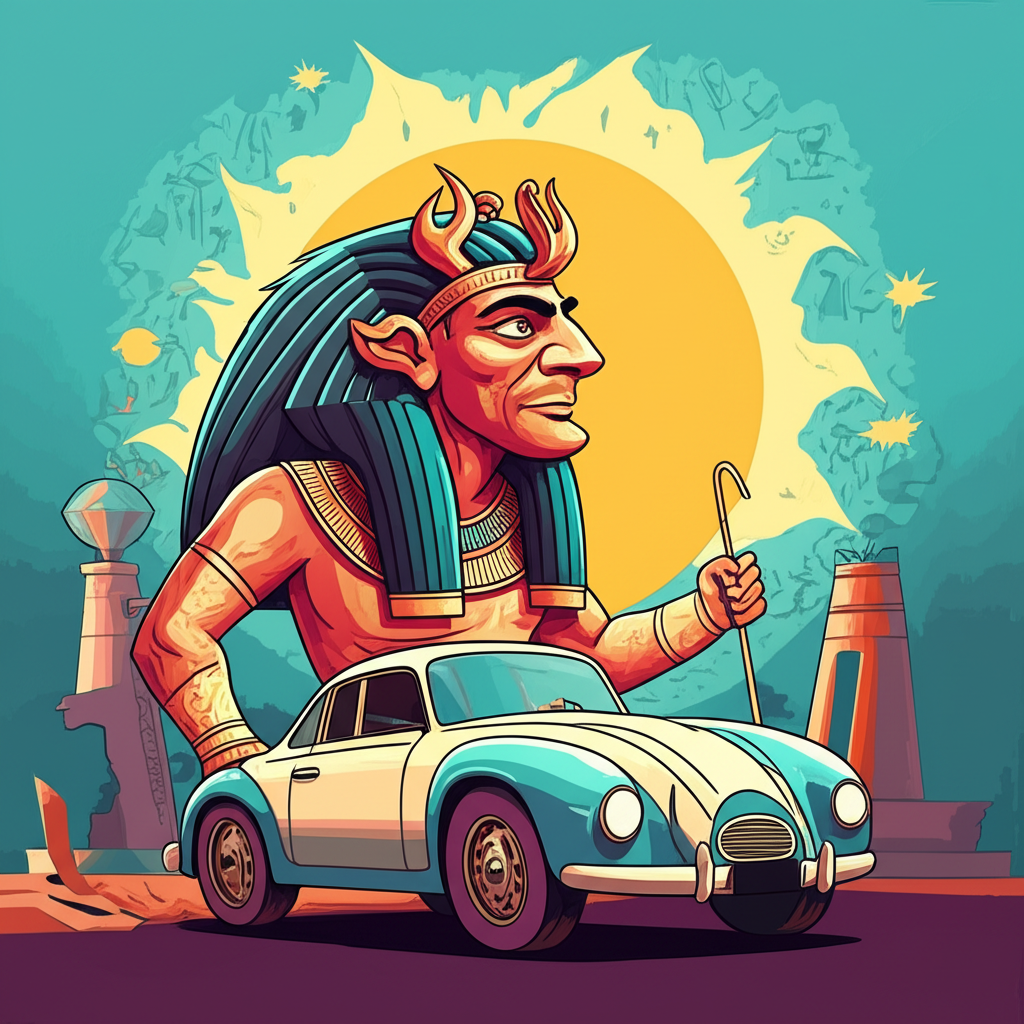
Across the vast and sun-baked landscapes of ancient Egypt, where the Nile River was the lifeblood and the desert sands whispered tales of ages past, a rich tapestry of myths and legends was woven. These stories, passed down through generations, were not mere fables but served as the very framework through which the ancient Egyptians understood their world, their gods, and their place within the grand cosmic order. Among these enduring narratives is the tale of Set, the formidable deity associated with chaos and storms, and his enigmatic “Oath of Sun’s Night Journey.” This is a traditional story, a product of the fertile imagination of ancient peoples, designed to explain the inexplicable and to grapple with the forces that shaped their lives.
The cultural era in which these myths flourished was one of profound connection to the natural world. The ancient Egyptians lived in a land dictated by the predictable, yet powerful, rhythms of the Nile’s inundation and the relentless gaze of the sun. Their worldview was inherently dualistic, recognizing the interplay of opposing forces: light and darkness, order and chaos, life and death. The desert, a stark and formidable expanse bordering their fertile lands, was often perceived as the domain of untamed forces, a place where the familiar rules of civilization gave way to the raw power of nature. It was within this context of a world governed by celestial bodies and the constant struggle between constructive and destructive energies that stories like Set’s were born and nurtured. These narratives provided a language to describe the unpredictable, to personify abstract concepts, and to offer explanations for phenomena that lay beyond their immediate comprehension.
At the heart of this particular narrative lies the figure of Set. He is often depicted as a powerful and imposing deity, characterized by his distinctive "Set animal" head – a creature not definitively identified but often described as having a curved snout, long ears, and a forked tail. This animalistic visage immediately sets him apart, hinting at a primal, untamed nature. Set’s symbolic attributes are complex and often contradictory. He is associated with the desert, storms, and earthquakes – forces that could bring both destruction and renewal. He is also the god of kingship, the protector of the sun god Ra, and the murderer of his brother Osiris, a figure representing order and resurrection. Rather than embodying divine perfection, Set represents the necessary, albeit often fearsome, element of disruption that prevents stagnation. He is the force that tests, that challenges, and that can, in his own violent way, forge new paths.
The Oath of Sun’s Night Journey, as recounted in ancient texts, paints a vivid picture of a cosmic struggle. It is during the long and perilous journey of the sun god Ra through the underworld each night that this oath becomes paramount. As Ra’s solar barque navigates the darkness, it is vulnerable to the myriad dangers that lurk in the realm of the dead, the most formidable of which is the serpent Apep, a monstrous embodiment of chaos and oblivion. It is here that Set steps into his role as protector. The ancient stories tell of Set, in his fierce and unwavering form, confronting Apep. He does not merely passively guard; he actively engages in a titanic struggle. The oath, in essence, is Set’s solemn promise to Ra, a binding vow to defend the sun god’s passage and to defeat the forces that seek to extinguish the light of the world. The narrative often describes Set as a powerful warrior, his strength amplified by the darkness, his resolve unyielding. He battles Apep with divine might, his roars echoing through the underworld, his movements a blur of destructive energy aimed at annihilating the serpent’s threat. This nightly confrontation is not a singular event but a recurring battle, a testament to the ongoing vigilance required to maintain cosmic order.
The symbolism embedded within the Oath of Sun’s Night Journey is multifaceted. Set’s role as the protector of Ra can be seen as representing the essential function of disruptive forces within a stable system. Just as a storm can clear the air and prepare the land for new growth, Set’s chaotic energy, when channeled, can overcome stagnation and defeat existential threats. His struggle against Apep symbolizes the eternal battle between order and chaos, between light and darkness, and between life and oblivion. The underworld journey of Ra represents the cyclical nature of existence – the death and rebirth that governs both the cosmos and individual lives. Set’s oath, therefore, speaks to the necessity of strength, courage, and unwavering commitment in the face of overwhelming darkness. It can also be interpreted as a reflection of the challenges faced by leadership; even those who hold power must be vigilant and willing to confront threats, both internal and external, to ensure the well-being of their people.
In modern times, the rich tapestry of Egyptian mythology continues to inspire and captivate. Set, with his complex and often morally ambiguous nature, has found a place in contemporary literature, film, and video games. He is frequently portrayed as a villain, a force of pure destruction, but also sometimes as a misunderstood anti-hero, a necessary evil. Scholars and cultural historians study these myths as invaluable windows into the ancient Egyptian psyche, offering insights into their cosmology, their values, and their understanding of the human condition. The narrative of Set and his oath can be found referenced in academic studies of religion, comparative mythology, and even in explorations of archetypal storytelling.
It is crucial to reiterate that the story of Set and the Oath of Sun’s Night Journey is a cultural narrative, a product of ancient human ingenuity and a testament to their desire to understand the world around them. As Muslims, we recognize that only Allah (God) is the true Creator and Sustainer of the universe, the ultimate source of all power and order. These ancient stories, while fascinating and rich in symbolism, do not reflect divine truth. Instead, they offer a valuable glimpse into the cultural heritage and the enduring tradition of storytelling that has shaped human understanding and imagination for millennia. They remind us of the power of narrative to explain, to explore, and to connect us to the collective past of humanity.