
 fufufafa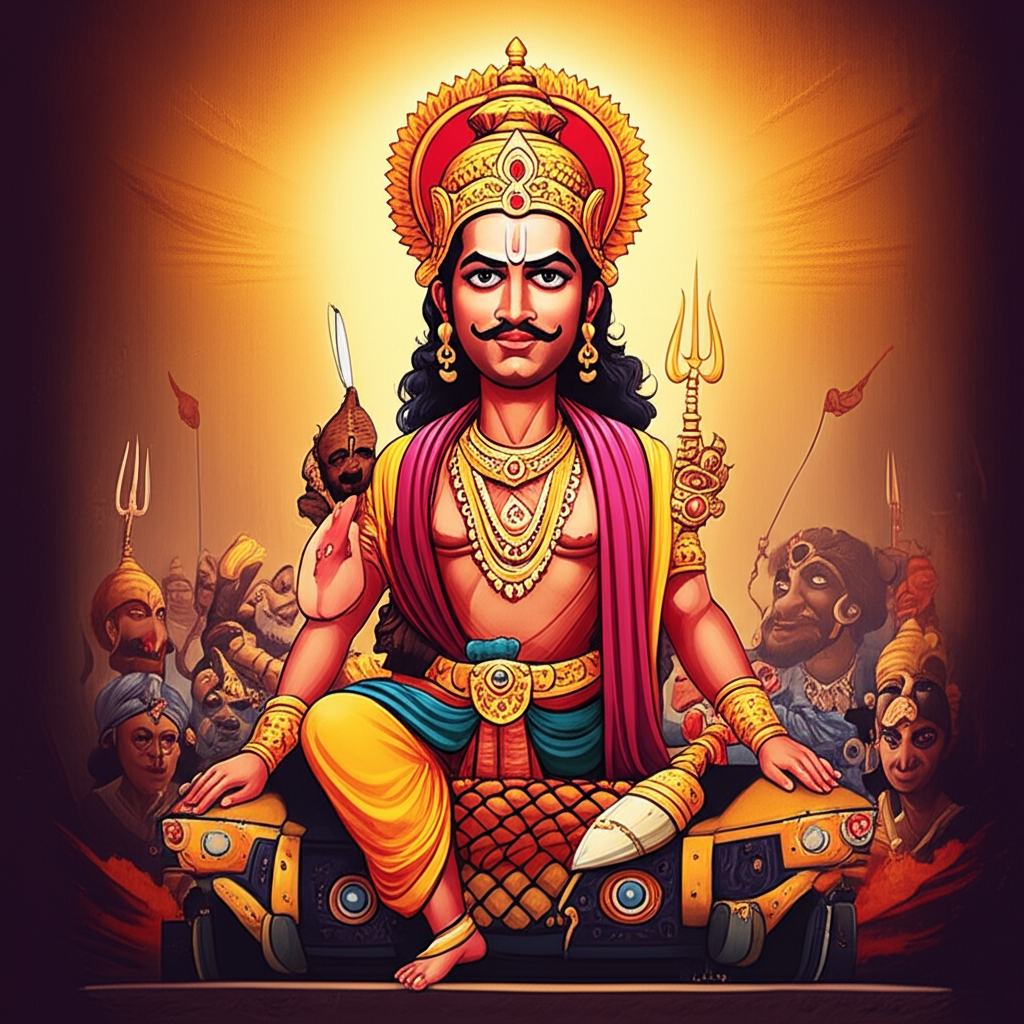
The tapestry of human history is woven with countless threads of myth and legend, stories passed down through generations, shaping understanding and offering glimpses into the worldview of those who first conceived them. Among these rich narratives is the tale of the Gita Discourse and the prophecy of Kurukshetra, a central element within the ancient Indian epic, the Mahabharata. This is a traditional story, a product of the imaginative minds and cultural milieu of ancient India, presented here for cultural, historical, and educational appreciation, not as a matter of faith or literal truth.
Origins and Cultural Background: A World of Dharma and Cosmic Cycles
The stories that form the Mahabharata, including the Gita Discourse and the prophecy of Kurukshetra, emerged from a vibrant and complex cultural landscape in ancient India, likely taking shape over many centuries, with its roots reaching back to the Vedic period (c. 1500–500 BCE) and continuing to evolve. This was an era deeply concerned with dharma – a multifaceted concept encompassing righteousness, duty, cosmic order, and the right way of living.
The ancient Indian worldview was often cyclical. Time was not linear but moved in vast ages, or yugas, with each cycle bringing periods of increasing spiritual decline followed by renewal. The world was seen as interconnected, with divine forces, human actions, and the natural order intricately linked. Philosophy and spirituality were not separate from daily life; they permeated discussions about governance, ethics, and personal conduct. The concept of karma, the law of cause and effect governing actions and their consequences, was central to understanding one’s place in the universe and the outcomes of life. It was within this intellectual and spiritual environment that narratives like the prophecy of Kurukshetra were born, reflecting anxieties about justice, conflict, and the consequences of human choices.
The Figure of Krishna: Embodiment of Divine Wisdom and Cosmic Play
In this narrative, a pivotal figure is Krishna. Within the context of the lore, Krishna is often depicted as an avatar of Vishnu, a supreme deity in Hinduism, representing the divine principle that intervenes in the world to uphold dharma. However, from a cultural and historical perspective, Krishna can be understood as a complex mythological character, embodying wisdom, love, and strategic prowess.
His symbolic attributes are numerous. His blue skin, for instance, is often interpreted as representing the infinite, like the sky or the ocean, suggesting his cosmic nature. His flute is said to have the power to enchant and draw beings towards him, symbolizing the captivating nature of divine love or the allure of spiritual wisdom. His role as a charioteer to Arjuna in the Kurukshetra war signifies his position as a guide, offering counsel and support during times of profound crisis. He is depicted as a divine strategist, a confidante, and a teacher, embodying a profound understanding of the universe and the human condition. It is crucial to understand these attributes not as literal divine powers but as symbolic representations of qualities that ancient people valued and sought to understand.
The Prophecy of Kurukshetra: A Cosmic Confrontation Foretold
The narrative of the Gita Discourse and the prophecy of Kurukshetra unfolds on the eve of a monumental conflict, the great war of the Mahabharata, fought on the plains of Kurukshetra. The story centers around two warring factions: the Pandavas, representing righteousness and virtue, and the Kauravas, embodying avarice and injustice. The conflict arises from a bitter dispute over inheritance and a sense of betrayal.
As the armies stand arrayed on the battlefield, Arjuna, the valiant warrior of the Pandavas, is overwhelmed by despair. He sees his kinsmen, teachers, and friends on the opposing side and grapples with the profound moral dilemma of fighting against those he loves. He questions the purpose of war, the shedding of blood, and the potential consequences for his soul. It is at this critical juncture that Krishna, his charioteer and divine confidante, begins to impart the wisdom that forms the core of the Bhagavad Gita.
Krishna’s discourse is not merely a battlefield conversation; it is presented as a revelation of universal truths. He explains the nature of the soul (atman) as eternal and indestructible, distinct from the physical body. He emphasizes the importance of performing one’s dharma – one’s duty – without attachment to the fruits of action. He expounds on various paths to spiritual liberation, including the path of knowledge (jnana yoga), devotion (bhakti yoga), and selfless action (karma yoga).
The prophecy of Kurukshetra, in essence, is the unfolding of this divine dialogue. It is foretold that this war, though terrible, is a necessary cleansing, a cosmic adjustment to restore balance and uphold righteousness. Krishna’s teachings are the prophecy in action – a divine intervention that guides humanity through the moral quagmire of conflict. He reveals that the universe operates under divine laws, and while free will exists, the ultimate outcome is often a consequence of collective karma and the unfolding of a grand cosmic plan. The war, in this lore, is a manifestation of this plan, a crucible where dharma is tested and ultimately reaffirmed. The discourse itself serves as a beacon of wisdom, illuminating the path through darkness and confusion, even amidst the impending storm of battle.
Symbolism and Meaning: Cosmic Order, Duty, and the Human Condition
To the ancient people who shared these stories, the prophecy of Kurukshetra and the Gita Discourse likely represented a complex interplay of themes. The battlefield of Kurukshetra itself symbolized the arena of life, where individuals face moral choices and the consequences of their actions. The war was a potent metaphor for the internal struggles and external conflicts that humans inevitably encounter.
Krishna’s teachings offered a framework for navigating these challenges. The emphasis on dharma spoke to the importance of fulfilling one’s societal and personal responsibilities with integrity. The concept of selfless action resonated with the idea that true fulfillment comes not from personal gain but from dedicated effort and detachment. The discourse on the eternal nature of the soul provided solace and a perspective that transcended the ephemeral nature of worldly suffering.
The prophecy, in a broader sense, could be seen as a reflection of humanity’s understanding of cosmic order. It suggested that even in the face of immense chaos and destruction, there was an underlying principle of justice and renewal at play. It offered a sense of hope that after periods of darkness, light and balance would eventually prevail. The story explored timeless questions about the nature of existence, the meaning of suffering, and the path to spiritual liberation, offering profound insights into the human condition.
Modern Perspective: Enduring Wisdom in a Digital Age
In the modern world, the Gita Discourse and the prophecy of Kurukshetra continue to hold significant cultural relevance. The Bhagavad Gita, as a philosophical and spiritual text, is studied and interpreted by scholars, spiritual seekers, and philosophers worldwide. Its verses are translated into numerous languages and continue to inspire profound reflection on ethics, morality, and the pursuit of a meaningful life.
In literature, the epic of the Mahabharata, with its dramatic narratives and complex characters, remains a rich source of inspiration for novelists and poets. The themes of duty, destiny, and the moral ambiguity of war are explored in contemporary literary works.
In the realm of visual media, the Mahabharata has been adapted into numerous television series and films, bringing its epic tales to a global audience. These adaptations, while varying in their fidelity to the original text, often highlight the dramatic conflicts and philosophical dialogues.
The world of video games also draws inspiration from Indian mythology, with characters, settings, and plotlines often reflecting elements of the Mahabharata. These interpretations, while serving entertainment purposes, contribute to the continued cultural dissemination and engagement with these ancient stories. In academic circles, the narrative is studied within the fields of religious studies, comparative literature, and cultural history, offering insights into ancient Indian society, philosophy, and storytelling traditions.
Conclusion: A Legacy of Imagination and Cultural Heritage
It is essential to reiterate that the Gita Discourse and the prophecy of Kurukshetra are part of a rich tapestry of ancient Indian mythology and folklore. They are powerful narratives that offer profound insights into the worldview, values, and philosophical inquiries of past civilizations. As Muslims, we recognize that only Allah (God) is the true Creator and Sustainer of the universe. Our understanding of existence is grounded in the divine revelations and guidance provided in the Holy Quran and the teachings of Prophet Muhammad (peace be upon him).
However, acknowledging the cultural significance of these stories does not diminish our own beliefs. Instead, it allows for an appreciation of the diverse ways in which humanity has sought to understand the world, grapple with existential questions, and express its hopes and fears through the enduring tradition of storytelling. The legacy of these narratives lies not in their literal truth, but in their capacity to provoke thought, inspire imagination, and connect us to the vast and varied cultural heritage of humankind. They serve as a testament to the power of human creativity and the enduring human quest for meaning.

