fufufafa
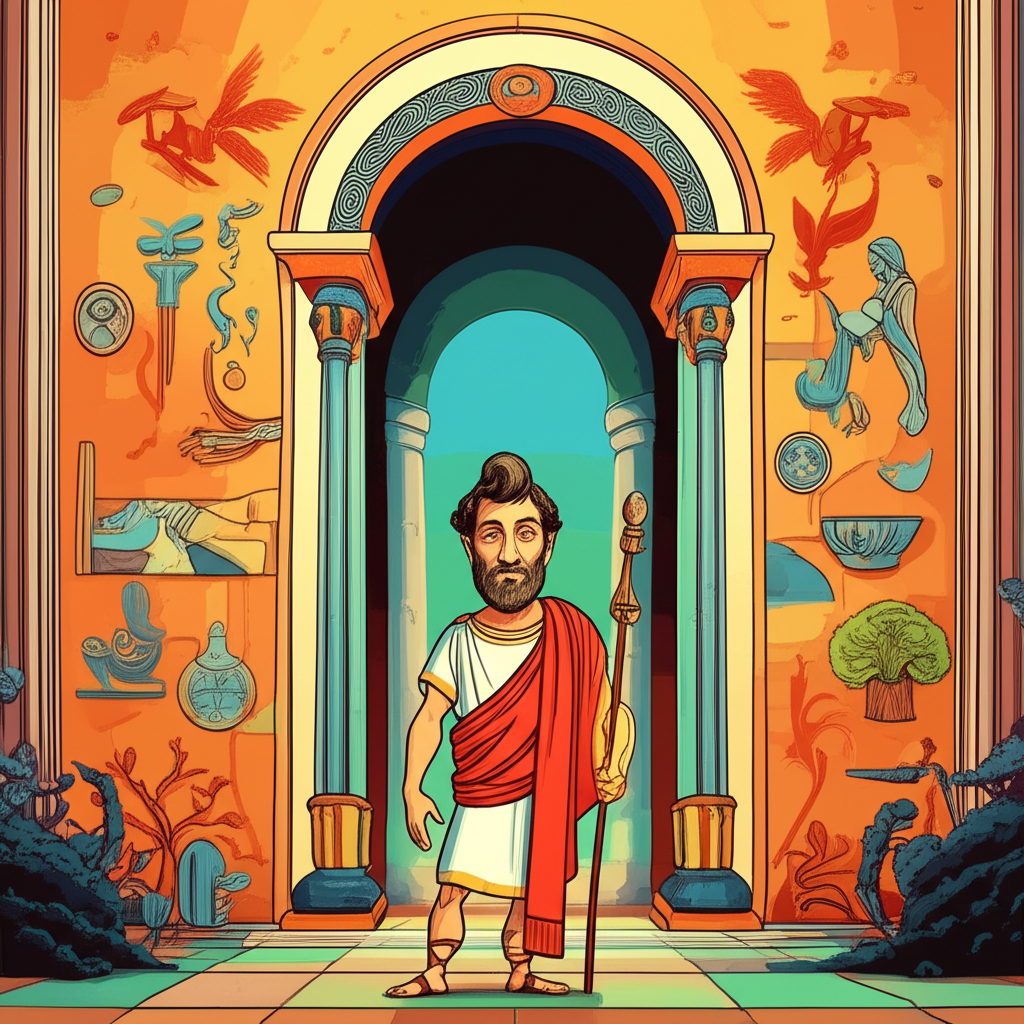
Across the sun-drenched lands and azure seas of ancient Greece, a tapestry of tales was woven by the vibrant imaginations of its people. These were stories of powerful gods and goddesses, heroic mortals, and mythical creatures, told and retold through generations around crackling hearths and in bustling agoras. One such traditional story, born from the depths of this rich cultural heritage, is the myth we explore today: "The Lyre: Curse of Hera." It is a narrative that, like countless others from its era, served not as a decree of truth but as a reflection of human understanding, morality, and the perceived cosmic order of their world.
Origins and Cultural Background
This particular myth, "The Lyre: Curse of Hera," emerges from the heart of ancient Greek mythology, a collection of stories that flourished from the Mycenaean civilization through the classical period, roughly from the 16th century BCE to the 4th century CE. During this extensive era, Greek society was characterized by independent city-states, a robust oral tradition, and a deep reverence for a pantheon of anthropomorphic deities who resided on Mount Olympus.
The people of ancient Greece viewed the world as a complex interplay between human endeavor and divine will. They believed their gods were not distant, ethereal beings, but powerful entities with human emotions, flaws, and motivations – love, jealousy, wrath, and compassion. Natural phenomena, societal order, and individual fates were often attributed to the whims or interventions of these gods. Myths served as their explanations for the inexplicable, their moral compass, their historical records, and their entertainment. They were a means to understand the human condition, the dangers of hubris (excessive pride), the importance of respecting divine power, and the intricate dance between destiny and free will. Music, art, and poetry were highly valued, often seen as gifts from the gods, making the concept of a cursed musical instrument a potent and tragic idea.
Character Description: Hera and the Lyre
At the heart of our story stands Hera, the formidable Queen of the Olympian gods. As the wife of Zeus, the king of the gods, Hera was revered as the goddess of marriage, women, childbirth, and family. She possessed immense power and authority, often depicted as a majestic and stern figure, adorned with a diadem and carrying a scepter. However, Hera was equally famed for her intense jealousy and vengeful nature, particularly towards Zeus’s numerous mortal and immortal lovers and their offspring. Her wrath was legendary, often manifesting in elaborate, often cruel, punishments designed to torment those who incurred her displeasure. To the ancient Greeks, Hera symbolized the powerful, sometimes destructive, aspects of loyalty, pride, and the fierce protection of one’s domain.
Central to this narrative is also the lyre, a stringed musical instrument profoundly significant in ancient Greek culture. Often associated with the god Apollo, patron of music, poetry, and prophecy, and also famously invented by the cunning Hermes, the lyre symbolized harmony, beauty, divine inspiration, and the power of art to stir the soul. Its melodic tones were believed to soothe, inspire, and even move the very fabric of the cosmos. In the context of "The Lyre: Curse of Hera," this instrument transforms from a symbol of divine gift and mortal artistry into an unwitting conduit for divine retribution, highlighting the double-edged nature of talent when faced with Olympian jealousy.
The Main Story: Lyron’s Discordant Gift
In a secluded valley, where olive trees whispered ancient secrets to the passing winds and streams hummed a ceaseless melody, lived a young man named Lyron. He was neither a demigod nor a king, but a humble shepherd blessed with an extraordinary gift: music. His lyre, carved from a sturdy ash tree and strung with the finest gut, was more than an instrument; it was an extension of his soul. When Lyron played, the very air seemed to hold its breath. Birds paused their songs to listen, nymphs emerged from their hidden groves, and even the wild beasts of the forest lay still, captivated by the pure, unblemished beauty of his melodies. Mortals from neighboring villages flocked to hear him, calling his music a gift from the gods, comparing his skill to that of Apollo himself.
Such praise, however, carries a dangerous echo in the halls of Olympus, especially when it inadvertently slights the jealous queen. It was not Lyron’s intention to offend, but his growing fame, the whispers that his music rivaled divine artistry, reached the ears of Hera. She heard tales of mortals moved to tears, of hearts uplifted, and even of Zeus himself, her perpetually wandering husband, pausing to listen to the mortal’s ethereal notes during his earthly excursions. To Hera, this was not merely a mortal’s talent; it was a challenge, a testament to beauty and joy that blossomed outside her control, another perceived slight against her divine sovereignty. She saw it as a subtle mockery, a reminder of the world’s constant allure, threatening the sanctity of her domain.
Her fury, cold and calculating, began to brew. She would not destroy the boy, for his talent was indeed a marvel, but she would twist it, corrupt its essence. Hera descended from Olympus, cloaked in shadow, and found Lyron asleep beside his cherished lyre, exhausted from a day of playing for an enraptured crowd. With a whisper barely discernible, she laid her curse upon the instrument. It was not a curse of silence, nor of destruction. Instead, she willed that from that day forward, the lyre would still produce music of unparalleled beauty, but its effect would be subtly, insidiously poisoned. The melodies would no longer bring harmony and joy; they would sow discord, ignite forgotten grievances, stir bitterness, and awaken the darkest impulses in the hearts of those who listened. For Lyron himself, the music would become a mirror, reflecting his deepest sorrows and magnifying his every regret.
Unaware of the divine intervention, Lyron awoke the next morning, his heart brimming with the desire to share his gift. He played for his family, and where once there was laughter, now came sharp words, old quarrels re-ignited, and a strange, cold tension. He played for his beloved, and her eyes, once filled with adoration, now held suspicion and resentment. He played for the villagers, and what began as a joyous gathering quickly devolved into arguments, accusations, and even violence. Fear replaced admiration in their eyes as they pointed at him, at his lyre, declaring it an instrument of ill omen, a bringer of strife.
Lyron, heartbroken and bewildered, could not comprehend the transformation. His music still sounded beautiful to his own ears, yet its effect was undeniably devastating. He tried to change his tunes, to play only melodies of peace, but the curse was absolute. The lyre, once his greatest joy, became his torment. He watched as his world crumbled, his loved ones turning away, his reputation tarnishing. The very gift that had defined him now made him an outcast, a harbinger of sorrow. In his despair, he could hear the lyre’s notes echoing his own profound loneliness and the crushing weight of his unwanted power. Eventually, Lyron, a broken figure, abandoned his lyre by a desolate cliff, choosing silence and solitude over the unintentional destruction wrought by Hera’s cruel curse. The once-celebrated musician vanished from memory, a tragic testament to the perils of attracting a goddess’s wrath.
Symbolism and Meaning
To the ancient Greeks, the myth of "The Lyre: Curse of Hera" would have resonated with several profound meanings. Foremost, it served as a cautionary tale against hubris, even unintentional. Lyron’s talent, though pure, inadvertently drew comparisons to the gods, a dangerous territory in a polytheistic worldview. It underscored the belief that mortal excellence, when perceived as a challenge to divine authority, could lead to severe consequences.
Hera’s curse symbolized the unpredictable and often destructive nature of divine power and human jealousy. Her actions highlighted the idea that the gods, despite their omnipotence, were capable of human-like flaws, reflecting the complexities and imperfections of human nature itself. The twisted effect of the lyre’s music represented how even the purest of intentions or the most beautiful of gifts could be corrupted, becoming a source of suffering rather than joy. It also spoke to the ancient Greek understanding of fate and the inescapable nature of a divine decree. Lyron’s inability to break the curse emphasized the futility of defying the gods once their will was set in motion. Ultimately, the story explored the fragility of mortal happiness and the ever-present shadow of divine intervention in human lives, urging respect and humility towards the Olympian powers.
Modern Perspective
Today, "The Lyre: Curse of Hera" continues to offer rich ground for interpretation and reflection, albeit through a different lens. In modern literature, movies, and games, themes of divine curses, tragic heroes, and the corruption of beauty are frequently explored. One can see echoes of Lyron’s fate in characters who possess extraordinary gifts that ultimately lead to their downfall, or in narratives where power, even artistic power, comes with a heavy price. From the cursed artifacts in fantasy novels to the tragic figures in superhero comics who struggle with their overwhelming abilities, the myth’s core idea—that a source of great beauty or power can be twisted into an instrument of sorrow—remains potent.
Culturally, this myth contributes to our understanding of the enduring appeal of Greek mythology, not as historical truth, but as a rich repository of human archetypes and universal themes. It is studied in academic settings for its insights into ancient Greek psychology, societal values, and religious beliefs. The story serves as a reminder of the power of art to both uplift and, when wielded unwisely or cursed by external forces, to sow discord. It invites us to consider the ethical responsibilities that come with talent and influence, and to reflect on the destructive nature of unchecked envy, whether divine or human.
Conclusion
"The Lyre: Curse of Hera" stands as a testament to the profound imagination and storytelling prowess of the ancient Greeks. It is a traditional cultural narrative, a product of a specific time and worldview, and is not presented as a historical or theological truth to be believed. As Muslims, we recognize that Allah alone is the true Creator and Sustainer of the universe, and we hold firm to the belief in His absolute oneness and unique perfection, far removed from the anthropomorphic deities of ancient myths.
However, appreciating such stories like that of Lyron and his cursed lyre allows us to connect with the rich tapestry of human cultural heritage. It reminds us of the universal human capacity for imagination, for grappling with fundamental questions about fate, morality, and the forces that shape our lives. These ancient myths, though products of human creativity and not divine revelation, continue to teach us about the human spirit, the enduring power of storytelling, and the diverse ways in which societies have sought to understand themselves and the world around them throughout history.