fufufafa
This article delves into the mythical narrative of Nuada and the Eternal Temple, a story rooted in the rich soil of ancient Irish mythology, particularly concerning the pantheon known as the Tuatha Dé Danann. It is imperative to understand from the outset that this is a traditional story, a product of the human imagination passed down by ancient peoples, not a factual account or a basis for belief. Our exploration is purely for cultural, historical, and educational understanding, appreciating the narrative as a testament to the storytelling traditions of a bygone era.
Origins and Cultural Background: Echoes of an Elder World
The legend of Nuada emerges from the pre-Christian Celtic societies of Ireland, a period shrouded in the mists of antiquity. For these ancient people, the world was a vibrant, animated tapestry, brimming with spiritual forces and interconnected realms. Nature was not merely a backdrop but a living entity, imbued with a sacred presence. Rivers, mountains, and forests held their own spirits and mysteries, and the cycles of the sun and moon were seen as powerful cosmic rhythms governing life and death.
In this worldview, the lines between the mundane and the magical were fluid. The Otherworld, a parallel dimension often accessed through natural features like burial mounds or lakes, was believed to be home to powerful beings—gods, goddesses, and ancestral spirits. The Tuatha Dé Danann, the "People of the Goddess Danu," were regarded as divine ancestors or god-like figures who ruled Ireland before the arrival of humanity, possessing immense magical abilities and profound wisdom. Their stories often reflected the aspirations, fears, and moral codes of the communities that shared them, intertwining tales of heroic deeds with spiritual quests and the perennial struggle between order and chaos.
Nuada and the Whispers of the Eternal Temple
At the heart of this particular narrative stands Nuada, a central figure among the Tuatha Dé Danann. He is depicted as their first king, a formidable warrior, and a just ruler, embodying the ideal sovereignty. His most distinguishing characteristic, and the pivot around which much of his story turns, is his epithet: Nuada Airgetlám, meaning "Nuada of the Silver Hand." This attribute is not merely a descriptive detail but a profound symbol of resilience, divine craftsmanship, and the journey of overcoming adversity. It speaks to a society that valued physical perfection in its leaders, yet also celebrated the ingenuity and power of restoration.
The "Eternal Temple," as conceived within this narrative, is not a character but a mythical location of profound significance. It is portrayed as a hidden sanctuary, a place beyond mortal comprehension, a nexus of ultimate wisdom, healing, and divine power. It symbolizes the unattainable ideal, the source of true sovereignty and spiritual completeness, guarded by ancient magic and accessible only to those deemed worthy through trials of character and spirit. It represents the ultimate destination for a soul seeking not just physical wholeness, but profound spiritual and existential understanding.
The King, The Loss, and The Quest for Wholeness
The saga of Nuada begins with the arrival of the Tuatha Dé Danann in Ireland, their journey from the four mythical cities of Falias, Gorias, Murias, and Findias, bringing with them powerful magical artifacts. Upon their arrival, they faced the Fir Bolg, the previous inhabitants, in the epic First Battle of Mag Tuired. It was in the throes of this brutal conflict, as Nuada valiantly led his people, that tragedy struck. In a fierce duel with the Fir Bolg champion, Sreng, Nuada’s arm was severed at the shoulder.
According to the ancient laws of the Tuatha Dé Danann, a king had to be physically perfect, unblemished, and whole. Nuada’s disfigurement rendered him unfit to rule, leading to his temporary deposition. Bres, a half-Fomorian prince, was chosen as a replacement, but his reign proved to be tyrannical and oppressive, plunging the land into hardship.
During this period of darkness, Nuada’s resilience shone. Dian Cécht, the skilled physician of the Tuatha Dé Danann, fashioned him a magnificent arm of gleaming silver, a marvel of divine artistry. This new limb was so perfectly articulated that Nuada could wield a sword and shield with his customary skill, earning him the enduring epithet, Nuada Airgetlám. Later, Dian Cécht’s son, Miach, with even greater skill, grew a flesh-and-blood arm for Nuada, restoring him to full physical wholeness. With his perfection restored, Nuada reclaimed his rightful throne, ushering in a golden age of prosperity and justice.
Yet, despite his physical restoration and renewed kingship, a subtle yearning lingered within Nuada. He sensed a deeper, spiritual incompleteness, a need for a profound validation of his renewed sovereignty, a connection to the very essence of true leadership. Whispers spoke of the Eternal Temple, a sanctuary rumored to lie beyond the veils of the known world, holding the ultimate source of divine blessing and wisdom. It was said that within its hallowed halls lay the understanding of true balance—the spiritual counterpart to his physical restoration.
Thus, Nuada embarked on a solitary quest, leaving the comforts of his throne to seek this elusive truth. His journey led him through enchanted forests where ancient trees whispered forgotten secrets, across shimmering lakes that reflected the moon’s wisdom, and over mist-shrouded mountains where the air hummed with primal magic. He faced trials not of strength, but of character: riddles posed by ancient spirits, illusions crafted by mischievous fae, and tests of compassion and unwavering resolve. Each challenge honed his spirit, stripping away the vestiges of his past loss and refining his understanding of what it meant to lead.
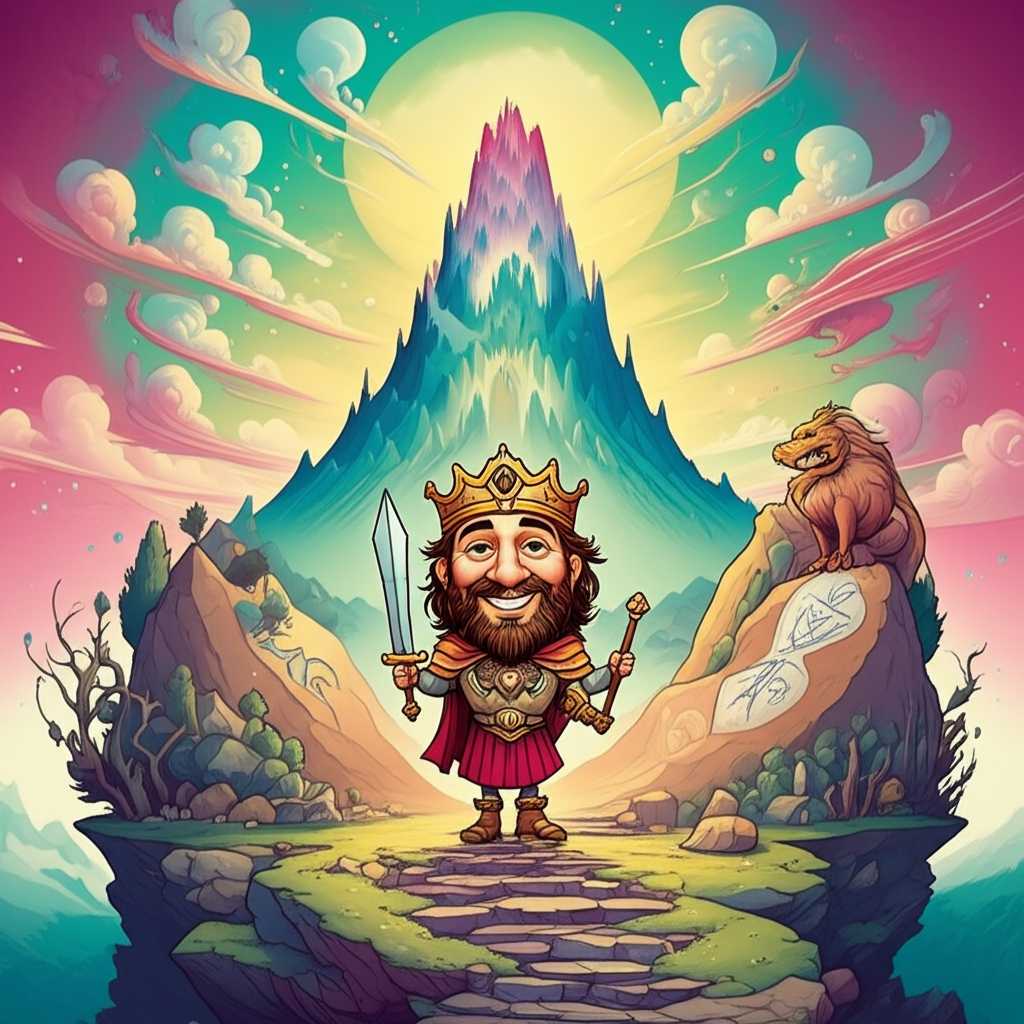
Finally, after untold trials and a journey that felt both endless and instantaneous, Nuada arrived at the threshold of the Eternal Temple. It was not a structure of stone and mortar, but a shimmering edifice woven from pure light and ancient energy, existing slightly out of phase with the mundane world. Within, he found not a deity, but a profound stillness, a convergence of all knowledge. He stood before an altar of pure crystal, where the essence of true sovereignty, wisdom, and eternal balance resided. There, Nuada did not receive a new arm, but a profound spiritual blessing, an infusion of cosmic understanding that affirmed his place not just as a king, but as a vessel of divine purpose. He returned to his people not just as Nuada of the Silver Hand, nor even Nuada of the restored flesh, but as Nuada the Wise, his kingship now imbued with a profound spiritual depth, guiding his people with unparalleled wisdom and a reign of true, enlightened peace.
Symbolism and Meaning: Reflecting Ancient Truths
The legend of Nuada and the Eternal Temple is rich with symbolic resonance. Nuada’s severed arm powerfully symbolizes loss, vulnerability, and the disruption of order. His subsequent restoration, first with the silver arm and then with flesh, speaks to resilience, ingenuity, and the triumph over adversity. It also highlights the ancient Celtic belief in the sacral nature of kingship, where physical perfection was often equated with divine favor and fitness to rule. The silver arm itself is a testament to the transformative power of divine craftsmanship and the ability to find strength even in imperfection.
The Eternal Temple, though an invented element for this narrative, serves as a powerful symbol of aspiration, spiritual quest, and the search for ultimate truth. It represents the hidden depths of existence, the source of divine wisdom and healing that transcends physical ailments. For ancient peoples, such a place would have symbolized the ideal state of being, the connection to the divine, and the ultimate reward for a life lived with courage and purpose. The journey to the Temple reflects a universal human desire for understanding, self-improvement, and the attainment of a higher spiritual plane, demonstrating that true leadership requires not just physical strength but profound inner wisdom and divine sanction.
Modern Perspective: Echoes in Contemporary Culture
Today, the tales of Nuada and the Tuatha Dé Danann continue to captivate and inspire. While no longer believed as literal truth, they are cherished as vital components of Ireland’s cultural heritage and a significant influence on broader fantasy literature and media. Nuada’s story, with its themes of loss, resilience, and the quest for leadership, resonates deeply in modern interpretations. He appears in various forms of fantasy literature, from epic novels to graphic novels, often reinterpreted to explore contemporary ideas about disability, identity, and the nature of power. Video games frequently draw inspiration from Celtic mythology, featuring characters or settings reminiscent of Nuada’s world. Academics and cultural studies scholars delve into these myths to understand ancient worldviews, societal structures, and the enduring power of archetypal narratives. The legend serves as a rich source material for exploring human themes through a lens of magic and wonder.
Conclusion: A Legacy of Imagination
The legend of Nuada and the Eternal Temple stands as a magnificent testament to the human capacity for imagination and storytelling. It is a vibrant thread in the intricate tapestry of Irish mythology, a cultural artifact from a time when the world was perceived through a lens of enchantment and spiritual depth. As Muslims, we recognize that only Allah (SWT) is the true Creator and Sustainer of all existence, and that all power, wisdom, and divinity reside solely with Him. We acknowledge that these ancient narratives are products of human thought, reflecting the cultural and spiritual landscape of their time, not divine truth.
Yet, in respecting our own faith, we can still appreciate the profound cultural heritage embodied in such stories. They offer invaluable insights into the minds of those who came before us, allowing us to connect with ancient traditions, understand different worldviews, and marvel at the enduring power of human creativity. These legends remind us that storytelling is a fundamental human act, a way to explore complex ideas, impart moral lessons, and pass down the wisdom of generations, even as we affirm our belief in the one true God.