fufufafa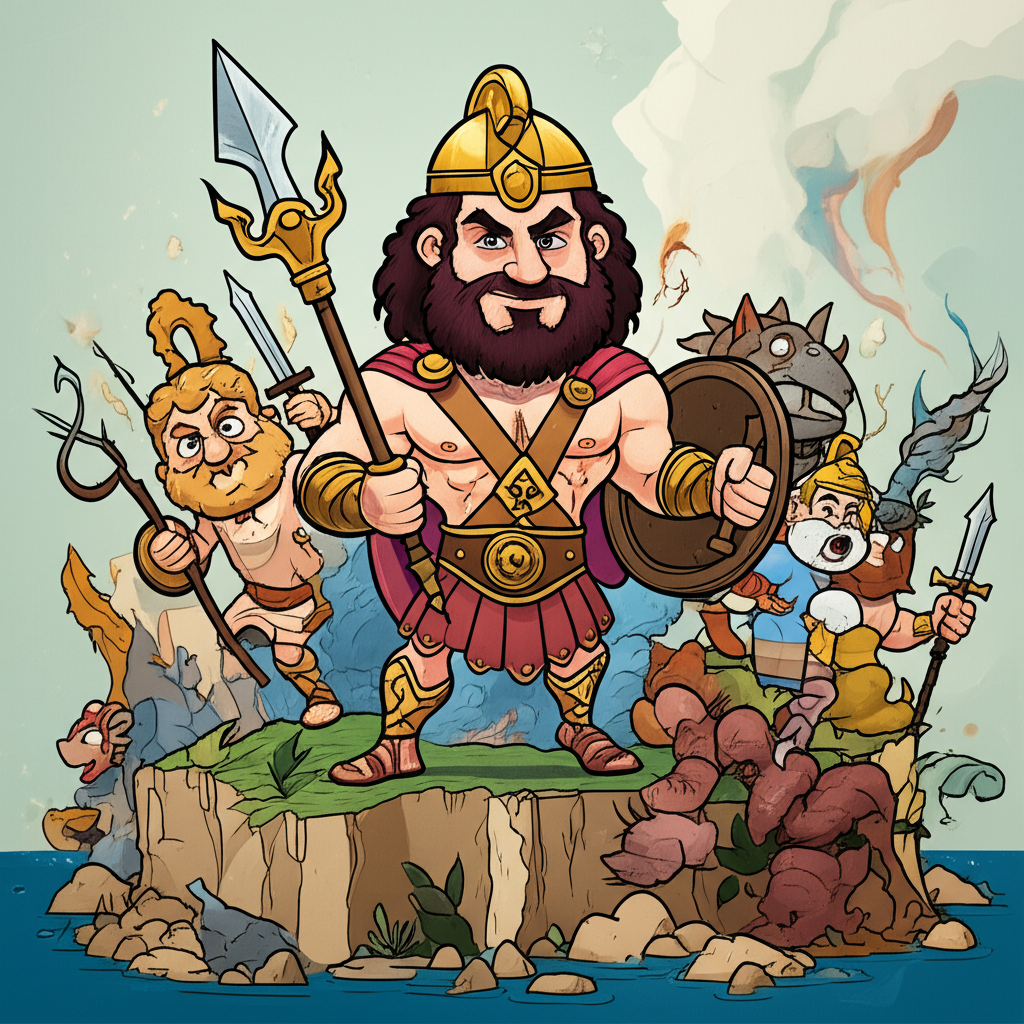
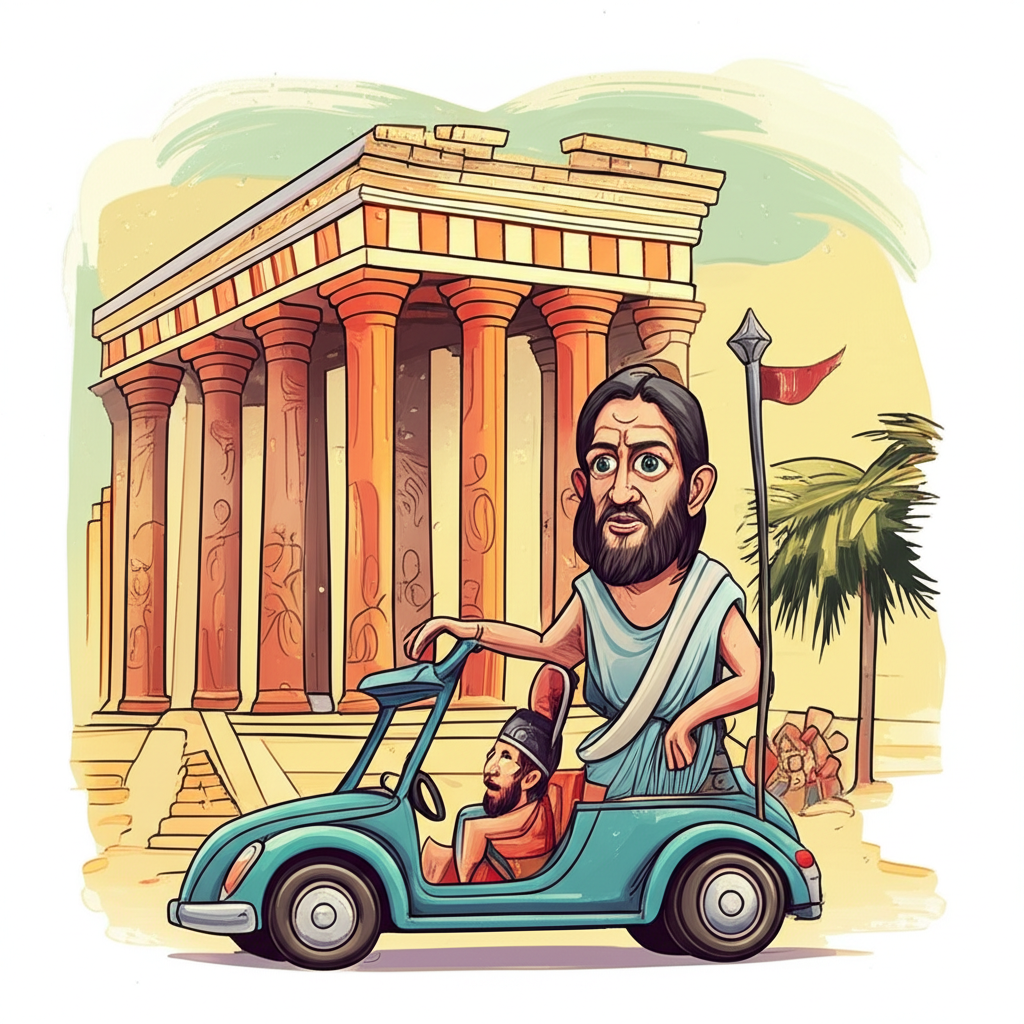
The ancient world, particularly the vibrant civilization of Greece, was a tapestry woven with threads of grand narratives, heroic deeds, and the intervention of powerful, often capricious, deities. Among the most enduring figures to emerge from this rich mythological landscape is Heracles, known to the Romans as Hercules. His story is one of immense strength, tragic folly, and ultimately, arduous penance. The tales of his twelve seemingly impossible labors, imposed upon him by King Eurystheus, have echoed through millennia. However, the vast ocean of Greek mythology contains many currents, and sometimes, a lesser-known or imagined stream flows alongside the great rivers. One such intriguing concept, though not part of the traditional twelve, is the "Songs of Styx," a hypothetical labor that invites us to delve into the deepest, most shadowed realms of ancient Greek cosmology.
This is a traditional story, a product of the human imagination passed down by ancient peoples, reflecting their understanding of the world around them. It is not presented as truth or divine revelation, but as a cultural artifact – a window into the minds of those who first told it.
Origins and Cultural Background: The Hellenic Worldview
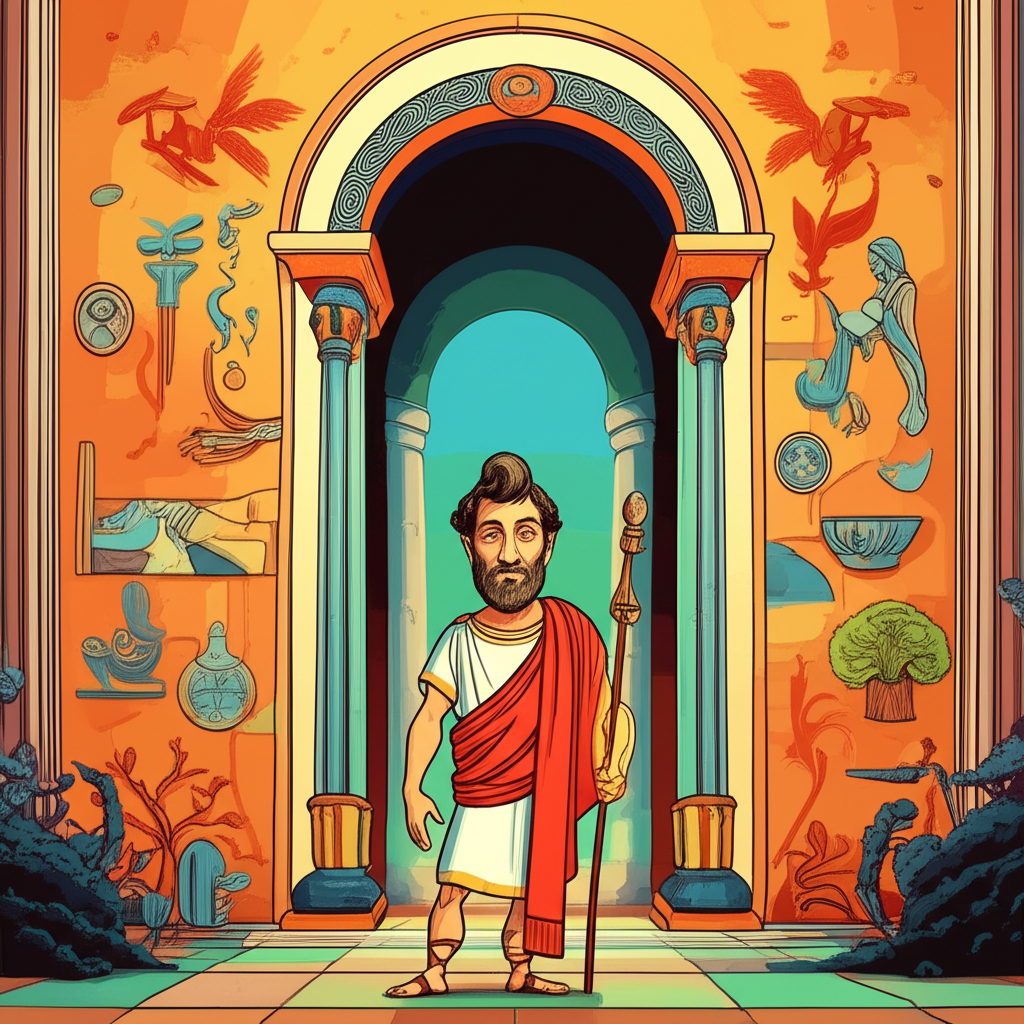
To fully appreciate tales like that of Heracles, one must first immerse oneself in the cultural era of ancient Greece, a society that flourished from roughly the 8th century BCE to 600 CE. This was a world grappling with the raw forces of nature, the mysteries of life and death, and the complexities of human morality, often without the benefit of modern scientific explanation. For the ancient Greeks, the cosmos was a living entity, animated by gods and goddesses who resided on Mount Olympus, ruled the seas, or held sway over the shadowy Underworld.
These deities were not distant, abstract concepts; they were intensely personal, embodying human virtues and vices, passions and jealousies. The world was perceived as interconnected, where divine will shaped mortal destinies, and heroes like Heracles served as intermediaries, sometimes champions, sometimes victims, of this intricate relationship. Myths were not mere entertainment; they were explanations for natural phenomena, moral lessons, chronicles of ancestral heroes, and justifications for social customs. They provided a framework for understanding human suffering, the inevitability of death, and the pursuit of glory and honor. The Underworld, overseen by Hades, was a very real, albeit terrifying, destination for all souls after death, traversed by rivers like the Styx, a boundary both physical and metaphysical.
Heracles and the River Styx: Characters of Myth
At the heart of our narrative stands Heracles, a figure of unparalleled physical might and an embodiment of human resilience. Born the son of Zeus and the mortal Alcmene, he was cursed by Hera, Zeus’s jealous wife, leading him to commit a horrific act of madness – the slaying of his own wife and children. To atone for this unspeakable crime, the Oracle of Delphi commanded him to serve King Eurystheus of Tiryns, who imposed upon him the famous twelve labors. Heracles is often depicted as a muscular, lion-skinned hero, wielding a club. Symbolically, he represents the struggle against overwhelming odds, the quest for redemption, and the potential for both destructive fury and profound courage within the human spirit. He is a demigod, straddling the mortal and immortal worlds, capable of extraordinary feats yet bound by mortal suffering.
The River Styx, a central element in our imagined labor, is not a creature but a primordial deity in its own right, and one of the five rivers of the Underworld. Its name, derived from the Greek word stygein, meaning "to hate" or "to abhor," perfectly encapsulates its chilling nature. The Styx was more than just a waterway; it was the boundary between the living world and the realm of the dead. Its waters were believed to possess immense power, capable of making one invulnerable (as with Achilles, who was dipped in its waters), but also poisonous to mortals. Most significantly, the Styx was the river over which the ferryman Charon transported the souls of the deceased. More profoundly, the Styx was the river by which the gods themselves swore their most solemn, unbreakable oaths. To break an oath sworn upon the Styx was to invite dire consequences, even for the immortals. Its "songs," therefore, would not be melodic tunes, but rather the profound, unsettling echoes of these broken vows, the laments of the unburied, and the chilling silence of eternal finality.
The Main Story: The Song of Silent Despair
The air in the court of King Eurystheus was thick with expectation, or perhaps, dread. Heracles, having completed his eleven labors, stood before the trembling king, anticipating his final, and usually, most terrifying, task. But Eurystheus, his face a mask of cunning, offered a challenge unlike any before. "Heracles," he rasped, "your strength is undeniable. You have faced beasts and stolen treasures. But there is a disturbance in the Underworld, a resonant despair emanating from the River Styx, a cacophony of sorrow and broken promises that even the living now hear in their darkest dreams. You are to descend into the realm of Hades, not to capture a beast, but to silence the Songs of Styx – the echoes of the unfulfilled, the lamentations of the forgotten, and the whispers of divine oaths betrayed. You must bring peace to that tormented river, or forever be haunted by its mournful chorus."
Heracles, ever the obedient servant of his fate, nodded grimly. This was a labor not of muscle, but of spirit. He descended through dark chasms, guided by the chthonic whispers, until he reached the desolate shores of the Underworld. The air grew heavy, and a profound chill seeped into his bones. Before him lay the River Styx, its black waters reflecting no light, only the eternal gloom. And indeed, Eurystheus had not exaggerated. A subtle, yet pervasive, sound emanated from its depths – not a song, but a tapestry of spectral whispers, mournful sighs, and the faint, unsettling clang of promises shattering into eternity. It was the sound of ultimate regret, of fates unfulfilled, of the cosmic reverberations of oaths broken even by the gods.
He sought out Charon, the grim ferryman, whose eyes glowed like embers. "I do not carry the living for pleasure," Charon rasped, his voice like grinding stone. "But I have heard the rumors of the ‘Songs.’ Even I, accustomed to eternal lament, find them unsettling. They are the echoes of the deepest betrayals, the unmourned dead, and the silent cries of those whose existence was swallowed whole by the Underworld."
Heracles, undeterred, explained his task. Charon, after much persuasion and a grim payment of a golden obol, agreed to ferry him to the source of the most potent despair. They glided across the icy waters, the spectral "songs" growing louder, weaving a suffocating shroud of sorrow. Heracles felt the weight of countless forgotten lives, the bitterness of broken vows, and the cold indifference of eternity pressing upon his soul.
Finally, Charon pointed to a desolate stretch of the river, where the ‘songs’ coalesced into an almost tangible entity. Here, the river seemed to churn with a silent, internal agony. Heracles realized that to "silence" these songs was not to stop a sound, but to bring peace to the underlying torment. He stood at the bank, a mortal among the eternal echoes, and for the first time, his brute strength felt useless. He closed his eyes, not to block out the sounds, but to listen more deeply, to understand them.
He heard the faint echo of a mother’s lullaby, never finished. The desperate plea of a lover, never answered. The booming pronouncements of gods, whose sacred Stygian oaths had been bent or broken for petty squabbles. He felt the vast, cold indifference of a universe that often forgot its smaller inhabitants. Heracles, who had himself known profound guilt and sorrow, extended his own pain, his own understanding, towards the river. He did not fight the ‘songs’; he embraced them, acknowledging the suffering, the brokenness, the cosmic loneliness they represented.
He poured out his own silent grief for his murdered family, his own struggle for redemption, into the desolate waters. It was an act of profound empathy, a shared lamentation. Slowly, subtly, the chaotic cacophony began to shift. The sharp edges of despair softened, the bitter whispers grew less piercing. The "songs" did not vanish, but they transformed into a quieter hum, a resonant echo of memory rather than active torment. It was not silence, but peace. Heracles had not conquered the Styx, but he had offered it solace. He had, in his own way, mourned with the unmourned, and acknowledged the unacknowledged.
Returning to the land of the living, Heracles carried no physical trophy. But in his eyes was a profound understanding of sorrow, and in his heart, the quiet hum of a river at peace. Eurystheus, seeing the transformation in the hero, sensed that this labor, though intangible, was perhaps the most profound of all.
Symbolism and Meaning
To the ancient Greeks, the tale of Heracles and the "Songs of Styx" (or any Underworld journey) would have been laden with profound symbolism. The journey to the Underworld itself represented a confrontation with mortality and the fear of the unknown. The River Styx, as the ultimate boundary, symbolized the finality of death and the inescapability of fate. The "Songs of Styx" would have represented the collective human suffering, the consequences of broken oaths (both mortal and divine), and the weight of guilt and regret.
Heracles’ task to "silence" these songs, especially through an act of empathy and shared sorrow rather than brute force, would have underscored the idea that some burdens cannot be overcome by strength alone. It might have taught that true peace, even in the face of immense suffering, comes from acknowledgment, understanding, and perhaps, shared humanity. It could symbolize the ancient Greek understanding of the soul’s journey, the importance of proper burial rites (to prevent souls from becoming restless), and the cosmic order where even gods were bound by sacred vows. The labor also speaks to the concept of redemption – that even the greatest heroes must confront their inner demons and the universal truths of existence.
Modern Perspective
Today, the myths of Heracles and the Underworld continue to resonate deeply across various forms of media and academic study. In literature, Heracles embodies the archetypal hero on a quest for atonement, his struggles reflecting universal themes of perseverance, moral choice, and the search for identity. Modern novels, graphic novels, and epic poems often reimagine his labors, exploring the psychological depths of his character.
In film and television, Heracles is frequently depicted as the ultimate action hero, his physical prowess amplified for dramatic effect. However, more nuanced interpretations also explore his tragic flaws and the complex relationship between divine power and mortal suffering. Video games, particularly in the fantasy and role-playing genres (e.g., Hades, God of War), draw heavily from Greek mythology, often featuring the River Styx, Charon, and the challenges of the Underworld. These games allow players to virtually experience the perilous journey to the realm of the dead, albeit in a stylized and interactive manner.
Culturally, these myths are studied for their insights into ancient psychology, religious beliefs, and societal values. They provide a rich foundation for understanding Western literature, art, and philosophy, demonstrating the enduring power of storytelling to explore fundamental human questions about good and evil, life and death, and the nature of heroism.
Conclusion
The story of Heracles and the "Songs of Styx," whether a traditional narrative or an imaginative exploration within the mythos, stands as a testament to the enduring power of cultural storytelling. It is a product of ancient Greek civilization, offering a glimpse into their worldview, their fears, and their aspirations. It is crucial to remember that this, like all mythology, is a cultural story, not a belief system or a historical record to be taken literally.
As Muslims, we recognize that Allah is the one true Creator and Sustainer of all existence, unique in His attributes and without partners. The rich tapestry of human mythologies, including the tales of ancient Greece, serves as a powerful reminder of the boundless human imagination, our innate desire to understand the world, and our capacity for narrative creation. These stories, while not to be confused with divine truth, offer valuable insights into the cultural heritage of humanity and the universal themes that continue to shape our understanding of ourselves and the world around us. They are echoes of a distant past, inviting us to reflect on the enduring art of storytelling and its profound impact on human civilization.