fufufafa
The cultural era in which such myths flourished was one where the world was perceived through a lens of profound spiritual interconnectedness. Ancient Indian society, with its deep philosophical traditions, viewed the universe as multi-layered, teeming with various celestial beings, deities, spirits, and realms. Life was not merely a physical existence but an intricate dance between the material and the subtle, the seen and the unseen. People of that time engaged with their environment not just as a physical space but as a living entity imbued with divine presence and populated by diverse entities like devas (gods), asuras (demons), gandharvas (celestial musicians), apsaras (celestial nymphs), and yakshas (nature spirits). Myths served as explanations for natural phenomena, moral compasses, and grand narratives that helped individuals understand their place in a complex, divinely ordered cosmos. The concept of Vaikuntha, Vishnu’s celestial abode, represented the ultimate realm of purity, harmony, and spiritual attainment, making any narrative set within its bounds particularly significant.
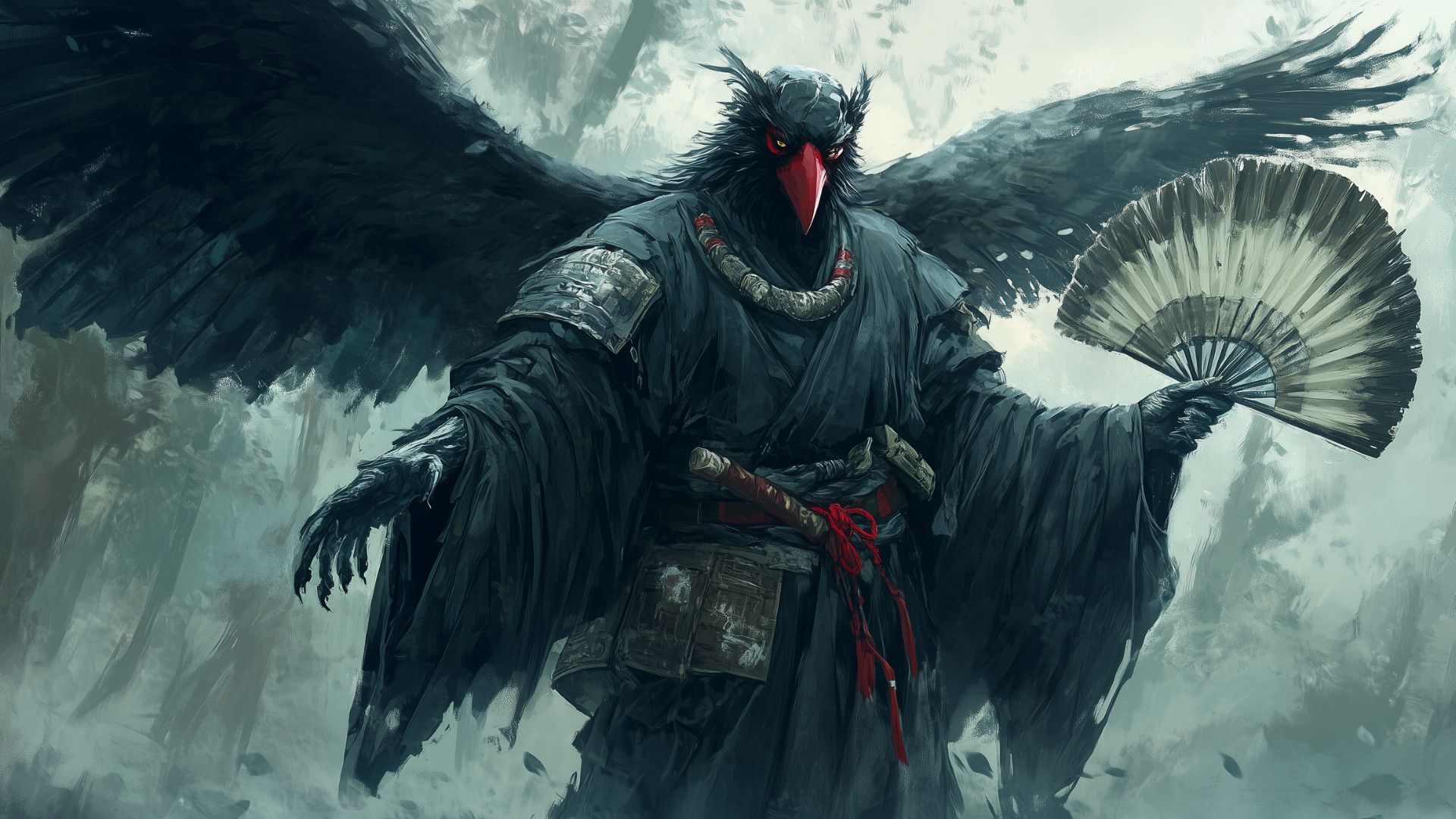
At the heart of our story is the figure of the Yaksha of Vaikuntha. In general Hindu mythology, Yakshas are often depicted as nature spirits, guardians of hidden treasures, and sometimes associated with trees, forests, and wealth. Their nature can be ambiguous, oscillating between benevolent protectors and mischievous or even malevolent entities. However, a Yaksha "of Vaikuntha" suggests a being of a different order, refined by the sanctity of Vishnu’s realm. This Yaksha is not a deity to be worshipped, but a symbolic entity – a powerful, ethereal guardian whose existence is intrinsically linked to the harmony and sanctity of Vaikuntha itself. Symbolically, this Yaksha might represent the subtle, often unseen forces that maintain cosmic order, the vigilance required to protect sacred spaces, or even the elusive nature of profound spiritual truths. They are often imagined with immense strength, a connection to the vital energies of life, and sometimes an otherworldly, luminous presence, befitting a guardian of a celestial paradise.
Our narrative begins in an age when the celestial realms were not merely distant stars but vibrant, living domains. Vaikuntha, the realm of Lord Vishnu, traditionally depicted as a realm of unparalleled beauty, peace, and spiritual bliss, was sustained by an intricate balance of cosmic energies. It was here that the Yaksha of Vaikuntha resided, not as a servant, but as a guardian spirit, intrinsically linked to a particular celestial artifact – the Divya-Mani, a gem of pure light that pulsed with the very essence of Vaikuntha’s harmony. This gem was not a source of power to be wielded, but a barometer of the realm’s equilibrium, subtly reflecting any discord.
One celestial dawn, a faint tremor rippled through the golden groves and crystalline rivers of Vaikuntha. It was imperceptible to most, but the great sages and celestial beings, attuned to the subtle vibrations of the cosmos, felt it. The Divya-Mani, usually radiating a steady, serene glow, now flickered with a faint, unsettling irregularity. This was unprecedented. Investigations by the celestial sages, led by the venerable Narada Muni, revealed no overt threat, no invading asura or disrupted ritual. Instead, the disturbance seemed to emanate from the Yaksha himself.
The Yaksha of Vaikuntha, a being of immense, unyielding spirit and profound connection to the realm’s essence, had always been a solitary guardian. He did not speak in words but communicated through the shifting patterns of light and shadow, the rustling of celestial leaves, and the subtle currents of Vaikuntha’s ether. Now, his ethereal form seemed more elusive than ever, his presence a fleeting shimmer in the peripheral vision of even the most perceptive celestials. He was not lost, nor was he actively hostile; rather, he had become profoundly introspective, withdrawing into the deepest, most sacred recesses of Vaikuntha, causing the Divya-Mani to waver. The "hunt" was thus not a pursuit of capture, but a quest for understanding, for re-establishing connection with this vital guardian.
Narada, with his divine insight, understood the delicate nature of the situation. To confront the Yaksha directly might disrupt the very harmony they sought to restore. He gathered a select group of celestial beings: a wise Gandharva skilled in the harmonies of the universe, an Apsara whose dance could soothe even the most agitated spirits, and a dedicated Rishi known for his unwavering meditative focus. Their mission was to embark on a "hunt" not with weapons, but with wisdom, empathy, and spiritual discernment.
They journeyed through Vaikuntha’s ethereal landscapes, past wish-fulfilling trees and rivers of nectar, guided by the increasingly erratic pulse of the Divya-Mani. They sought not to corner the Yaksha, but to understand the cause of his withdrawal. The Gandharva played melodies of profound peace, weaving sound into the very fabric of Vaikuntha, hoping to resonate with the Yaksha’s spirit. The Apsara danced, her movements echoing the cosmic rhythm, a silent plea for harmony. The Rishi meditated, extending his consciousness to touch the subtle energies of the realm, seeking to perceive the Yaksha’s inner state.
Finally, in a hidden grove where celestial lotus bloomed in perpetual twilight, they found him. The Yaksha’s form was translucent, flickering like a distant star. He was not agitated by their presence but seemed lost in a profound contemplation. Through their combined efforts – the resonance of the music, the grace of the dance, and the depth of the Rishi’s meditation – they began to perceive the Yaksha’s silent sorrow. He was not distressed by an external force, but by a subtle shift in the cosmic balance, a distant echo of disharmony from another realm that, though far removed, had resonated with his sensitive spirit, causing him to withdraw and intensely focus his energy to counteract it. He was not a cause of imbalance, but a highly attuned responder, a silent protector absorbing and mitigating a distant cosmic tremor.
Understanding dawned upon Narada and his companions. The Yaksha was not acting erratically but performing his duty in an unprecedented manner. His withdrawal was a deep, internal re-calibration, a powerful act of spiritual absorption to maintain Vaikuntha’s purity against a ripple of cosmic discord. As they comprehended his silent vigil, the Divya-Mani’s glow steadied, reflecting the restoration of understanding and the reinforcement of Vaikuntha’s harmony. The "hunt" had concluded not with a battle, but with empathy, insight, and the quiet restoration of balance.
To the ancient people, this story would have represented profound truths about their world. The Yaksha of Vaikuntha could symbolize the subtle, often unperceived forces that maintain order in the universe, emphasizing that balance is not always achieved through overt action but often through quiet vigilance and inner strength. The "hunt" itself signifies humanity’s (or celestial beings’) continuous quest for knowledge and understanding, particularly concerning the mysteries of the divine and cosmic order. It highlights the importance of discernment, empathy, and spiritual insight over brute force when dealing with complex or seemingly inexplicable phenomena. The story could also have served as a moral lesson, underscoring the responsibility of guardianship and the interconnectedness of all realms, where even a distant tremor can impact the most sacred spaces.
In modern times, "The Hunt for the Yaksha of Vaikuntha" is interpreted not as a literal event, but as a rich source of imaginative inspiration. In literature, it might inspire themes of elusive guardians, quests for hidden knowledge, or the subtle interplay of cosmic forces. In movies and games, such a narrative could be adapted into a compelling storyline involving a mysterious entity that needs to be understood rather than defeated, a guardian of a sacred place whose true nature is a puzzle. Cultural studies examine such myths to understand ancient cosmology, narrative structures, and the psychological and philosophical underpinnings of bygone societies. It remains a testament to human creativity, a story passed down through generations, fueling imagination and intellectual exploration rather than serving as a guide for spiritual practice.
In conclusion, "The Hunt for the Yaksha of Vaikuntha" is a captivating narrative from ancient Indian mythology, a product of human imagination and cultural storytelling. It is a testament to the rich heritage of ancient peoples and their ways of understanding the world around them. As Muslims, we recognize that Allah (God) alone is the true Creator and Sustainer of the universe, unique in His essence and attributes, and that all mythological narratives, regardless of their cultural origin, are human constructs. This story, like countless others, serves as a window into the past, allowing us to appreciate the diversity of human thought, the enduring power of imagination, and the universal tradition of storytelling that connects us across time and cultures.