fufufafa
From the sun-drenched landscapes and vibrant city-states of ancient Greece, where marble temples touched the azure sky and philosophical debates echoed in agoras, emerges a tapestry of myths and legends. These stories, woven from the collective imagination of a people deeply connected to nature and the divine, offered explanations for the world’s mysteries, celebrated human virtues, and cautioned against hubris. Among these timeless tales, the legend of Hermes and his enigmatic Helm of Darkness holds a particular fascination, a whisper from a time when the boundaries between the mortal and the divine were fluid, and the gods themselves walked among mortals, albeit in distant, awe-inspiring ways. It is crucial to remember that this is a traditional story, a product of ancient storytelling, and not a factual account or a belief system to be adopted.
The cultural era that birthed these myths, predominantly the Archaic and Classical periods of Greece (roughly 8th to 4th centuries BCE), was a time of profound societal transformation. City-states like Athens and Sparta rose to prominence, fostering distinct cultural identities. The environment, characterized by its rugged coastline, fertile valleys, and a vast, shimmering sea, deeply influenced their worldview. For the ancient Greeks, the world was alive with unseen forces. Natural phenomena – the thunderclap of Zeus, the tempestuous sea of Poseidon, the fertile earth of Demeter – were attributed to the actions of powerful deities who inhabited Mount Olympus. Life was a delicate balance, often dictated by the whims of these gods, and understanding their favor or displeasure was paramount. Their understanding was steeped in a polytheistic framework, where a pantheon of gods and goddesses governed different aspects of existence.
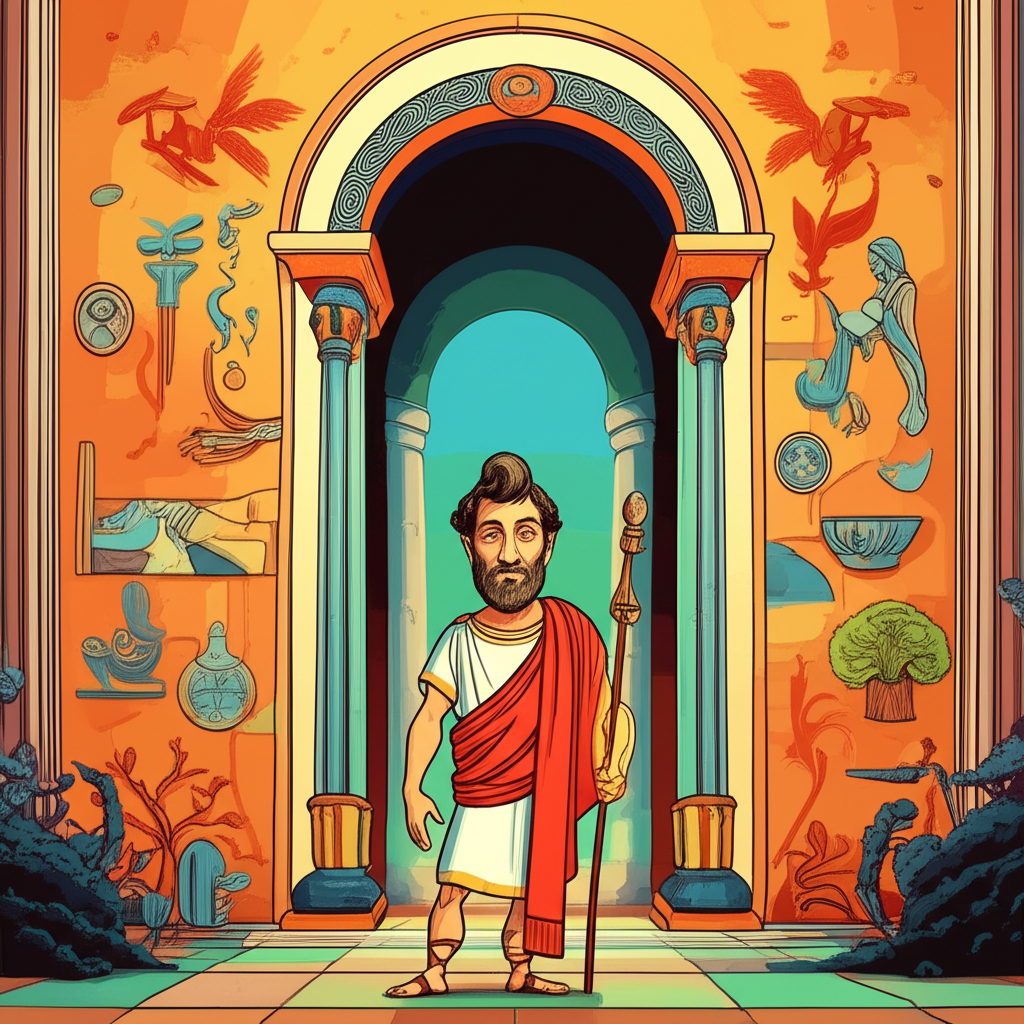
Central to the myth of the Helm of Darkness is Hermes, the fleet-footed messenger of the gods, the god of travelers, merchants, thieves, and a guide to the underworld. He was often depicted as a youthful, athletic figure, adorned with winged sandals and a winged cap (the petasos). His attributes were speed, cunning, eloquence, and a certain roguish charm. The Helm of Darkness, in its most commonly understood form within these myths, was not merely a piece of headwear but an artifact imbued with extraordinary power. It was often described as a cap or helmet that rendered its wearer invisible, allowing them to move unseen and unheard, to observe without being observed, and to traverse the world with unparalleled stealth. It was a symbol of his ability to operate in the liminal spaces, to be present yet absent, a master of discretion and opportune arrival.
The narrative surrounding the Helm of Darkness is not always a singular, epic tale but rather a recurring motif woven into various accounts of Hermes’ deeds. Imagine Hermes, a blur of motion with his winged sandals, perhaps tasked by Zeus with a delicate mission. He needs to gather information without alerting his target, to deliver a message discreetly, or to retrieve a stolen item. With the Helm of Darkness pulled low, he becomes a phantom. The rustle of leaves might be the only indication of his passage, a fleeting shadow cast by the moonlight. He could slip through guarded gates, eavesdrop on clandestine conversations, or even, as some tales suggest, outwit even the most vigilant of mortals or other gods. The helm amplified his natural abilities, transforming him from a swift messenger into an agent of pure stealth. It allowed him to be the unseen observer, the silent confidante, the enigmatic presence that shapes events from the periphery. His journeys were not merely physical; they were journeys through the veil of perception, facilitated by this legendary artifact.
The symbolism of the Helm of Darkness is rich and multifaceted, offering insights into the values and anxieties of ancient Greek society. Primarily, it represented invisibility and secrecy, crucial for a messenger who often dealt with sensitive information. It spoke to the power of discretion and strategic advantage. In a world where direct confrontation was not always the wisest path, the ability to act unseen was a potent tool. Furthermore, it symbolized transition and liminality. Hermes, as a guide to the underworld and a protector of travelers, was a figure who bridged different realms. The helm allowed him to exist in these in-between spaces, unseen by those confined to the ordinary world. It could also be interpreted as a representation of knowledge acquired through observation, the understanding gained by witnessing events without personal involvement. For a society that valued wisdom and foresight, the ability to see and know without revealing oneself held significant appeal. In a broader sense, it might have also touched upon the human desire for escape and freedom from scrutiny, the wish to be able to move through life unburdened by the gaze of others.
In the modern world, the myth of Hermes and his Helm of Darkness continues to resonate, albeit in transformed guises. This ancient legend has found fertile ground in literature, film, and video games, where its themes of invisibility, stealth, and cunning are frequently explored. Characters inspired by Hermes, or possessing similar artifacts, appear in fantasy novels as elusive rogues or divine agents. In video games, the concept of invisibility is a staple gameplay mechanic, allowing players to adopt a stealthy approach. The Helm of Darkness itself has become a recognizable trope, often depicted as a powerful magical item that grants its wearer the ability to vanish. Beyond entertainment, the story continues to be a subject of study in classical mythology and folklore, providing valuable insights into ancient Greek beliefs, their understanding of the divine, and their narrative traditions. Cultural studies scholars analyze these myths as windows into the historical psyche of a civilization.
In conclusion, the legend of the Helm of Darkness, entwined with the figure of Hermes, is a captivating testament to the enduring power of human storytelling. It is a product of ancient Greek imagination, a way for them to comprehend the unseen forces that shaped their world and to embody ideals of speed, cunning, and discreet action. As Muslims, we recognize that only Allah (God) is the true Creator and Sustainer of all existence, and that all power and might reside with Him alone. These ancient narratives, therefore, are not to be mistaken for divine truth or a basis for worship. Instead, they serve as a valuable cultural heritage, a window into the rich tapestry of human history, and a reminder of the boundless capacity for imagination that has always driven humanity to create stories that explore the mysteries of life and the depths of the human spirit. The whispers of Hermes and his Helm of Darkness continue to echo, not as a call to belief, but as an invitation to appreciate the enduring legacy of storytelling and the cultural wisdom it imparts.