fufufafa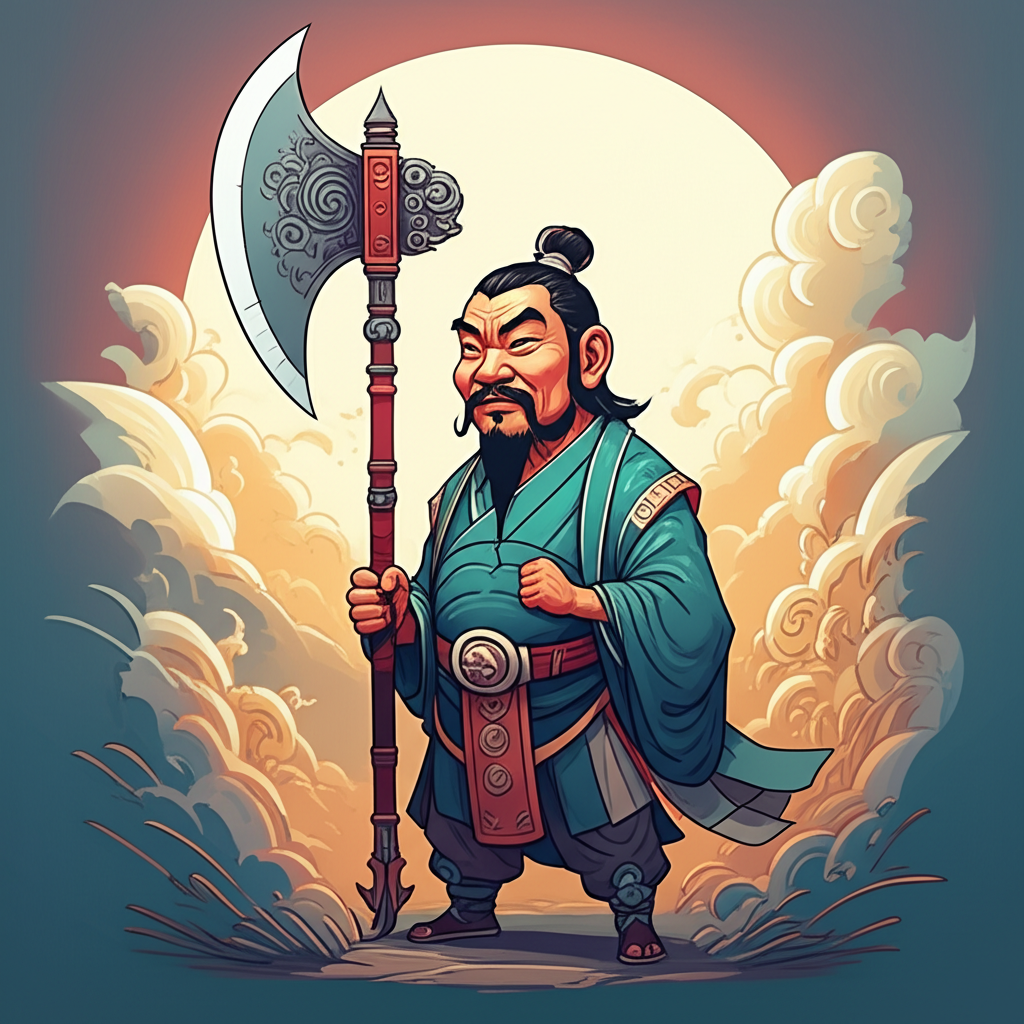
In the tapestry of ancient Chinese mythology, where dragons soared and spirits danced with the elements, whispers of powerful deities and their celestial instruments have echoed through millennia. Among these tales, the legend of Houtu and her "Heavenly Axe" emerges, a fascinating narrative from the rich folklore of the Han Dynasty and earlier periods. It is crucial to understand that this is a traditional story, a product of the imaginative minds of ancient peoples seeking to explain the world around them, not a statement of literal truth or divine decree.
The genesis of these myths lies in a time when the world was perceived as a dynamic, often unpredictable entity, governed by forces far beyond human comprehension. The ancient Chinese, deeply connected to the rhythms of nature, viewed their existence as intertwined with the cosmos. Rivers that flooded, mountains that stood sentinel, the cycle of seasons – all were imbued with spiritual significance. Their cosmology was a complex interplay of Yin and Yang, the five elements, and a pantheon of deities who embodied and controlled these natural phenomena. In this worldview, stories of divine intervention, celestial battles, and legendary artifacts served as both explanations and moral compasses, providing order and meaning to the human experience. The concept of a celestial realm and its inhabitants was a natural extension of this perspective, a place where the ultimate powers resided, shaping the destiny of the mortal world.
Within this rich mythological landscape, Houtu emerges as a figure of profound earthly connection. She is often depicted as a primordial goddess, associated with the Earth itself, its fertility, and its enduring stability. While specific depictions vary, she is generally seen as a maternal and nurturing deity, embodying the very ground upon which life flourishes. Her "Heavenly Axe," though less frequently detailed than other mythical weapons, is a symbol of immense power, capable of shaping and transforming the earth. It is not merely a tool of destruction but an instrument of creation and order. The axe, in many cultures, represents authority, the ability to cut through chaos, and the power to establish boundaries. In Houtu’s case, this translates to her role in organizing the land, separating the heavens from the earth, and perhaps even carving out the mountains and valleys that define the physical world. The "Heavenly" aspect of the axe signifies its divine origin and its immense, unearthly power, far exceeding any mortal implement.
The narrative of Houtu and her Heavenly Axe often intertwines with creation myths and tales of cosmic order. Imagine a time when the world was a formless chaos, a swirling miasma of primordial energies. It is here that Houtu, the embodiment of the nascent Earth, steps forth. With her Heavenly Axe, she embarks on a monumental task. The legend speaks of her wielding this celestial weapon to cleave apart the chaotic mass, separating the ethereal heavens from the solid earth. With each mighty swing, she carves out the land, shaping mountains from the rugged blows and deepening valleys with the sweeping arcs of the blade. The axe, imbued with the power of creation, could also be seen as a tool for establishing boundaries, defining the physical realm from the formless void. Some interpretations suggest that the axe was used to establish the very foundations of the world, to solidify the earth and prevent it from dissolving back into the primordial soup. The sound of her work, it is said, was the rumble of thunder, and the sparks that flew from the impact of the axe were the first stars igniting in the night sky. Her efforts brought order to the nascent universe, transforming a state of flux into a structured and habitable world. This was not a violent act of destruction, but a purposeful act of divine craftsmanship, guided by an inherent understanding of balance and form.
The symbolism embedded within this myth is profound and multifaceted. Houtu’s connection to the Earth highlights the ancient reverence for the land, its bounty, and its power to sustain life. The Heavenly Axe, in this context, can be seen as representing the force of divine will that imposes order upon chaos, a fundamental concept in many ancient philosophies. It may have symbolized the power of leadership and the ability to make decisive actions for the betterment of a community or the world. Furthermore, the act of shaping the land could represent the establishment of societal structures, the creation of boundaries, and the organization of human life. The axe’s dual nature – capable of both separation and creation – reflects the complex nature of existence, where order often arises from differentiation and where creation necessitates the division of existing forms. It speaks to the ancient understanding that the physical world, with its diverse landscapes, was not a random occurrence but a deliberate act of divine design.
In contemporary times, these ancient myths continue to resonate, finding new life in various forms of media and scholarly study. In literature, Houtu and her legend might be reinterpreted as a powerful matriarchal figure, a guardian of the earth, or a symbol of the primal forces of nature. Video games often draw inspiration from such folklore, depicting Houtu as a formidable deity with earth-shattering abilities or her Heavenly Axe as a legendary artifact with unparalleled power. Cultural studies scholars delve into these narratives to understand the worldview of ancient societies, their spiritual beliefs, and their attempts to grapple with the mysteries of existence. The enduring appeal of these stories lies in their ability to tap into universal themes of creation, order, and the power of the divine.
In conclusion, the legend of Houtu and her Heavenly Axe is a captivating glimpse into the imaginative world of ancient China. It is a traditional story, a testament to the ingenuity of human storytelling and the desire to find meaning in the vastness of the cosmos. As Muslims, we recognize that only Allah is the true Creator and Sustainer of all that exists, the ultimate source of all power and order. Yet, we can appreciate these ancient narratives for their cultural significance, their enduring themes, and their contribution to the rich tapestry of human heritage. These stories, passed down through generations, remind us of the power of imagination, the enduring human quest for understanding, and the beauty of cultural expression through the timeless art of storytelling. They serve as windows into the minds of our ancestors, revealing their hopes, their fears, and their profound connection to the world around them.