fufufafa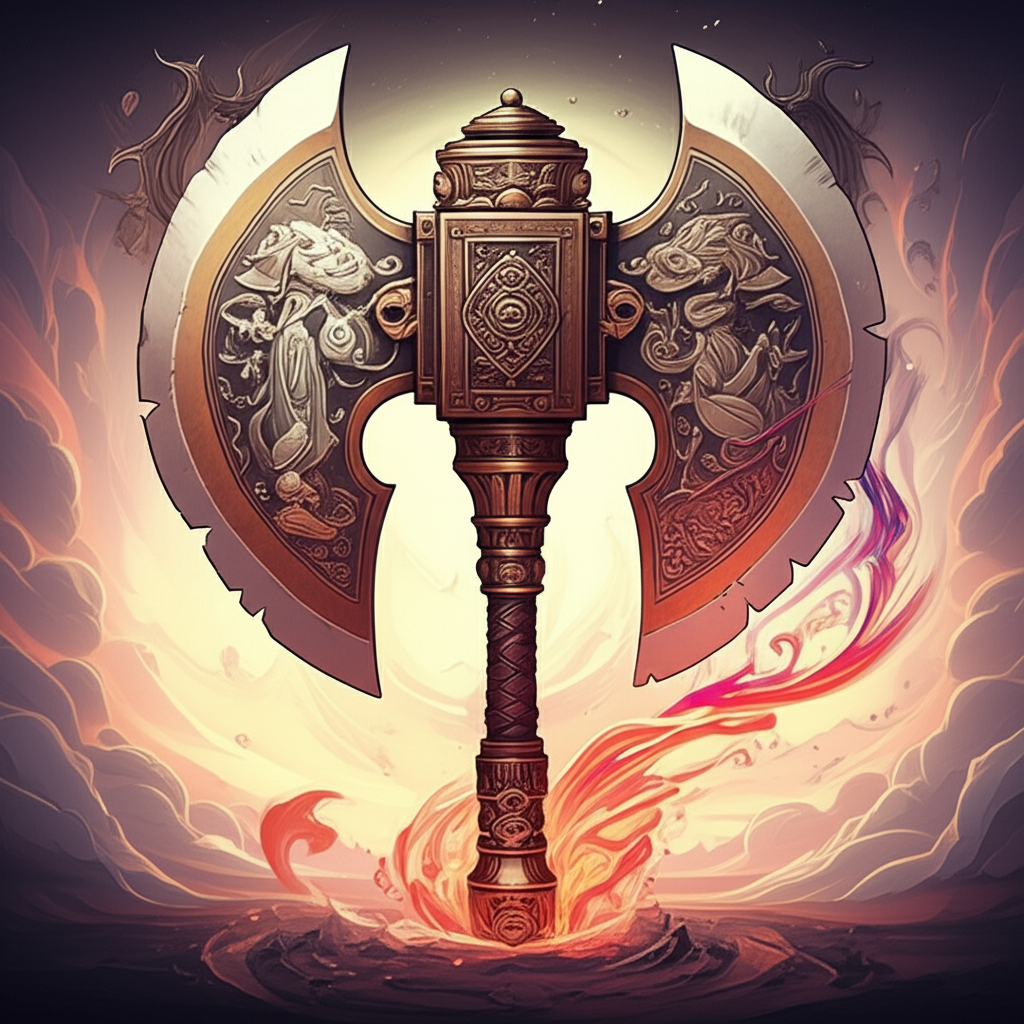
The Heavenly Axe: The Earthen Power of Houtu
Disclaimer: This article explores a topic from mythology and folklore. The story, characters, and events described are part of a cultural and historical narrative tradition. It is NOT real and is NOT meant to be believed, worshipped, or practiced. The content is presented for educational understanding of cultural heritage and storytelling.
Introduction
From the fertile plains of the Yellow River to the misty peaks of sacred mountains, ancient China was a land rich with stories. These were not mere entertainment but the very fabric through which people understood the world around them. They explained the changing of seasons, the fury of storms, and the unshakeable ground beneath their feet. One such collection of legends revolves around Houtu, the personification of the Earth itself. Within these traditional narratives, passed down through generations, is the tale of a formidable tool—the Heavenly Axe—a symbol of the Earth’s power to create, shape, and restore balance. This is the story of Houtu’s might, a myth born from a deep reverence for the natural world.
Origins and Cultural Background
This legend finds its roots in the worldview of ancient Chinese civilization, particularly during eras when animistic and polytheistic beliefs were prevalent. In a society deeply dependent on agriculture, the Earth was not merely soil and rock; it was a living, breathing entity. It was the great mother that provided sustenance, the foundation upon which civilization was built, and a force of immense, sometimes terrifying, power. The people of this time viewed the cosmos as a balanced system of Heaven (Tian), Earth (Di), and the human realm. The harmony between these spheres was essential for peace and prosperity.
Concepts like Yin and Yang—the dualistic forces of darkness and light, feminine and masculine, passive and active—were central to their philosophy. Heaven was seen as a predominantly yang force, active and celestial. The Earth, in contrast, was the ultimate yin principle: receptive, stable, nurturing, and foundational. It was from this profound respect and conceptual framework that the figure of Houtu, the Empress of the Earth, emerged as a counterpart to the celestial Jade Emperor.
Character Description
Houtu is not typically depicted as a warrior or an adventurous deity in the way many gods from other cultures are. Instead, her character is a personification of the Earth’s attributes. She represents immense gravity, unyielding stability, and boundless patience. Her power is not swift like lightning but slow, deliberate, and unstoppable, like the shifting of tectonic plates or the inexorable growth of a forest. In symbolic art, she is often shown as a serene, regal empress, embodying the dignity and grace of the land itself. Her spirit was believed to reside in the soil, the mountains, and the deep places of the world.
The "Heavenly Axe" associated with her in some folkloric interpretations is not a weapon of war but a tool of cosmic craftsmanship. It is not an axe for felling trees but for shaping reality. Legends describe it as being forged not in a celestial fire, but crystallized from the very core of the world—a concentration of geological force, imbued with the essence of the Five Elements (Wood, Fire, Earth, Metal, and Water). Its purpose was not to conquer, but to correct; not to destroy, but to carve order from chaos, much like a farmer uses a tool to cultivate a wild field.
Main Story: The Retelling of the Sundered Land
In an age long past, the world fell into a state of profound imbalance. A celestial beast, born of a wayward, chaotic star, fell from the heavens and crashed into the mortal realm. Where it landed, the earth soured, the mountains groaned, and the rivers turned black with poison. The creature’s chaotic energy spread like a disease, causing the land to fissure and crops to wither into dust. The harmony between Heaven and Earth was broken.
From his celestial throne, the Jade Emperor sent down thunderbolts, and other gods unleashed heavenly powers, but their efforts were in vain. Their celestial energy could not touch the deep-seated corruption that had taken root within the physical world. The mortal heroes, with their swords of bronze and their bravest hearts, were powerless against a blight that was not of their realm. The world wept, and its cries echoed down into the deepest foundations of the earth.
This collective groan of a world in pain stirred Houtu from her quiet, eternal contemplation. As the spirit of the Earth, she felt the land’s suffering as her own. She did not rise in a fury of rage, but with the solemn, focused determination of a mother tending to a gravely ill child. She knew that this was a wound that could not be healed from the sky; it had to be mended from the ground up.
From the heart of the world, she drew forth the Heavenly Axe. It did not gleam with polished metal but shimmered with the light of compressed stone, raw minerals, and the deep, dark soil of the earth. It felt heavy with the weight of mountains. Holding it, Houtu moved across the blighted land. Her steps were not rushed; each one was as deliberate as a changing season.
She did not confront the celestial beast directly. Instead, she went to the source of its corruption—the poisoned land itself. Raising the axe high, she brought it down upon a cracked and barren plain. The strike did not shatter the ground but sent a deep, resonant hum through it. With this single, powerful act, she cleaved the chaotic energy away from the physical soil, separating the poison from the earth like a surgeon removing a sickness.
She moved to the mountains that were crumbling into dust. With a second, sweeping arc of the axe, she carved a new, stable ridgeline, restoring their strength and majesty. Where the rivers had turned toxic and stagnant, she struck the earth a third time, carving a new, deep channel that allowed fresh water from the mountain springs to flow down, washing away the corruption and carrying it out to the vast, purifying sea.
The land began to heal. The chaotic beast, its source of power severed from the earth, withered and dissolved into a harmless mist. The balance was restored not through a violent battle in the heavens, but through the patient, powerful act of reshaping the world itself. Her work done, Houtu and the Heavenly Axe receded back into the earth, their presence becoming one with the quiet, enduring strength of the restored land.
Symbolism and Meaning
To the ancient people who told this story, Houtu and her axe were powerful symbols. Houtu represented the stability and resilience of the natural world. She was a reminder that the Earth was not a passive resource to be exploited but a powerful entity with the ability to heal and restore itself. Her deliberate, calm actions taught a lesson in patience and methodical problem-solving over impulsive aggression.
The Heavenly Axe symbolized the formidable power inherent in nature to create and destroy. It was an allegory for natural phenomena like earthquakes, volcanic eruptions, or floods—events that dramatically reshape the landscape. While terrifying, these events were also seen as a part of the world’s natural cycle of renewal. The axe, therefore, represents the principle that great power can be a tool for restoration. It is the force that carves a new river valley after a flood or allows new life to grow from volcanic soil. The story served as a way for people to comprehend and respect the awesome, landscape-altering forces of the natural world.
Modern Perspective
Today, the myth of Houtu and other figures from Chinese folklore continue to thrive, albeit in new forms. These ancient stories provide a deep well of inspiration for modern literature, particularly in the xianxia (immortal heroes) and wuxia (martial arts) genres. Characters in these novels often seek to master the elemental forces, with earth-based powers representing defense, endurance, and immense strength.
In video games and movies, these mythological concepts are frequently adapted. Players might wield legendary artifacts similar to the Heavenly Axe or choose character classes based on elemental powers that echo the principles of Yin and Yang. Figures like Houtu have inspired characters who act as guardians of nature or powerful earth-based mages. In cultural studies, these myths are analyzed as foundational texts that reveal the values, fears, and philosophies of ancient Chinese society, particularly its emphasis on balance, harmony, and respect for the natural world.
Conclusion
The tale of Houtu and the Heavenly Axe is a compelling example of how ancient cultures used storytelling to personify the world around them. It is a product of human imagination, a narrative crafted to instill a sense of respect for the Earth and to explain the seemingly chaotic forces of nature in an orderly, meaningful way. This story, like all myths, is a cultural artifact that offers a window into the past, reflecting the values of a society deeply connected to the land.
As Muslims, we recognize that only Allah is the true Creator and Sustainer, and these stories are viewed as cultural artifacts, not statements of belief. By studying them, we gain a deeper appreciation for the diversity of human culture and the timeless power of storytelling. These ancient legends remind us of our shared human heritage and the enduring quest to understand our place within the vast and wondrous world.