fufufafa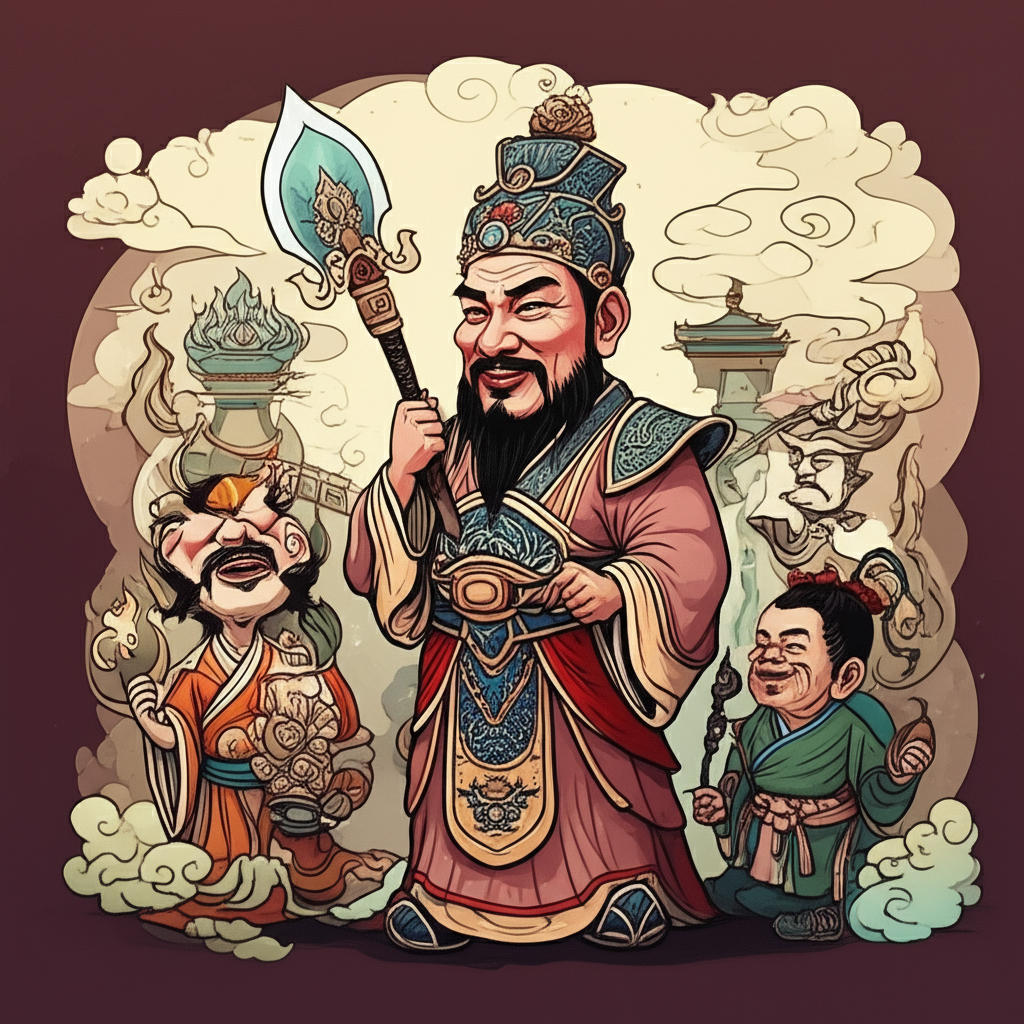
From the mists of ancient China comes a tale, whispered through generations and painted across silk scrolls, of a powerful ruler and a divine weapon. This is the story of the Jade Emperor and the Heavenly Axe, a narrative steeped in the rich tapestry of Chinese mythology. Let us explore this legend, remembering always that it is a product of human imagination, a story told by those who came before us to explain the world and the forces they perceived within it.
Origins and Cultural Background:
The legend of the Jade Emperor and his Heavenly Axe emerged from the fertile ground of Chinese folk religion and Taoism, flourishing particularly during the Tang Dynasty (618-907 AD). This was a time of great cultural and artistic expression in China, a period where philosophical ideas like Taoism, Confucianism, and Buddhism intertwined, shaping the worldview of the people. Nature was deeply revered, seen as a source of both sustenance and peril. The heavens, with their unpredictable weather patterns and awe-inspiring celestial displays, were considered the domain of powerful deities who controlled the fate of humankind. Society was hierarchical, with the Emperor at the apex, mirroring the celestial order with the Jade Emperor ruling over the heavens. In such a world, myths like this provided explanations for natural phenomena, offered moral lessons, and reinforced the social order. It helped them understand events like floods, droughts, and other natural disasters by placing them into a context of divine intervention and celestial balance.
Character Description: The Jade Emperor and the Heavenly Axe:
The Jade Emperor, known in Chinese as Yu Huang, is the supreme ruler of Heaven in Taoist cosmology. He is depicted as a dignified, wise, and benevolent ruler, often adorned in elaborate robes and a jeweled crown, seated upon a majestic throne. He is not necessarily seen as a creator god, but rather as an administrator and arbiter, responsible for maintaining order and harmony throughout the universe. He oversees all the deities in the celestial bureaucracy, ensuring that each performs their assigned duties.
The Heavenly Axe, often referred to as the "Axe of Pan Gu," is an artifact of immense power. It is said to be the weapon used by the primordial giant Pan Gu to separate the heavens and the earth from the initial chaos. The axe is often described as being made of celestial jade, radiating with divine energy, and capable of cleaving mountains, parting rivers, and even controlling the very elements. It is a symbol of creation, destruction, and the power to impose order upon chaos. It represents the raw, untamed energy of the universe, capable of both great good and terrifying destruction, depending on the wielder’s intent. The axe symbolizes the immense responsibility that comes with power, and the need for a wise and just leader to wield it effectively.
Main Story: A Narrative Retelling:
In the beginning, there was only chaos – a swirling void of nothingness where heaven and earth were indistinguishable. From this void emerged Pan Gu, a giant of immense strength and will. Armed with a mighty axe, forged from the very essence of the nascent universe, Pan Gu began his Herculean task. With each swing, the Heavenly Axe cleaved the darkness, separating the light from the darkness, the Yin from the Yang. Mountains rose, valleys formed, and the sky began to stretch upwards, pushed by Pan Gu’s tireless efforts.
After countless ages, Pan Gu finally succeeded in separating heaven and earth. Exhausted, he collapsed and his body transformed into the landscape itself. His breath became the wind, his blood the rivers, his voice the thunder, and his eyes the sun and moon. But the Heavenly Axe remained, a silent testament to his incredible feat.
Later, after many generations of gods and demigods, the task of ruling the newly formed world fell to the Jade Emperor. He was chosen not for his brute strength, but for his wisdom, compassion, and his unwavering dedication to justice. The Jade Emperor knew the power of the Heavenly Axe, its ability to reshape the world. He understood that such power, if misused, could plunge the universe back into chaos.
Therefore, he did not wield the Axe himself for conquest or dominance. Instead, he used his wisdom and his understanding of the Tao to govern the heavens and the earth. He kept the Heavenly Axe as a symbol of his responsibility, a reminder of the power he held and the consequences of its misuse. The Axe became a safeguard, used only in the most dire of circumstances, to maintain the cosmic balance and protect the mortal realm from celestial threats. Legend says that he used the axe once, during a great flood, to carve channels in the earth, diverting the waters and saving countless lives. But even then, he used it with restraint, guided by his wisdom and compassion.
Symbolism and Meaning:
The story of the Jade Emperor and the Heavenly Axe is rich in symbolism. Pan Gu’s creation myth represents the constant struggle to bring order from chaos, a theme that resonates deeply within Chinese philosophy. The Heavenly Axe itself symbolizes power, both the power to create and the power to destroy. The Jade Emperor’s cautious use of the Axe reflects the importance of responsible leadership and the dangers of unchecked power.
The myth also speaks to the importance of balance and harmony in the universe. The Jade Emperor’s role is not to dominate, but to maintain the cosmic order, ensuring that all things are in their proper place. It emphasizes the need for wisdom, compassion, and a strong sense of justice in leadership. It also serves as a cautionary tale, reminding people that even the most powerful tools can be destructive if used unwisely.
Modern Perspective:
The legend of the Jade Emperor and the Heavenly Axe continues to resonate in modern Chinese culture. The story is often adapted into movies, television shows, video games, and literature, where it serves as a source of inspiration for fantastical narratives and heroic characters. The Jade Emperor remains a popular figure in Chinese opera and folk festivals. He is often depicted as a wise and benevolent ruler, a symbol of justice and order. The Heavenly Axe, too, has become a popular motif in modern art and design, often used to represent power, strength, and the ability to overcome challenges. In cultural studies, the myth is analyzed for its insights into Chinese cosmology, social structures, and values.
Conclusion:
The tale of the Jade Emperor and the Heavenly Axe is a testament to the power of human imagination and the enduring appeal of storytelling. It is a cultural artifact, passed down through generations, offering glimpses into the beliefs and values of ancient China. It reminds us of the importance of wisdom, responsibility, and the constant struggle to bring order from chaos.
As Muslims, we understand that Allah is the one and only Creator, the sustainer of the universe, and that all power ultimately resides in Him. While we appreciate and respect the cultural heritage embodied in stories like this, we recognize that these are products of human imagination and should not be taken as articles of faith. Instead, let us view them as valuable insights into the human condition, a reflection of our enduring desire to understand the world around us and our place within it. This story enriches our understanding of cultural diversity and the beauty of the human storytelling tradition.