fufufafa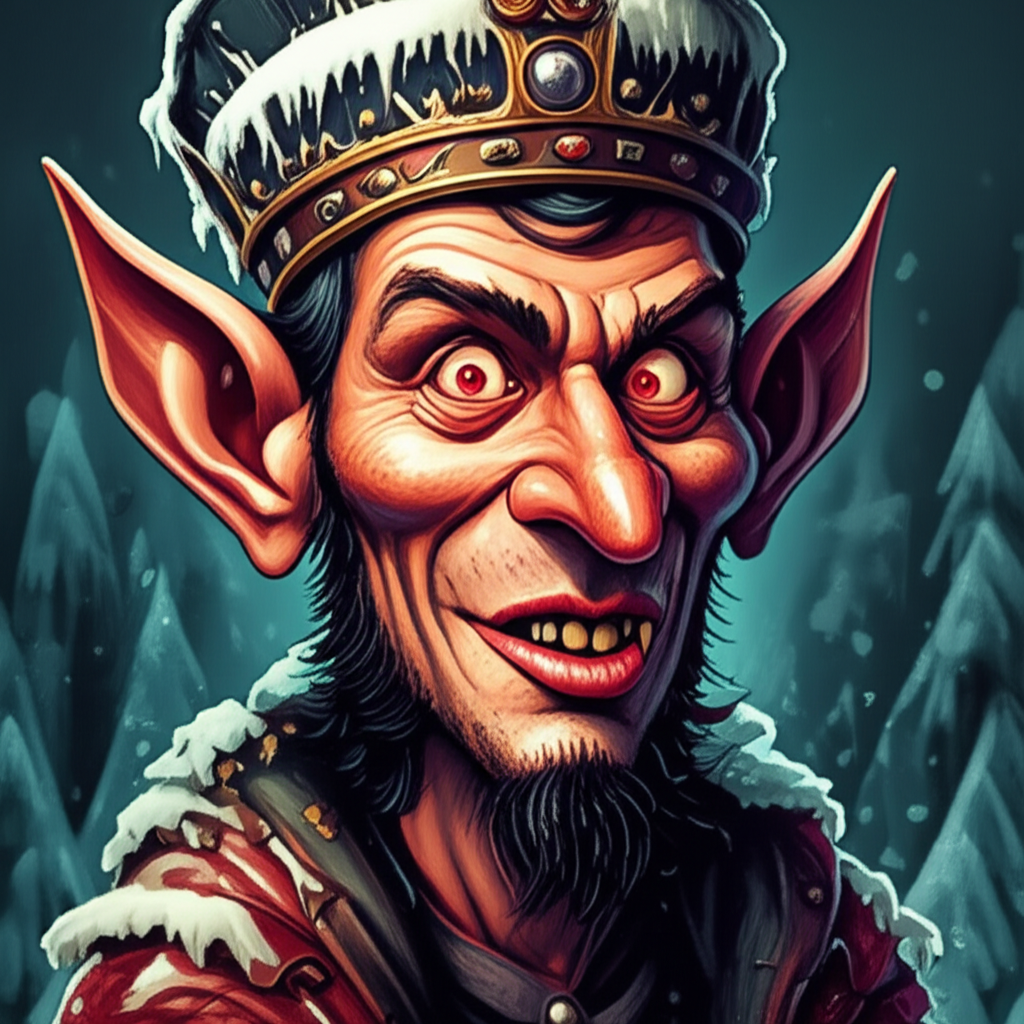
From the misty, windswept landscapes of ancient Scotland, particularly the rugged borderlands where feuds and folklore intertwined, comes the chilling tale of Redcap and the enigmatic Crown of Winter. This is not a recounting of factual events, but a narrative woven from the threads of human imagination, a traditional story shared by ancient peoples to explain the mysteries of their world and the darker corners of their fears.
The cultural era from which this myth likely emerged was one of harsh realities and a deep connection to the natural world. In medieval Scotland, life was often precarious. Communities lived under the constant threat of famine, disease, and the brutal realities of clan warfare. The natural world, with its dramatic shifts in weather, its untamed wilderness, and its hidden dangers, was a powerful force that dictated survival. In such a context, people looked for explanations for the unpredictable, the terrifying, and the awe-inspiring. They imbued the very earth, the winds, and the shadows with spirits and beings that reflected their experiences and anxieties. The world was seen as a place alive with unseen forces, where the boundaries between the mortal and the supernatural were fluid and permeable. It was a time when stories were not mere entertainment but vital tools for understanding, teaching, and coping with the unknown.
Central to this particular legend is the figure of Redcap, a creature steeped in the folklore of the border regions. Redcap is depicted as a malevolent spirit, often inhabiting ancient ruins, battlefields, or lonely stretches of moorland. He is typically described as a small, wizened old man, his form hunched and gnarled. His most striking feature, and the origin of his name, is the blood-red cap he is said to wear. This cap is not merely a fashion accessory; it is believed to be dyed in the blood of those he has claimed. Redcap is also often depicted with long, sharp talons, and his eyes are said to burn with a malevolent light. He is a creature associated with violence and death, a spectral sentinel guarding places of bloodshed and sorrow. His symbolic attributes point towards the enduring presence of past violence, the lingering echoes of tragedy, and the primal fear of what lurks in the desolate and forgotten places of the world. He embodies the idea that certain locations, stained by history, can hold a residual malevolence.
The legend of Redcap’s pursuit of the Crown of Winter, while less universally documented than the creature himself, speaks to a broader theme of elemental power and dominion. The Crown of Winter itself is not a tangible object in the way a king wears a crown. Instead, it represents the absolute authority and chilling grip of the winter season. It is the embodiment of the deepest frost, the most biting winds, and the longest nights. In the narrative, Redcap, driven by an insatiable thirst for power and perhaps an affinity for the starkness of the cold, seeks to claim this ethereal crown.
Imagine a vast, desolate moorland, blanketed in a shroud of perpetual twilight. The wind, a mournful lament, whips across the heather, carrying with it the scent of damp earth and decay. Here, amidst the crumbling stones of an ancient watchtower, a place where centuries of conflict have seeped into the very soil, dwells Redcap. His eyes, like embers in the deepening gloom, scan the horizon. He is a creature of shadows and sorrow, his existence tied to the lingering anguish of past battles. He knows the stories whispered on the wind, tales of the Crown of Winter, a symbol of ultimate dominion over the land when it lies dormant and frozen.
The Crown of Winter, in this telling, is not a physical artifact to be found. It is a state of being, a potent force that descends upon the land with the arrival of the deepest cold. It is the power that stills rivers, silences the birdsong, and forces life to retreat into slumber. Redcap, perhaps envious of this natural, profound control, or perhaps seeking to amplify his own malevolent influence, embarks on his grim quest. His journey is not one of physical travel across miles, but a spectral endeavor, a relentless pursuit of this elemental power. He is said to follow the retreating warmth, a shadow clinging to the edges of civilization, always seeking the heart of the coming frost. He might be depicted as harassing travelers who venture too far into the increasingly frigid wilderness, his presence a warning, a harbinger of the season’s unforgiving nature. He doesn’t wear the crown; rather, he serves its power, his own dark essence amplified by the chilling aura it casts. He is the embodiment of winter’s cruelest aspects, an agent of its desolate reign.
The symbolism embedded within the tale of Redcap and the Crown of Winter is multifaceted. For the ancient peoples of Scotland, Redcap likely represented the lingering dread of violence and the inescapable consequences of conflict. He was a physical manifestation of the fear that the past would never truly fade, that places stained by bloodshed would forever hold a dark energy. The Crown of Winter, on the other hand, symbolized the raw, untamed power of nature. It was a reminder of humanity’s vulnerability in the face of elemental forces, a depiction of the stark beauty and unforgiving harshness of winter. Redcap’s pursuit of this crown could be interpreted as a yearning for control, a desire to harness or embody the ultimate power of a season that brought both hardship and a necessary period of rest to the land. It might also represent the ambition of those who sought dominance, even in the most desolate and inhospitable of circumstances.
In the modern world, these ancient myths and legends continue to find resonance, often reinterpreted through the lens of literature, film, and popular culture. Redcap, as a folkloric creature, has been adopted into fantasy novels and role-playing games, where he often serves as a formidable antagonist, a guardian of cursed places, or a creature embodying the grim aspects of the supernatural. The concept of the "Crown of Winter" also appears in various forms, representing themes of cold, power, and the cyclical nature of seasons, sometimes as a literal magical artifact, other times as a metaphor for absolute authority or a period of profound change. These modern interpretations often draw on the primal fears and awe that the original stories evoked, adapting them to new narratives and audiences, keeping the spirit of these ancient tales alive in new forms of storytelling.
It is crucial to reiterate that the tale of Redcap and the Crown of Winter is a product of human storytelling, a cultural artifact passed down through generations. As Muslims, we understand that only Allah (God) is the true Creator and Sustainer of all that exists. Our belief system acknowledges the Creator’s absolute power and sovereignty over all aspects of existence, including the natural world and its cycles.
This narrative, however, serves as a valuable window into the cultural heritage of the people who first conceived it. It speaks to their understanding of the world, their anxieties, their relationship with nature, and their capacity for imagination. Stories like these, born from the collective consciousness of ancient societies, remind us of the enduring power of human creativity and the rich tapestry of cultural expression that continues to shape our understanding of the world, even as we hold fast to our own foundational beliefs. They are echoes of the past, whispers of human imagination, and testaments to the timeless art of storytelling.