fufufafa
The mists of ancient Ireland, a land steeped in oral tradition and vibrant folklore, whisper tales of gods, heroes, and potent artifacts. Among these enduring narratives, the story of Nuada’s Sword, often intertwined with the prowess of the sun-god Lugh, holds a significant place. This is not a chronicle of historical events or a guide to divine worship; rather, it is a window into the imaginative world of ancient Celtic peoples, a tapestry woven from their understanding of the cosmos, their anxieties, and their aspirations. These are stories told and retold, passed down through generations, reflecting the rich cultural heritage of a people who found meaning and explanation in the natural world and the extraordinary powers they attributed to it.
The era in which these myths likely took root was one where the boundaries between the human and the supernatural were fluid, where the cycles of nature dictated life, and where the unseen forces of the world were believed to hold sway. Imagine a society living amidst rolling green hills, ancient forests, and the restless sea. Their worldview was likely animistic, seeing spirits and consciousness in all things – in the rustling leaves, the crashing waves, and the very earth beneath their feet. The Tuatha Dé Danann, the mythical race often central to these tales, represented a pantheon of powerful beings who embodied aspects of this natural world and human experience. Their stories, shared around crackling fires on long, dark nights, served to explain the inexplicable, to impart wisdom, and to entertain, offering a framework for understanding their place in the grand, often mysterious, order of existence.
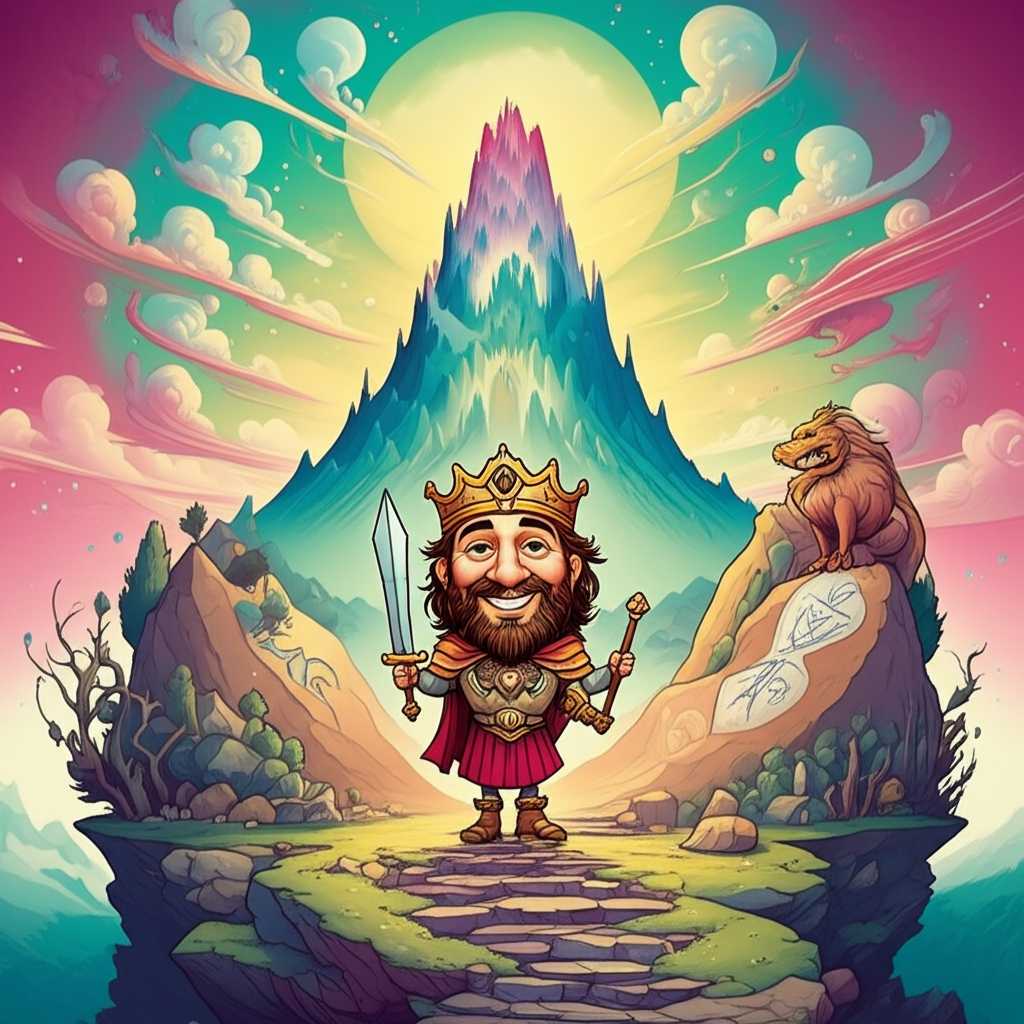
Within this rich mythological landscape, we encounter figures like Nuada, a king of the Tuatha Dé Danann, and Lugh, a multifaceted deity often associated with light, skill, and kingship. Nuada, in the tales, is often depicted as a noble leader, whose very essence is tied to the well-being of his people. His most famous attribute, and the focus of our narrative, is his sword. While not explicitly described as "Nuada’s Sword of Lugh" in every retelling, the association is strong, for Lugh was a supreme warrior and often a patron or embodiment of martial prowess. The sword itself, in the context of these stories, is not merely a weapon. It is a symbol, imbued with a power that transcends the physical. It represents authority, justice, and the cutting edge of victory. Its gleam is said to be blinding, its touch decisive, its very presence a harbinger of triumph for those who wielded it justly and a stark warning to their enemies. Lugh, the "Shining One" or "Master of Skills," embodies a multitude of talents – from smithcraft and healing to poetry and warfare. His connection to the sword signifies the divine blessing of skill and strength that was believed to empower heroes and rulers.
The narrative often unfolds during times of great conflict for the Tuatha Dé Danann. One prominent tale tells of the First Battle of Magh Tuireadh, where the Tuatha Dé Danann faced the Fomorians, a race often portrayed as monstrous and chaotic, representing the primal forces of darkness and destruction. In this epic struggle, Nuada, the king, suffered a grievous wound, losing his arm. While this rendered him unfit to rule according to ancient Celtic law, which demanded a king be physically whole, his spirit remained undeterred. It was Lugh, the versatile and powerful deity, who is sometimes credited with providing Nuada with a silver arm, miraculously restoring his kingship. However, the true power of the sword often surfaces in the context of Lugh’s own legendary battles. When Lugh himself took up arms, his prowess was unmatched. The sword, whether it was Nuada’s original weapon or one wielded by Lugh in his own right, became an extension of his divine might. Imagine the clash of armies under a sky ablaze with the sun – Lugh, a figure of radiant power, his movements swift and precise, his sword a blur of light. The weapon, in these accounts, seems to cut through enemy ranks with an almost supernatural ease, its edge imbued with the sun’s fierce energy and Lugh’s mastery of every art. It is the symbol of decisive action, of the ability to cleave through obstacles and bring about a righteous conclusion to conflict.
The symbolism woven into these tales is rich and multifaceted. The sword, as an artifact of power, represented more than just military might. For ancient Celts, it could symbolize justice, the ability to discern truth from falsehood, and the unwavering resolve of a leader. The blinding gleam of the sword might have represented the clarity of divine insight or the overwhelming force of a just cause. Lugh’s association with the sword highlights the value placed on skill, ingenuity, and the harmonious integration of various talents – a leader was not just a warrior but also a craftsman, a poet, and a healer. The struggles against the Fomorians, on the other hand, likely symbolized the eternal human battle against chaos, ignorance, and destructive forces. The sword, in this context, became a tool of order, capable of pushing back the encroaching darkness.
In the modern world, the legacy of these ancient myths continues to resonate. Nuada’s Sword, and the broader mythology of the Tuatha Dé Danann and figures like Lugh, have found new life in contemporary literature, fantasy novels, video games, and even films. These stories are mined for their epic scope, their compelling characters, and their rich symbolic potential. They inspire tales of heroic quests, battles against insurmountable odds, and the discovery of ancient, powerful artifacts. Scholars and enthusiasts of folklore continue to study these narratives, delving into their cultural context, their linguistic roots, and their enduring impact on the human imagination. They are studied not as historical accounts but as valuable insights into the beliefs, values, and storytelling traditions of past societies.
In conclusion, the tale of Nuada’s Sword and its connection to Lugh is a fascinating glimpse into the imaginative world of ancient Celtic peoples. It is a story of power, leadership, and the enduring human fascination with extraordinary abilities. As Muslims, we recognize that the true Creator and Sustainer of all existence is Allah (SWT). These narratives, while captivating and culturally significant, are products of human storytelling and ancient interpretations of the world. They serve as a reminder of the rich tapestry of human cultural heritage, the power of imagination, and the enduring tradition of storytelling that connects us to the wisdom and creativity of generations past. By understanding these stories within their historical and cultural context, we can appreciate their value as expressions of human thought and creativity, without attributing divine power to them.