fufufafa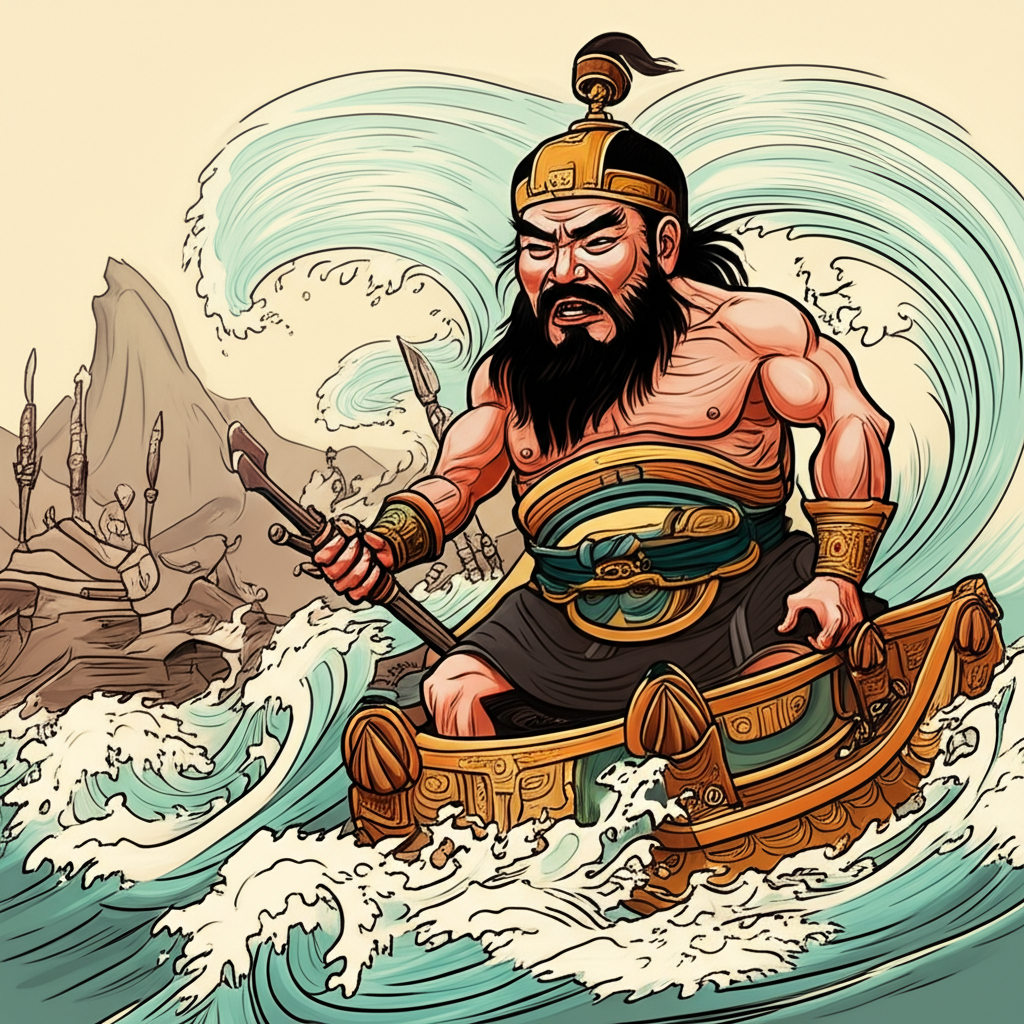
In the rich tapestry of ancient Chinese lore, where mountains touch the sky and rivers carve the earth, there exists a foundational narrative that speaks of humanity’s struggle against nature’s fury and the birth of civilization itself. This is the traditional story of the Great Flood, and the legendary figures, Gun and Yu, whose monumental efforts, one tragically flawed and the other brilliantly successful, are forever etched into the cultural memory of China. This narrative, passed down through generations, is a testament to the storytelling prowess of ancient people, offering insights into their worldview and values, rather than being a factual account or an object of belief.
Origins and Cultural Background
This myth emerges from a period in ancient China characterized by early agricultural societies and the constant, often overwhelming, challenges posed by the natural world. Long before the unification of great empires, communities clustered along river valleys, particularly the Yellow River, which, while life-giving, was also prone to devastating floods. These catastrophic events could wipe out entire settlements, destroy crops, and claim countless lives, leaving behind a landscape of despair. For the people of this era, the world was a powerful, unpredictable force, often benevolent but sometimes terrifyingly destructive. Their understanding of the cosmos was deeply intertwined with observations of nature, leading them to personify natural phenomena and weave narratives that explained the inexplicable, provided moral lessons, and offered hope for survival and prosperity. In such an environment, stories of heroes who could master the elements were not just entertainment; they were expressions of collective aspiration, resilience, and the desperate need for strong, wise leadership in the face of overwhelming adversity.
Legendary Figures: Gun, Yu, and the Majesty of Mount Tai
At the heart of this epic struggle stand two legendary figures: Gun and his son, Yu.
Gun is depicted in the myth as a formidable chieftain or minister, chosen by the revered Emperor Yao to quell the rampaging waters of the Great Flood. He is often characterized by his immense strength and unwavering determination, yet also by a certain hubris or perhaps an incomplete understanding of the forces he sought to control. His primary tool in the myth is a magical substance known as Xirang (息壤), or "self-growing soil," a miraculous earth that could expand infinitely to fill gaps and build barriers. This element serves as a powerful symbol within the narrative, representing a quick, perhaps simplistic, solution to a complex problem.
His son, Yu, in stark contrast, is portrayed as a figure of extraordinary perseverance, wisdom, and selfless dedication. Appointed by Emperor Shun (who succeeded Yao) after Gun’s failure, Yu embodies a different approach to leadership and problem-solving. He is not merely strong but intelligent, patient, and deeply empathetic to the suffering of his people. His character symbolizes the triumph of diligent, methodical work and a harmonious understanding of nature over brute force.
Mount Tai, while not a character in the traditional sense, holds immense symbolic weight in the narrative and Chinese culture as a whole. As one of the Five Great Mountains of China, Mount Tai has been revered since ancient times as a sacred peak, a symbol of stability, permanence, and the connection between heaven and earth. In the context of the flood myth, it often serves as a silent, majestic witness to humanity’s trials and triumphs, a place where cosmic order is affirmed, or where significant events unfold, reflecting the belief of ancient people in the mountain’s spiritual significance and its role in the divine order of things.
The Great Flood: A Narrative of Disaster and Deliverance
The story begins with the world plunged into an unimaginable deluge. Waters rose higher than mountains, engulfing valleys, sweeping away homes, and forcing people to seek refuge on the highest peaks. The land was a vast, chaotic ocean, and humanity teetered on the brink of extinction.
Emperor Yao, witnessing the immense suffering of his people, sought a hero to tame the flood. His choice fell upon Gun. For nine long years, Gun labored tirelessly. He employed the wondrous Xirang, piling up vast quantities of the self-growing soil to construct immense dikes and dams, believing he could block the relentless flow of water. He built and built, but for every wall erected, the waters seemed to rise higher, finding new paths to surge forth. Gun’s method, a direct confrontation with nature, ultimately proved futile. The waters, unyielding, continued their destructive course, and the suffering of the people persisted. Gun’s failure, often attributed to his hubris or his simplistic approach, led to his exile or, in some versions, his execution at Feather Mountain, a tragic end for a man who had dedicated his life, however misguidedly, to saving his people.
From Gun’s body, the myth tells, Yu was miraculously born, destined to complete the task his father could not. Appointed by Emperor Shun, Yu embarked on a different path. Instead of attempting to block the waters, Yu resolved to understand them. He spent years traveling across the flooded lands, meticulously observing the currents, charting the waterways, and studying the terrain. He enlisted the aid of many, including mythical beings like the Yellow Dragon and the Black Turtle, as symbolic representations of wisdom and strength from the natural world.
Yu’s strategy was one of channeling and dredging. He organized his people to dig vast canals, to deepen riverbeds, and to create outlets that would guide the floodwaters back to the sea. It was an arduous task, demanding immense sacrifice. For thirteen years, Yu toiled without rest, enduring incredible hardship. The story emphasizes his profound dedication: he passed by his own home three times during these years, hearing the cries of his infant son and the loving calls of his wife, yet never once stepping inside, prioritizing the welfare of his people above his own family. His hands became calloused, his body withered, but his spirit remained unbroken.
Slowly, painstakingly, the waters receded. The canals successfully guided the rivers, allowing the land to emerge once more. Yu divided the reclaimed land into the Nine Provinces, establishing a framework for governance and agriculture. His monumental achievement brought order out of chaos, transforming a drowned world into a habitable one. The "Songs of Mount Tai" would echo not as literal melodies but as a celebration of this triumph, with the ancient and revered mountain standing as a timeless witness to Yu’s unparalleled success and the re-establishment of harmony between humanity and the earth.
Symbolism and Meaning
This epic tale is rich with symbolism, offering profound insights into the values and understanding of ancient Chinese society. Gun’s failure represents the futility of confronting nature with brute force alone, highlighting the dangers of arrogance or an incomplete understanding. His tragic end serves as a cautionary tale against simplistic solutions to complex problems.
Yu, on the other hand, embodies the virtues of perseverance, wisdom, and selfless leadership. His success symbolizes the triumph of understanding, adaptability, and working in harmony with natural forces. His long journey and self-sacrifice underscore the importance of dedication and putting the collective good above personal comfort. The flood itself represents chaos and the immense challenges faced by early human societies, while its eventual control signifies the establishment of order, the birth of civilization, and the power of human ingenuity and cooperation. Mount Tai, in its silent grandeur, symbolizes the enduring forces of nature and the cosmic order that Yu helped to restore, marking a pivotal moment in the establishment of a stable world.
Modern Perspective
Today, the myth of Gun and Yu continues to resonate deeply within Chinese culture. It is not merely an ancient story but a foundational narrative that shapes national identity and cultural values. The tale of Yu’s perseverance is a popular theme in literature, art, and even modern media like films, animated series, and video games. Scholars of folklore, history, and comparative mythology study this myth for its insights into ancient engineering challenges, societal structures, and the development of early statecraft. Yu is often cited as an exemplary leader, and his story serves as a powerful metaphor for overcoming seemingly insurmountable obstacles through hard work, wisdom, and self-sacrifice. It reflects humanity’s enduring fascination with heroes who tame the wild and bring order to chaos, a theme universal across many cultures.
Conclusion
The Flood of Gun and Yu, culminating in the symbolic "Songs of Mount Tai," is a magnificent testament to the power of human imagination and the enduring legacy of storytelling. It is a cultural narrative from ancient China, cherished for its historical and educational value, and a window into the worldview of people who lived millennia ago. It is important to reiterate that this is a traditional story, a product of ancient human creativity, and not meant to be taken as literal truth or an object of belief.
As Muslims, we recognize that only Allah, the Almighty, is the true Creator and Sustainer of the heavens and the earth, the Giver of life, and the One Who controls all natural phenomena. Our faith teaches us that ultimate power and wisdom belong to Him alone. Yet, we can appreciate these ancient myths for their cultural heritage, their artistic beauty, and their profound insights into the human condition, reflecting on the universal themes of leadership, resilience, and the eternal struggle to navigate and understand the world around us. These stories, born from the hearts and minds of ancient peoples, continue to enrich our understanding of diverse human experiences and the shared heritage of imagination that binds us all.