fufufafa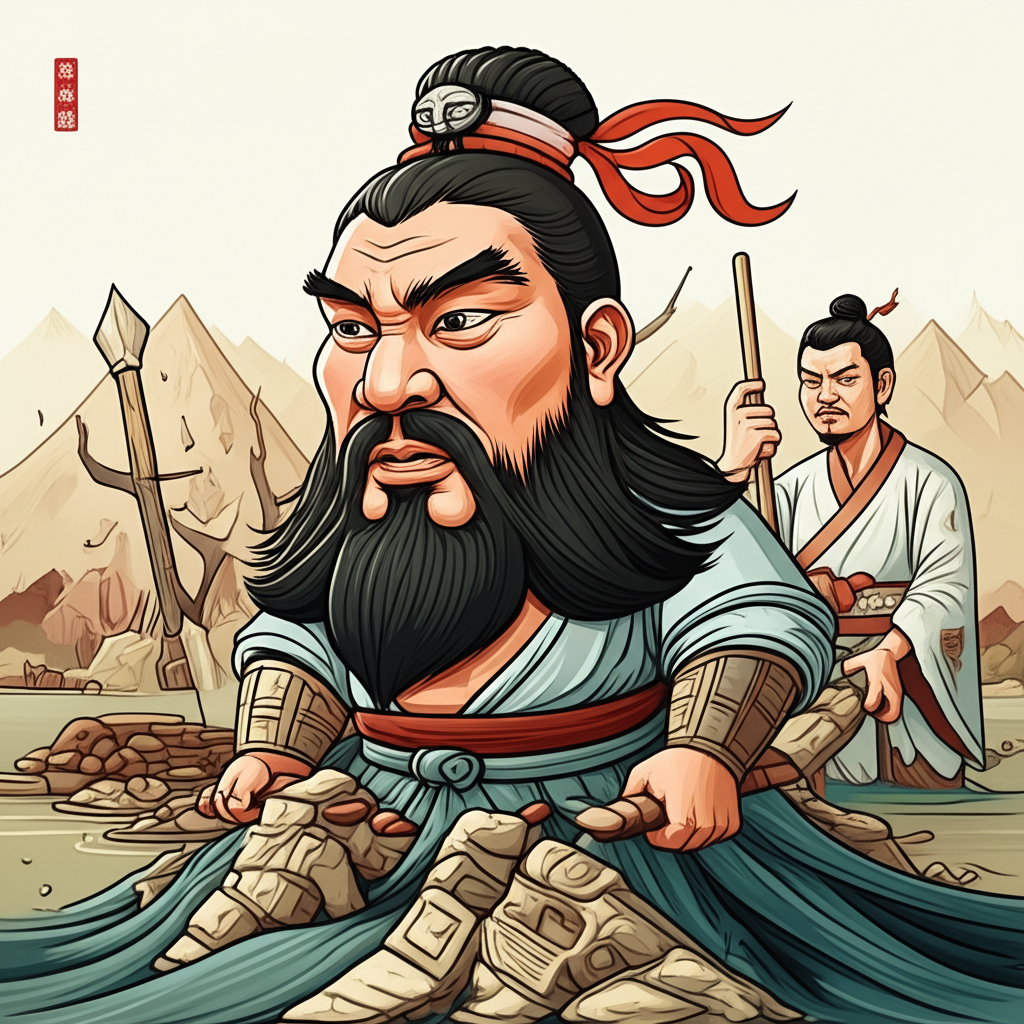
The grand tapestry of human culture is woven with threads of myth and legend, tales passed down through generations that attempt to explain the world, its wonders, and its terrors. Among these ancient narratives, the story of the "Flood of Gun and Yu," originating from the rich folklore of ancient China, stands as a testament to the enduring human fascination with cataclysm and the struggle for survival. This is not a historical account, nor is it a doctrine to be believed, but rather a traditional story, a product of the collective imagination of ancient peoples seeking to comprehend the immense power of nature and the challenges of societal rebuilding.
The era in which this myth likely took root was one deeply intertwined with the cycles of nature. Ancient China, particularly in its early agricultural societies, was profoundly dependent on the bounty of the land and the predictability of the rivers. Life revolved around the seasons, the rains, and the ever-present threat of floods that could devastate crops, drown livestock, and displace entire communities. The world, for these ancient peoples, was often perceived as a place governed by powerful, unseen forces, sometimes benevolent, sometimes wrathful. Deities, spirits, and mythical beings were often invoked to explain natural phenomena, from the gentle caress of a spring breeze to the destructive fury of a torrential downpour. The concept of a great flood, a cosmic reset, would have resonated deeply within this worldview, providing a framework for understanding both the cyclical nature of destruction and the subsequent renewal of life.
At the heart of this narrative lies the imposing figure of Gun, a mythical hero or demigod, and later, his son, Yu the Great. Gun, in the tales, is often depicted as a powerful, determined individual, tasked with the monumental challenge of controlling the incessant, overwhelming waters that threatened to engulf the land. He is not described as a divine being in the sense of an omnipotent creator, but rather as a figure endowed with extraordinary strength and ingenuity. His symbolic attribute is his relentless effort, his almost stubborn persistence in the face of an insurmountable problem. He embodies the human drive to confront and subdue the untamed forces of nature. His methods, as the stories unfold, are often portrayed as forceful and, ultimately, ineffective.
The narrative of the Flood of Gun and Yu unfolds as a dramatic saga of struggle and transformation. It begins with a world submerged, a cataclysm of unprecedented scale. The "Four Seas," a symbolic representation of all the waters, are said to have breached their bounds, turning the familiar landscape into a vast, churning ocean. The people were scattered, their homes destroyed, their lives hanging precariously in the balance. Gun was summoned, or perhaps took it upon himself, to stem the tide. He spent years, according to the legends, attempting to build dams and levees, to physically contain the raging waters. He labored tirelessly, his efforts a testament to his resolve. However, the sheer power of the flood, the relentless pressure of the Four Seas, proved too much for his methods. His dams were washed away, his efforts ultimately futile. The stories often depict Gun as failing in his task, his persistence leading him to a tragic end, sometimes described as being exiled or even executed for his inability to succeed.
It is in the aftermath of Gun’s failure that his son, Yu, emerges. Yu, inheriting his father’s burden and the responsibility to save his people, embarks on a different approach. While Gun had attempted to dam and block the waters, Yu, guided by a deeper understanding or perhaps a divine revelation (within the context of the myth), chose to channel and guide them. He spent thirteen years, a significant and symbolically charged period, traversing the flooded lands, not to fight the water, but to understand its flow. He orchestrated a vast undertaking of digging canals, diverting rivers, and creating drainage systems. His efforts were characterized by meticulous planning, immense perseverance, and a deep connection with the land and its waterways. Yu’s symbolic attributes are wisdom, strategic thinking, and unwavering dedication to the welfare of his people. He represents the triumph of intelligent adaptation over brute force. Through his tireless work, the waters were eventually brought under control, the land reclaimed, and civilization rebuilt. Yu is often depicted as a benevolent ruler, his reign marked by order and prosperity, a direct consequence of his monumental feat.
The symbolism embedded within the Flood of Gun and Yu is rich and multifaceted. Gun’s struggle can be seen as representing humanity’s initial, often naive, attempts to conquer nature through direct confrontation, highlighting the limitations of such an approach when faced with overwhelming natural forces. His failure underscores the idea that some challenges require more than just brute strength or unyielding resistance. Yu, on the other hand, embodies the wisdom of working with nature, of understanding its patterns and harnessing its power for constructive purposes. His success symbolizes the triumph of intelligence, adaptability, and diligent effort in overcoming adversity. The flood itself can be interpreted as a primordial force, a cleansing and destructive agent that necessitates societal renewal. It speaks to the cyclical nature of existence, where periods of chaos are followed by opportunities for rebirth and reconstruction. The story also serves as a powerful allegory for leadership, emphasizing the qualities of foresight, perseverance, and dedication to the common good.
In the modern world, the myth of Gun and Yu continues to resonate, albeit through different lenses. It is a prominent fixture in Chinese literature, art, and historical interpretation, often explored in academic studies of folklore and mythology. The characters of Gun and Yu have become archetypes, appearing in novels, plays, and even animated films, where their struggles and triumphs are reinterpreted for contemporary audiences. In the realm of video games, the narrative elements of large-scale environmental challenges and the quest for restoration can be found, drawing inspiration from such ancient tales. Furthermore, the story serves as a valuable point of reference for understanding ancient Chinese cosmology and their relationship with the natural world, offering insights into the values and beliefs that shaped their civilization.
In conclusion, the Flood of Gun and Yu is a compelling narrative from ancient Chinese folklore, a story that has been told and retold for centuries. It is crucial to reiterate that this is a traditional story, a product of human imagination and a way for ancient peoples to grapple with the immense forces of nature. As Muslims, we firmly believe that only Allah (God) is the true Creator and Sustainer of all that exists, and that all power and dominion belong to Him alone. The stories of the past, like this one, offer us a window into the cultural heritage of humanity, showcasing the enduring power of storytelling to explore fundamental human experiences, from struggle and failure to wisdom and ultimate renewal. These narratives, while not to be mistaken for divine truth, enrich our understanding of the diverse ways in which cultures have sought meaning and navigated the complexities of existence.