fufufafa
This article delves into a fascinating narrative from the rich tapestry of Norse mythology, a collection of stories primarily originating from the Germanic peoples of Scandinavia during the Viking Age. The tale of Loki’s downfall and its impact on the "Celestial Throne" – representing the divine order of Asgard – is a traditional story told by ancient people to explain their world, their values, and the forces they perceived around them. It is crucial to understand that this is a work of mythology and folklore, not a historical account or a set of beliefs to be practiced or worshipped. We explore it purely for cultural, historical, and educational understanding, recognizing it as a product of human imagination from a bygone era.
Origins and Cultural Background: Echoes from a Northern World
The myths of figures like Loki, Odin, and Thor emerged from a cultural era profoundly shaped by harsh natural environments, seafaring, and a warrior ethos. Predominantly shared during the Viking Age (roughly 8th to 11th centuries CE), these tales reflect the worldview of people living in Northern Europe, where survival often depended on strength, cunning, and communal bonds. Their society was tribal, agricultural, and deeply connected to the rhythm of seasons and the power of nature.
People of that time viewed the world as a complex network of nine realms, interconnected by the cosmic tree Yggdrasil. Their understanding of existence was often cyclical, anticipating a grand, fated end known as Ragnarök, followed by renewal. They believed in a pantheon of gods and goddesses, powerful beings who, despite their divinity, were often depicted with human-like flaws, emotions, and struggles. Honor, courage, and fate were central tenets of their moral code, and their myths served as profound commentaries on these concepts, explaining everything from the creation of the cosmos to the inevitability of death and rebirth. The "Celestial Throne" can be understood as a metaphor for the established order of Asgard, the realm of the Æsir gods, and the power wielded by its chief, Odin.
Loki: The Weaver of Chaos and Change
At the heart of this narrative stands Loki, a figure of immense complexity and contradiction. Though counted among the Æsir gods, Loki’s lineage traces back to the Jötnar, the giants, beings often associated with chaos and primordial forces. He is frequently described as the god of mischief, trickery, and fire, a master shapeshifter capable of assuming any form, from a salmon to a mare, even an old woman.
Symbolically, Loki embodies the unpredictable, disruptive forces within the cosmos. He is a catalyst for change, often initiating events that lead to both great benefit and terrible destruction for the gods. His intellect is unparalleled, his wit sharp, and his charisma undeniable, yet these qualities are frequently twisted by jealousy and malice. He represents the duality of cleverness—how it can be used for good or ill—and the precarious balance between order and chaos. Unlike other gods who represent specific domains like thunder or wisdom, Loki’s domain is more abstract: the disruption of norms, the challenging of boundaries, and the unraveling of established structures. He is not a being to be worshipped, but a narrative device that explores the nature of deceit, consequences, and the inherent instability even within a divine order.
The Serpent’s Coil Around the Throne: Loki’s Downfall
The story of Loki’s fall is not a single event but a tragic descent, a gradual corruption of his cleverness into pure malevolence that ultimately threatens the very foundation of the Celestial Throne, Asgard itself. Initially, Loki was a companion to the gods, his tricks often serving to amuse or even aid them, albeit through unconventional means. He once helped recover Thor’s hammer Mjölnir and facilitated the construction of Asgard’s formidable walls, though often through deceitful schemes. Yet, a growing bitterness festered within him, a resentment towards the Æsir for their perceived arrogance and the order they represented.
The turning point, the act that cemented his betrayal, was the death of Baldr, the beloved god of light, beauty, and purity. Baldr was plagued by prophetic dreams of his own demise, leading his mother, Frigg, to extract an oath from every living thing—and inanimate object—not to harm her son. Everything swore the oath, save for the tiny mistletoe, which Frigg deemed too insignificant. Loki, consumed by jealousy for Baldr’s universal adoration, discovered this sole vulnerability. He fashioned a dart from the mistletoe and, during a game where the gods harmlessly threw objects at the invulnerable Baldr, tricked the blind god Höðr into casting it. The mistletoe pierced Baldr, killing him instantly and plunging all of Asgard into grief.
Loki’s malice did not end there. When Hel, ruler of the underworld, offered to return Baldr if every creature in the nine realms wept for him, Loki, disguised as a giantess named Þökk, refused to shed a single tear. This act sealed Baldr’s fate and exposed the depth of Loki’s wickedness.
The gods, finally recognizing the true extent of Loki’s treachery, hunted him down. After a desperate chase, he was captured. His punishment was severe and symbolic: he was bound to three rocks with the entrails of his own son, Nari, which transformed into iron chains. A venomous serpent was placed above him, dripping poison onto his face. Only his loyal wife, Sigyn, remained by his side, holding a bowl to catch the venom, though she had to turn away when the bowl filled, allowing the poison to burn Loki, causing the earth to tremble with his agony.
This binding of Loki signifies the gods’ attempt to restore order to the Celestial Throne, to contain the chaos he embodied. However, his imprisonment was not eternal. Prophecy foretold his escape at Ragnarök, the twilight of the gods. Free from his chains, Loki would lead the monstrous children he sired—the Fenris wolf, the Midgard Serpent Jörmungandr, and Hel—alongside the Jötnar, in a final, cataclysmic battle against the Æsir. In this ultimate confrontation, Loki himself was destined to fight Heimdall, the guardian of the Bifrost bridge, and both would perish, marking the complete collapse of the old world order, including the Celestial Throne, before a new world could emerge from the ashes.
Symbolism and Meaning: A Tapestry of Human Experience
To ancient peoples, the narrative of Loki and the Celestial Throne offered profound insights into their world. Loki himself symbolizes the precarious balance between order and chaos, the disruptive force that, while sometimes necessary for change, can also lead to utter destruction if unchecked. His journey from trickster to malevolent force reflects the dangers of unchecked ambition, envy, and betrayal within any community or system. The death of Baldr, the embodiment of purity, at Loki’s hand, represents the devastating impact of malice and deceit on innocence, and the irreparable damage that can be inflicted by internal enemies.
The Celestial Throne, Asgard, symbolizes the established order, authority, and the ideals of a structured society. Loki’s actions, culminating in his role in Ragnarök, illustrate the fragility of even divine power and the inevitability of change, even cataclysmic change. The cyclical nature of Ragnarök, where the world is destroyed only to be reborn, suggests a belief in renewal, where even the greatest fall can pave the way for a new beginning. The story served as a moral compass, warning against deceit and celebrating loyalty, while also acknowledging the darker aspects of human (and divine) nature.
Modern Perspective: The Trickster’s Enduring Legacy
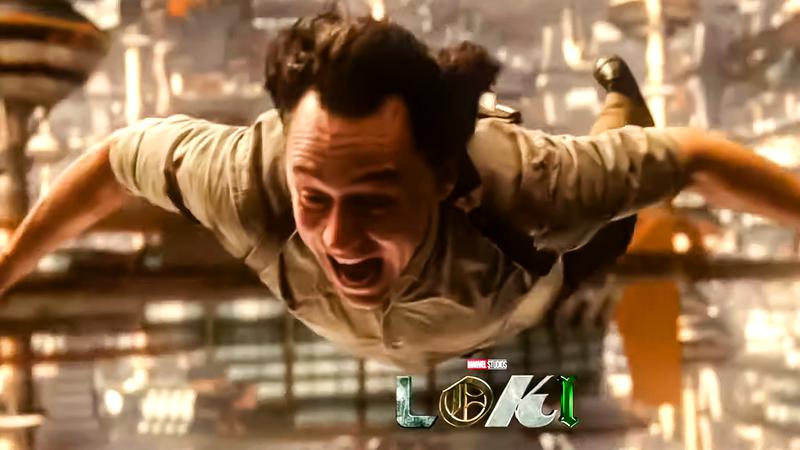
In contemporary culture, the myth of Loki and the Celestial Throne has experienced a remarkable resurgence, captivating new audiences across various media. In literature, film, and video games, Loki is frequently reinterpreted, often moving beyond a purely villainous portrayal. Marvel Comics and the Marvel Cinematic Universe, in particular, have popularized a version of Loki (famously portrayed by Tom Hiddleston) as a complex anti-hero, a sympathetic villain driven by a desire for belonging and recognition, rather than pure evil. This modern interpretation explores themes of identity, adoption, sibling rivalry, and the struggle against perceived destiny, resonating deeply with contemporary audiences.
Beyond popular entertainment, Loki remains a significant figure in cultural studies, literary analysis, and psychological theory. He is often cited as an archetypal trickster figure found in many mythologies worldwide, embodying the rebellious spirit that challenges norms and exposes hypocrisies. Scholars examine his role in understanding narrative structures, the dynamics of power, and the human fascination with characters who operate outside conventional morality.
Conclusion: A Reflection on Storytelling
The tale of Loki’s fall and the events leading to the ultimate fate of the Celestial Throne remains a powerful testament to the imaginative prowess of ancient Norse storytellers. It is a cultural story, not a belief system, offering a window into the values, fears, and cosmic understanding of people who lived centuries ago. As Muslims, we recognize that only Allah is the true Creator and Sustainer, and we understand these mythological narratives as products of human creativity, designed to explain the world before the advent of divine revelations.
This enduring myth, like countless others from various cultures, enriches our understanding of human heritage. It reminds us of the universal human impulse to create narratives that grapple with complex concepts like good and evil, order and chaos, destiny and free will. Such stories, passed down through generations, continue to inspire imagination, provoke thought, and serve as a vibrant reflection of our shared storytelling tradition.

 admin
admin
 rifanmuazin