fufufafa
In the tapestry of ancient Celtic lore, woven from the mists of Ireland and Scotland, whispers of powerful beings and their legendary deeds have echoed for centuries. Among these captivating tales is the story of Nuada, a king whose reign was marked by both profound loss and remarkable resilience, intrinsically linked to the fate of a sacred temple. It is important to understand that this narrative, like many others from ancient cultures, is a traditional story, a product of the imagination and worldview of people long past, shared to explain the world around them and explore fundamental human experiences.
The myths and legends of the Celts emerged during a period of significant cultural development, roughly from the Iron Age onwards. These were societies deeply connected to the natural world, where the changing seasons, the fertility of the land, and the unpredictable forces of nature held immense sway. Their worldview was often animistic, attributing spirits and consciousness to natural phenomena, animals, and even inanimate objects. The land itself was seen as alive, a source of power and sustenance, and their understanding of kingship and leadership was often intertwined with spiritual authority and the well-being of the community. The ancient Celts expressed their understanding of the cosmos, their fears, their hopes, and their moral compass through rich oral traditions, passed down through generations by poets, storytellers, and druids.
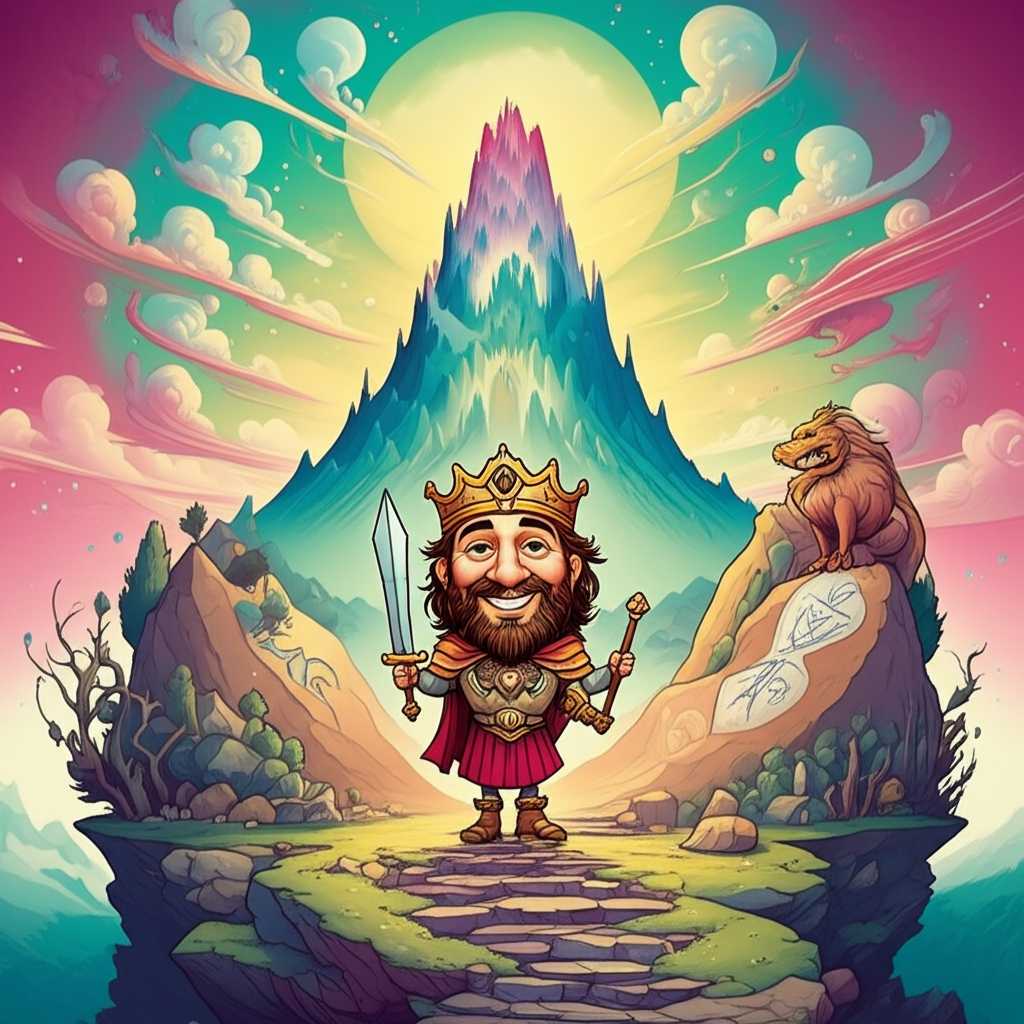
Central to this particular tale is Nuada, a figure often depicted as a noble and just king of the Tuatha Dé Danann, a mythical race of supernatural beings who inhabited Ireland. Nuada’s defining characteristic, and the source of his profound trial, was his missing hand. In the context of ancient Celtic symbolism, the hand often represented power, authority, craftsmanship, and the ability to act and shape the world. The loss of a hand, therefore, was a devastating symbolic blow, signifying a diminishment of kingship and leadership. Nuada’s silver hand, a prosthetic crafted by skilled artisans, served as a constant reminder of his injury but also as a testament to his enduring spirit and the ingenuity of his people. The silver itself, a precious metal, further amplified this, suggesting something of divine or magical origin, or at least something of great value and craftsmanship.
The narrative of Nuada often begins with his ascension to the throne of the Tuatha Dé Danann. He was a beloved ruler, wise and fair, and his reign was initially prosperous. However, during a fierce battle against the Fomorians, a race of monstrous beings representing chaos and destruction, Nuada suffered a grievous wound, losing his right arm from the shoulder. This loss was not merely physical; it carried immense symbolic weight. In the eyes of his people and according to the established customs of the Tuatha Dé Danann, a king with such a disability was deemed unfit to rule. The divine right of kings, as it were, was perceived to be broken. He was forced to relinquish his crown, a profound injustice that plunged him into despair and left his people vulnerable.
It was during this period of Nuada’s exile and the ensuing instability that the sacred temple played a pivotal role. The exact nature and location of this temple vary in different retellings, but it is consistently portrayed as a place of immense spiritual significance, a nexus of power and healing for the Tuatha Dé Danann. Some traditions place it as a central sanctuary, while others describe it as a hidden grove or a sacred spring guarded by ancient forces. It was within the precincts of this temple that the Tuatha Dé Danann believed their most profound connection to the divine and to the land itself resided.
Driven by the desire to reclaim his rightful place and to restore order to his people, Nuada, with the aid of skilled smiths and possibly divine intervention, was fitted with a perfect, articulated hand made entirely of silver. This remarkable feat of craftsmanship not only restored his physical wholeness but also, in the eyes of many, symbolically reconnected him to his lost authority. However, the path back to kingship was not straightforward. Nuada, though healed, still bore the mark of his wound. The struggle for his throne and the subsequent need to prove his worthiness continued.
The climax of the story often involves Nuada’s return to the sacred temple, not just as a supplicant, but as a leader seeking validation and the restoration of his full power. It is within this hallowed space that the ancient rites were performed, and the blessings of the land and the ancestors were sought. Some versions of the myth describe a trial or a ritualistic cleansing within the temple that affirmed Nuada’s inherent kingship, demonstrating that his spirit and his connection to his people remained unbroken. Others speak of a final confrontation where Nuada, with his silver hand now a symbol of his resilience and renewed strength, ultimately defeated his adversaries and reclaimed his throne, leading his people to victory and a period of renewed peace. The temple, in essence, served as the crucible where his legitimacy was tested and ultimately reaffirmed.
The story of Nuada and the sacred temple is rich with symbolism. Nuada’s lost hand represents vulnerability, the fragility of power, and the potential for even the greatest leaders to suffer setbacks. The silver hand, on the other hand, symbolizes resilience, the triumph of human ingenuity and spirit over adversity, and the ability to adapt and overcome. The sacred temple, as a locus of spiritual power and ancient wisdom, represents the enduring connection between the people, their land, and their ancestral traditions. It can be interpreted as a symbol of hope, healing, and the restoration of balance. The conflict with the Fomorians embodies the eternal struggle between order and chaos, civilization and barbarism, light and darkness.
In contemporary interpretations, the tale of Nuada has found a vibrant afterlife in various forms of media. He is often depicted as a wise and tragic hero in fantasy literature, a character whose physical disability and subsequent prosthetic add depth and complexity to his persona. In video games, characters inspired by Nuada might possess unique abilities tied to their mechanical limbs or a strong connection to ancient powers. These modern retellings often explore themes of overcoming adversity, the nature of leadership, and the enduring power of hope, reinterpreting the ancient symbols for a modern audience.
In conclusion, the story of Nuada and the sacred temple is a captivating piece of ancient Celtic folklore. It is a narrative woven from the imagination of a people deeply connected to their environment and their spiritual beliefs. As Muslims, we recognize that only Allah (God) is the true Creator and Sustainer of all existence, and that such tales are products of human storytelling and cultural heritage. These myths, however, offer invaluable insights into the values, fears, and aspirations of past societies. They highlight the enduring human fascination with leadership, resilience, and the quest for belonging and restoration. The tale of Nuada, with its echoes of loss and its triumphant return, serves as a powerful reminder of the enduring human capacity for imagination and the rich tapestry of cultural heritage that continues to shape our understanding of the world.