fufufafa
The mists that cling to the emerald fields of Ireland carry whispers of a time when the veil between worlds was thin, a time when the land itself seemed to breathe with a magic beyond the mundane. From this rich tapestry of ancient lore, we encounter the enduring legend of the Tuatha Dé Danann, a people woven into the very fabric of Irish mythology, whose purported presence on the Hill of Tara continues to captivate the imagination. It is crucial to understand that this is a traditional story, a product of the ancient Irish imagination, offering a glimpse into how they interpreted their world, not a historical account or a declaration of belief.
The roots of this tale are deeply embedded in the Celtic culture of Ireland, a society that flourished for centuries before the advent of Christianity. Imagine a people living in close communion with the natural world, where the rolling hills, the ancient forests, and the wild Atlantic coastline were not just landscapes but potent forces, imbued with spirit and mystery. Their worldview was one of interconnectedness, where the cycles of nature—birth, death, and rebirth—mirrored the rhythms of human life and the perceived movements of unseen powers. The concept of the Otherworld, a parallel realm of gods, spirits, and magical beings, was not a distant philosophical notion but a palpable reality that could, at times, intersect with the mortal plane. It was within this fertile ground of animism and a deep reverence for the land that stories of beings like the Tuatha Dé Danann took root and flourished, passed down through generations via oral tradition, woven into epics and ballads sung by bards around crackling fires.
The Tuatha Dé Danann, in these ancient narratives, are depicted not as crude monsters or simple spirits, but as a sophisticated and powerful race. They are often described as possessing extraordinary beauty, wisdom, and mastery over the arts, crafts, and even the very elements. Their supposed attributes were symbolic of the aspirations and understandings of the ancient Irish. Their mastery of craftsmanship, for instance, might represent a profound respect for skill and ingenuity, while their connection to nature could symbolize the vital importance of the land for sustenance and spiritual well-being. They are often portrayed as having descended from the sky, or emerging from beneath the earth, signifying their otherworldly origins and their inherent superiority. These beings were said to wield magical artifacts of immense power, such as the Spear of Lugh, the Cauldron of Dagda, and the Sword of Nuada, each imbued with specific symbolic meanings related to kingship, abundance, and justice. Their existence, therefore, served as a focal point for the ideals and the perceived forces that shaped the lives of the ancient Irish.
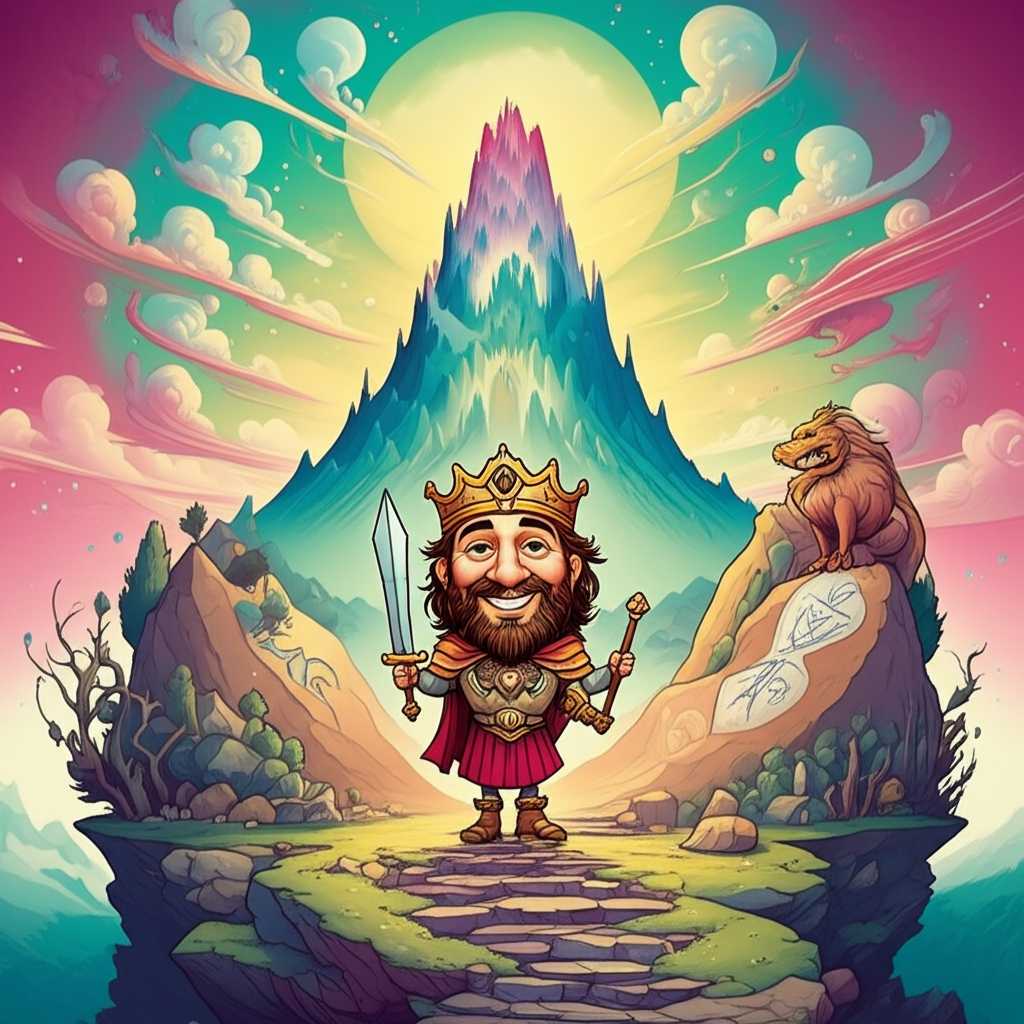
The narrative of the hunt for the Tuatha Dé Danann on the Hill of Tara is less a singular, linear story and more a tapestry of recurring themes and encounters. Tara, the ancient seat of the High Kings of Ireland, was considered a sacred place, a nexus where the earthly and the divine converged. It is on this hallowed ground that the Tuatha Dé Danann are said to have held court, their presence a constant, albeit often unseen, influence. The "hunt" itself is not typically a physical pursuit with bows and arrows, but rather a quest for knowledge, for understanding, or for the favor of these powerful beings. It might involve ancient kings seeking their counsel before battle, druids attempting to commune with them for prophecies, or even heroes undertaking perilous journeys to gain a fragment of their wisdom or a touch of their magic.
Imagine a scene at Tara, under a sky streaked with the hues of twilight. The air is thick with the scent of damp earth and peat smoke. A lone chieftain, clad in rough wool and leather, stands atop the Mound of the Hostages, his gaze fixed on the horizon. He is not hunting game, but the elusive presence of the Tuatha Dé Danann. He has heard tales from his elders, stories of their shimmering forms seen dancing in the moonlight, of their ethereal music drifting on the wind. He seeks not to capture, but to appease, to understand the forces that govern the land and its fortunes. Perhaps he leaves an offering at the foot of the mound, a simple gesture of respect, hoping for a sign, a whisper of guidance in the rustling leaves. Or perhaps a young warrior, filled with ambition, dreams of encountering them, of proving his worth and earning their favor to secure victory in the coming conflict. The narrative is one of aspiration, of the human yearning to connect with something greater than oneself, to tap into the wells of power and wisdom that the ancients believed resided just beyond the ordinary.
The symbolism woven into the legends of the Tuatha Dé Danann and their association with Tara is multifaceted. They can be seen as embodying the forces of nature – the fertility of the earth, the power of the sun, the mysteries of the moon. Their constant presence and influence might have represented the ancient Irish understanding of the inherent spiritual energy that permeated their world. Furthermore, the Tuatha Dé Danann often served as archetypes of leadership, wisdom, and justice, reflecting the qualities that the ancient Irish valued in their rulers. Their tales also offered a moral compass, illustrating the consequences of pride, hubris, and disrespect towards the natural and spiritual order. The "hunt" for them, in essence, was a metaphor for the human endeavor to navigate these complex forces, to seek balance, and to strive for excellence in all aspects of life.
In the modern era, the Tuatha Dé Danann continue to resonate through our cultural landscape. They are no longer perceived as literal deities to be worshipped, but as rich characters and potent symbols within the realms of literature, film, and gaming. Writers draw inspiration from their magical abilities and their complex relationships to craft compelling narratives of fantasy and adventure. In popular culture, they might appear as wise mentors, formidable adversaries, or the source of ancient prophecies that drive the plot. Scholars of folklore and mythology delve into these stories to understand the cultural values, beliefs, and societal structures of ancient Ireland. The Hill of Tara itself remains a site of immense historical and cultural significance, drawing visitors who are captivated by the echoes of these ancient tales.
In concluding, it is vital to reiterate that the stories of the Tuatha Dé Danann and their presence on the Hill of Tara are profound expressions of ancient Irish cultural heritage, born from a time of deep connection with the natural world and a rich tapestry of imagination. As Muslims, we recognize that only Allah (God) is the true Creator and Sustainer of all existence, and that the ultimate truth lies in His divine revelations. These ancient narratives, however, serve as valuable windows into the human capacity for storytelling, for creating meaning, and for grappling with the mysteries of existence. They are a testament to the enduring power of imagination and the vital role that cultural heritage plays in shaping our understanding of ourselves and the world around us. The whispers on the wind from Tara are not calls to worship, but echoes of a past that continues to inform and inspire our appreciation for the enduring art of human storytelling.