fufufafa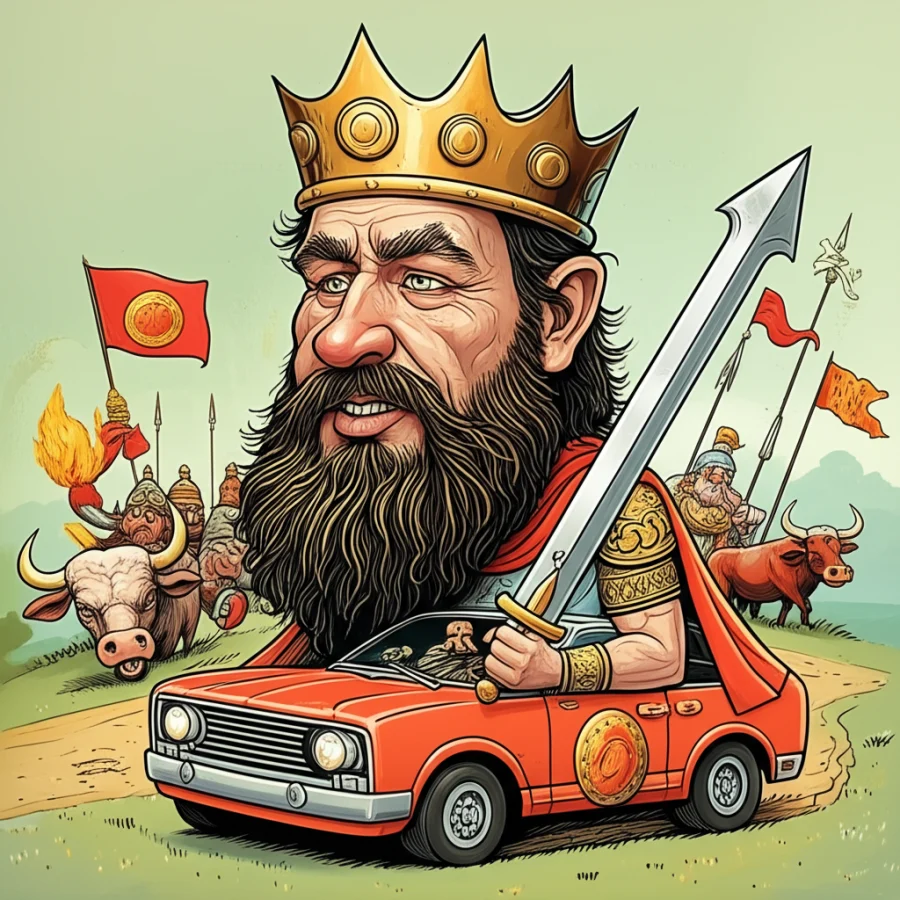
The mists that cling to the emerald hills and ancient stone circles of Ireland hold within them a rich tapestry of tales, woven by generations of storytellers. Among these, the Ulster Cycle stands as a monumental collection of heroic narratives, and at its heart lies the legendary Cattle Raid of Cooley. This epic story, deeply embedded in the cultural memory of Ireland, speaks of heroes, deities, and the very fabric of life as it was imagined by ancient peoples. It is crucial to understand that these are traditional stories, born from the human desire to explain the world, celebrate courage, and grapple with the mysteries of existence, rather than factual accounts or divine pronouncements.
The cultural era in which these myths were born was one of a pre-Christian, tribal society in Ireland, likely flourishing during the early Iron Age and continuing to be shared orally for centuries. This was a world perceived through a lens of animism, where the natural world was imbued with spirits and where the boundaries between the human and the supernatural were fluid. Life was deeply connected to the land, the seasons, and the cycles of nature. Leadership was paramount, and the strength of a community was often measured by its wealth, which in this pastoral society, was largely defined by its cattle. These stories, passed down through bards and seanchaithe (traditional storytellers), served as a form of shared history, moral instruction, and entertainment, shaping the collective identity and worldview of the people.
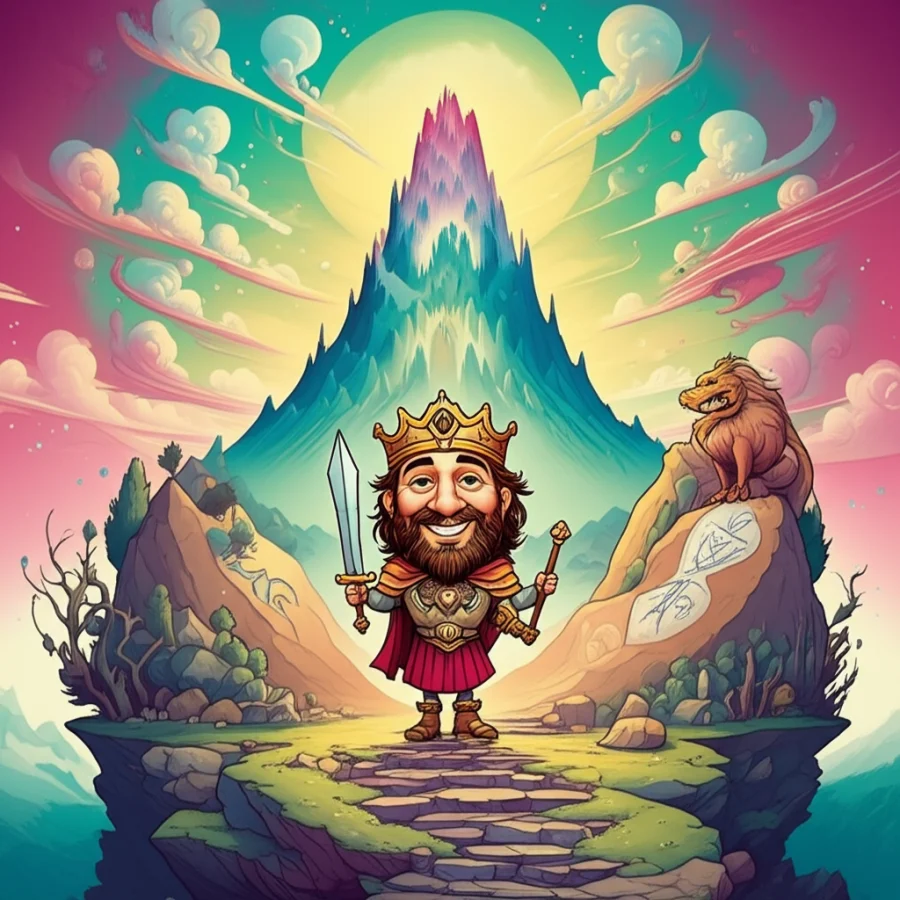
Within the grand narrative of the Cattle Raid of Cooley, the figure of Nuada emerges, though not as the central protagonist of this particular saga. Nuada, in the broader Irish mythology, is a figure of significant importance, particularly in the tales of the Tuatha Dé Danann, the mythical race of gods who were said to have inhabited Ireland before the arrival of humans. He is often depicted as a wise and benevolent king, a leader who embodies justice and prosperity. A key aspect of Nuada’s legend is his silver arm, a testament to his resilience and the sacrifices he made for his people. When he lost his arm in battle against the Fomorians, monstrous beings who represented chaos and destruction, a skilled craftsman fashioned him a new one of pure silver. This symbolic attribute speaks to his enduring strength, his ability to overcome adversity, and the ingenuity of his people. Nuada represents an ideal of kingship, one characterized by courage, leadership, and a deep commitment to the well-being of his realm. He embodies the qualities that ancient societies admired in their leaders – the capacity to protect, to govern justly, and to inspire loyalty.
The Cattle Raid of Cooley itself is a sweeping saga, a conflict born from pride and greed. The story centers around the powerful Brown Bull of Cooley, a magnificent creature whose possession is coveted by Queen Medb of Connacht. Medb, a formidable and ambitious ruler, desires the bull to match the wealth of her husband, Ailill, who owns a bull of equal prowess. When her attempts to acquire the Brown Bull through diplomacy fail, she launches a full-scale invasion into the neighboring kingdom of Ulster.
The narrative unfolds with the cunning of Medb and her allies, the armies of Connacht, marching north. However, a curse placed upon the men of Ulster renders them weak and incapacitated, leaving their greatest warrior, Cú Chulainn, to defend his homeland almost single-handedly. Cú Chulainn, a demigod himself, is a figure of immense power, known for his battle frenzy, the "ríastrad," where he transforms into a monstrous entity, capable of facing overwhelming odds. The story then becomes a testament to his extraordinary valor and his unwavering dedication to Ulster. He engages in a series of epic duels against champions sent by Medb, each battle a brutal and bloody affair. His youthful prowess, his supernatural abilities, and his sheer determination are pitted against the might of Connacht. The raid, therefore, is not just a conflict over cattle; it is a clash of wills, a test of leadership, and a dramatic exploration of heroism against impossible circumstances. While Nuada is not directly involved in the battles of the Cattle Raid, his legacy as a just and prosperous king, and the very stability of the land he once ruled, are what Cú Chulainn fights to protect. The well-being of Ulster, the kingdom that would have benefited from Nuada’s wise reign, is at stake.
The symbolism woven into the Cattle Raid of Cooley is rich and multifaceted. The cattle themselves represent wealth, prosperity, and the very sustenance of life. The conflict over the Brown Bull can be seen as a metaphor for the struggles for power and resources that likely characterized ancient societies. Cú Chulainn’s solitary stand against an invading army speaks to the themes of courage, sacrifice, and the fierce loyalty to one’s homeland. The supernatural elements, such as Cú Chulainn’s ríastrad and the curse upon the Ulstermen, reflect the ancient belief in the interconnectedness of the physical and spiritual realms, and perhaps the capricious nature of fate. Nuada’s silver arm, in the broader context of the Tuatha Dé Danann, can symbolize the resilience of leadership and the ability to adapt and endure even in the face of profound loss. These stories offered a framework for understanding bravery, the consequences of ambition, and the enduring spirit of a people.
In the modern world, the tales of the Ulster Cycle, including the Cattle Raid of Cooley, continue to resonate. They are studied in literature and cultural studies departments, analyzed for their linguistic artistry, their depiction of ancient social structures, and their enduring themes of heroism and conflict. The characters, particularly Cú Chulainn, have inspired countless adaptations in novels, poetry, and even video games, where their mythic qualities are reinterpreted for new audiences. These stories serve as a vital link to Ireland’s ancient past, offering insights into the imagination and worldview of its early inhabitants.
It is important to reiterate that the Cattle Raid of Cooley and the figures within it, such as Nuada, are part of a rich tradition of ancient storytelling. These narratives are valuable cultural artifacts, offering glimpses into the beliefs, values, and imaginations of past peoples. As Muslims, we recognize that only Allah is the true Creator and Sustainer of all existence, and that these ancient stories, while culturally significant, do not represent divine truth. Their enduring power lies not in their literal truth, but in their ability to spark imagination, to explore the human condition, and to preserve the vibrant heritage of storytelling that connects us to our shared past. The echoes of Nuada and the fierce bravery of Cú Chulainn, carried on the winds across the Irish landscape, remind us of the enduring power of human narrative and the profound stories that shape our understanding of the world.