fufufafa
The tapestry of human civilization is richly woven with tales that seek to explain the inexplicable, to imbue the natural world with meaning, and to explore the complexities of human nature. Among these narratives, the myths and legends of ancient Greece stand as towering monuments to human imagination. This particular story, "The Tale of Zeus and the Sacred City," emerges from this vibrant tradition, not as a historical account, but as a traditional narrative passed down through generations by the ancient Greeks, offering a glimpse into their understanding of the cosmos and their place within it.
Origins in the Cradle of Western Civilization
To truly appreciate such a myth, one must first step back into the cultural era of its inception. Ancient Greece, flourishing from roughly the 8th century BCE to 600 CE, was a world of independent city-states, maritime trade, philosophical inquiry, and fervent artistic expression. It was a society that grappled with the raw power of nature – the unpredictable storms, the fertile earth, the vast, unforgiving sea. Without the scientific understanding we possess today, these phenomena were often attributed to the will and whims of powerful, anthropomorphic deities.
The people of this time viewed their world as a stage where gods and goddesses, residing atop the mythical Mount Olympus, actively intervened in human affairs. Every thunderclap, every bountiful harvest, every victory or defeat in battle, could be seen as a sign of divine favor or displeasure. Their worldview was polytheistic, meaning they worshipped a pantheon of gods, each with distinct domains, personalities, and often, very human-like flaws. These stories were not mere entertainment; they served as moral compasses, explanations for natural events, and validations of societal norms, shaping the collective consciousness of a civilization that laid many foundations for Western thought.
Zeus: The Thunderer of Olympus
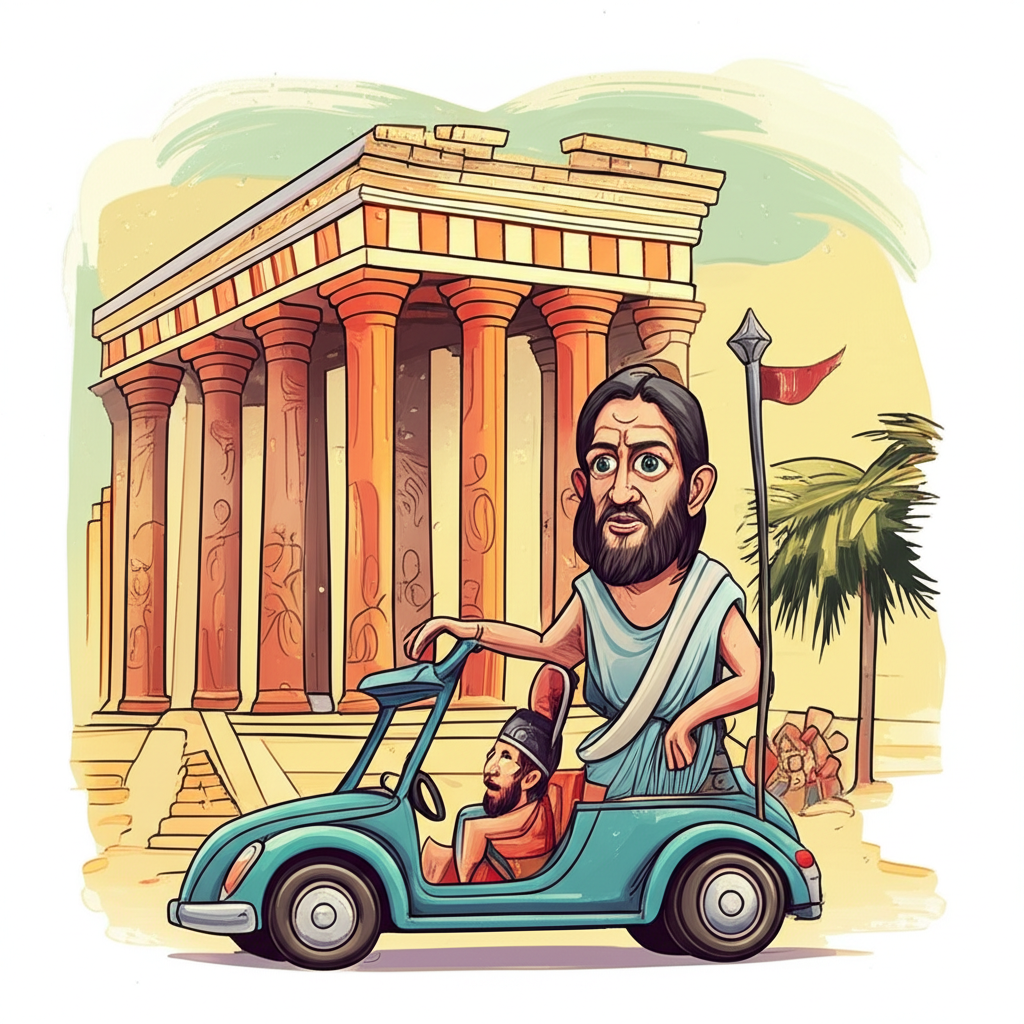
Central to this mythological landscape was Zeus, the mighty king of the Olympian gods. In the Greek imagination, Zeus was a figure of immense power and authority, often depicted as a mature, regal man with a flowing beard, wielding his signature weapon: the thunderbolt. His primary domain was the sky and weather, hence his epithets as "Cloud-Gatherer" and "Thunderer." Symbolically, Zeus embodied cosmic order, justice (though often administered with a heavy hand), and the ultimate authority over both gods and mortals. The eagle, a creature of majestic flight and powerful gaze, was his sacred animal, and the sturdy oak his sacred tree, further emphasizing his strength and enduring presence.
It is crucial to understand that these descriptions are of a mythological construct, a symbolic representation of power and natural forces as conceived by ancient storytellers. They reflect the human attempt to personify the grand, often terrifying, aspects of the natural world and the abstract concepts of leadership and consequence. Zeus was a character in their grand narrative, a powerful force within their imagined universe, rather than a being to be worshipped in the way monotheistic faiths worship the one true Creator.
The Tale of Veridia: A City Blessed by the King of Gods
Our tale unfolds in Veridia, a city nestled in a verdant valley, renowned not for its martial prowess or its vast riches, but for the profound piety and unwavering humility of its people. Unlike many burgeoning city-states consumed by ambition, Veridia’s citizens lived simply, their lives attuned to the rhythms of the earth, and their temples, though modest, were always filled with sincere offerings and heartfelt prayers. They honored all the gods, but their reverence for Zeus, the protector of justice and hospitality, was particularly profound.
For generations, Veridia prospered. Its fields yielded abundant harvests, its springs flowed with sweet water, and its people lived in peace, their disputes settled with wisdom rather than violence. This tranquility, however, drew the envious gaze of a warlord from the arid lands to the east, King Vorlag, whose armies were as vast as his ambition. Vorlag saw Veridia as a ripe fruit, ready for plucking, and he marched his legions towards the peaceful city, intent on plunder and subjugation.
Panic rippled through Veridia. Their small militia, composed mostly of farmers and artisans, was no match for Vorlag’s seasoned warriors. In their desperation, the elders and priests gathered at the main temple, prostrating themselves before the altar of Zeus, pleading for divine intervention. Their prayers were not for strength to defeat their enemies, nor for vengeance, but for the preservation of their way of life and the safety of their families. They offered not just their last grains, but their very souls in devotion.
High above, on the swirling clouds of Olympus, Zeus observed. He had witnessed countless human conflicts, countless prayers for victory, but the pure, selfless devotion of Veridia’s people was rare. He saw their humility, their deep-rooted faith, and their aversion to pride. Such virtue, he mused, was worthy of protection. But even a king of gods found delight in a test.
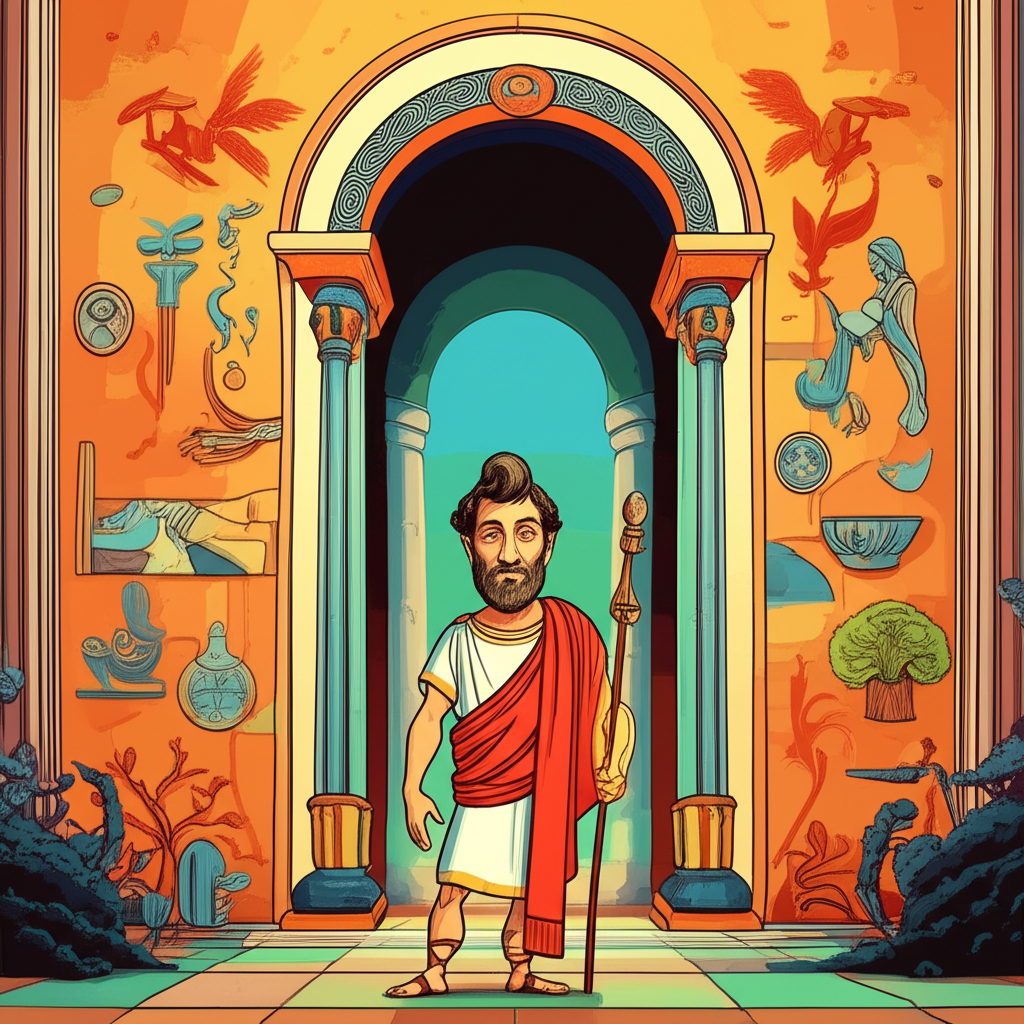
That night, as Vorlag’s armies camped on the plains bordering Veridia, a lone figure appeared at the city gates. He was an old man, cloaked in rags, leaning heavily on a gnarled staff, his face etched with hunger and fatigue. He sought refuge and a simple meal. The city guards, despite the imminent threat of invasion, did not hesitate. They welcomed him in, offered him their meager rations, and provided him with a warm place to rest. The old man moved through the city, testing every household, every merchant, every leader. And everywhere he went, he was met with kindness, hospitality, and a quiet dignity, even in the shadow of war. No one recognized him as Zeus, disguised, walking among his most devout.
Satisfied, Zeus shed his mortal guise as the first rays of dawn touched the mountain peaks. He stood invisible on a high ridge overlooking Vorlag’s camp. With a silent command, the clear morning sky began to churn. Not with rain, but with a terrifying, ethereal mist that descended rapidly, thick and suffocating. It enveloped Vorlag’s entire army, disorienting them, sowing confusion and fear. Weapons were dropped, formations dissolved, and the soldiers, unable to see or breathe, panicked. They fought each other in the haze, mistaking comrades for enemies, until the army was a scattered, broken multitude, fleeing in disarray, convinced they had incurred the wrath of some unseen, terrible power.
As suddenly as it appeared, the mist lifted, revealing the plains empty save for discarded armor and the echoes of terrified screams. Veridia was saved. The people emerged from their homes, bewildered but unharmed, finding no trace of the invading army. They knew, in their hearts, that a divine hand had intervened. From that day forward, Veridia was known as the Sacred City, forever under the special, unseen protection of Zeus. Its humility had been rewarded, its piety recognized, and its existence became a testament to the power of a virtue that pleased the king of the gods.
Symbolism and Enduring Meaning
For the ancient Greeks, the tale of Veridia, or similar narratives, served multiple profound purposes. It underscored the absolute, unquestionable power of Zeus and the Olympian pantheon over human destinies. It provided a moral framework, illustrating the rewards of piety, humility, and hospitality, and the dangers of hubris and unbridled ambition. The miraculous intervention was a way to explain fortunate events, to provide hope in times of despair, and to reinforce the belief in a cosmic order where good deeds, particularly those pleasing to the gods, would ultimately be acknowledged and rewarded. It also served as a cultural anchor, explaining why certain places or cities might hold a special, revered status, supposedly divinely blessed.
Modern Interpretations and Cultural Heritage
Today, "The Tale of Zeus and the Sacred City," like all Greek myths, is approached not as a literal truth, but as a rich source of cultural, historical, and educational understanding. These stories are celebrated for their literary merit, their profound psychological insights, and their enduring archetypes. Zeus, in particular, remains a potent figure in literature, art, film (from epics like Clash of the Titans to modern adaptations like Percy Jackson), and video games (God of War series). Scholars study these myths to understand the values, fears, and aspirations of ancient societies, while artists draw inspiration from their dramatic narratives and iconic characters. They are recognized as foundational texts that have profoundly influenced Western storytelling, philosophy, and political thought, serving as a testament to the human imagination’s capacity for creating elaborate, meaningful narratives.
A Legacy of Imagination
In conclusion, "The Tale of Zeus and the Sacred City" is a beautiful, imaginative story from the treasury of ancient Greek mythology. It is a product of human creativity, reflecting the worldview of a people who sought to understand their universe through the lens of powerful, personified forces. As Muslims, we recognize that only Allah is the true Creator and Sustainer, and our belief rests solely in Him, the One without partners or equals. Yet, we can appreciate the profound cultural heritage embodied in such tales, acknowledging their role in shaping ancient societies and inspiring countless generations. These stories, while not to be believed as fact, stand as enduring monuments to the power of human imagination and the universal tradition of storytelling, which continues to connect us to our collective past and enrich our present.