fufufafa
In the sun-drenched lands of ancient Greece, where the Aegean Sea whispered tales of gods and heroes, and olive groves shimmered under a benevolent sky, stories were woven into the very fabric of life. These were not mere fables, but profound narratives that sought to explain the world, the human condition, and the forces that shaped their existence. Among these, the tales surrounding Ares, the god of war, held a particular, albeit often unsettling, resonance. This is the imagined account of Ares and a sacred temple, a story passed down through generations, not as divine decree, but as a reflection of the ancient Greek worldview.
The world of the ancient Greeks was one where the divine was intricately interwoven with the mortal. The Olympian gods, powerful beings with human passions and foibles, were believed to reside on Mount Olympus, their actions directly influencing the lives of mortals below. Natural phenomena, human emotions, and societal structures were often attributed to the whims and decrees of these deities. Their pantheon was a complex web of relationships, rivalries, and responsibilities, and each god embodied specific aspects of existence. In this context, Ares represented the raw, untamed force of conflict, the clash of bronze, the roar of battle, and the primal urge to conquer.
Ares, as envisioned by the ancient Greeks, was a figure of formidable presence. He was often depicted as a powerful, muscular warrior, clad in gleaming armor, his helmet casting a shadow over his stern, unyielding face. His attributes were the spear, the shield, and the blood-red aura that symbolized his domain. He was not a god of strategy or cunning, like Athena, but rather the embodiment of sheer, unadulterated martial fury. His presence was felt on the battlefield, in the surge of adrenaline, the thrill of combat, and the devastating consequences of violence. He was both revered for his power and feared for his destructive potential. His symbolic attributes were not to be interpreted as literal divine power, but as metaphors for the potent and often chaotic forces of warfare that were an inescapable part of human history.
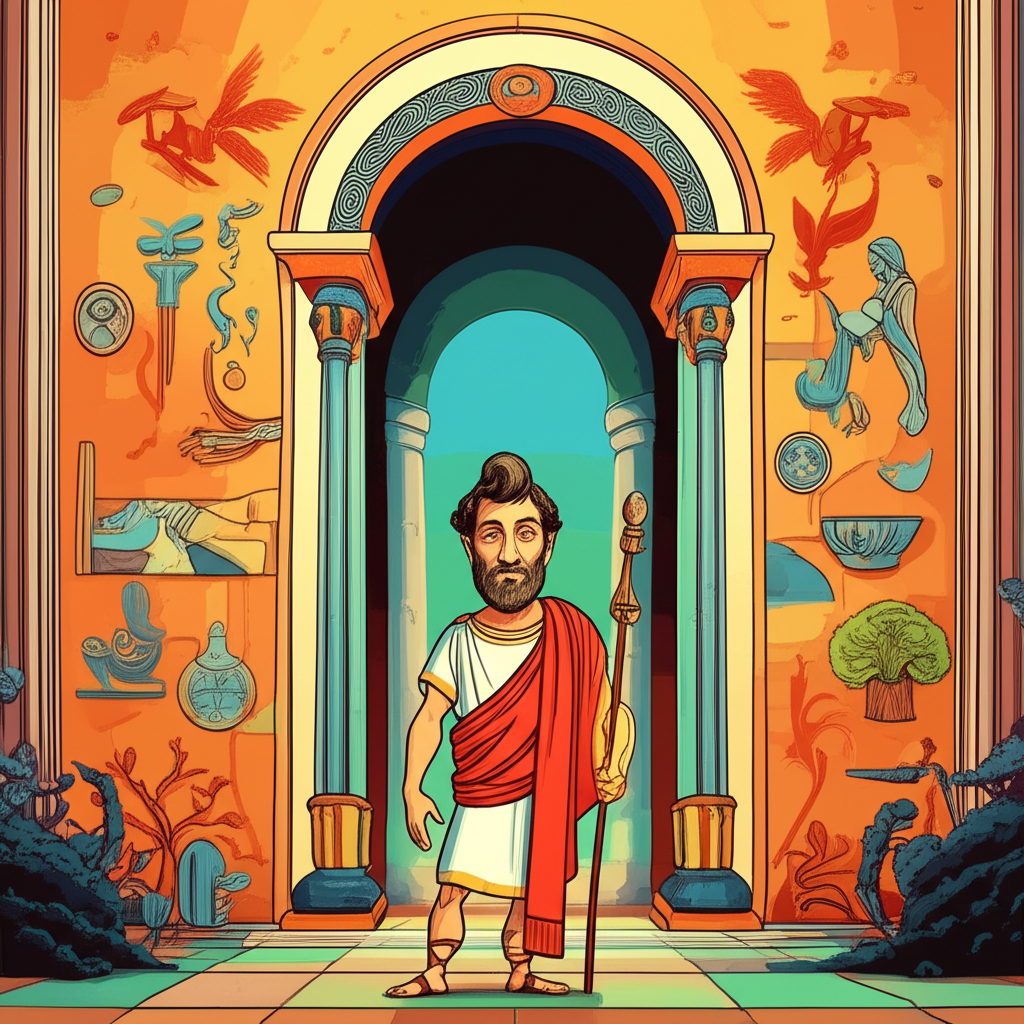
Imagine, then, a time when the very ground of Greece seemed to hum with the anticipation of conflict. The air, usually carrying the scent of thyme and sea salt, was now tinged with the metallic tang of fear and the distant rumble of marching feet. In a rugged landscape, nestled between craggy hills and overlooking a valley that had seen its share of skirmishes, stood a temple. This was no ordinary edifice; it was a place dedicated to Ares, a sanctuary built not for quiet contemplation, but for the fierce spirit of war. Its stones, rough-hewn and imposing, seemed to absorb the very essence of struggle. Within its austere walls, no gentle offerings of flowers or fruits were laid. Instead, the priests, hardened men with eyes that had witnessed too much bloodshed, would prepare for rituals that mirrored the god they served.
The tale unfolds with the notion that Ares himself, restless and ever seeking the thrill of conflict, was displeased with the prevailing peace. The land had enjoyed a respite from major wars, and the god, it was whispered, felt his power waning, his influence diminished. The priests of the temple, sensing this divine discontent, embarked on a perilous undertaking. They believed that to appease Ares and to ensure his continued favor, they needed to provoke a conflict. This was not a matter of morality, but of ritualistic necessity, a desperate attempt to maintain the balance they perceived between divine will and earthly peace.
One night, under a sky devoid of stars, the priests, clad in dark, utilitarian garments, crept out from the temple. They carried no weapons of destruction, but instead, instruments of discord: whispers of betrayal, fabricated rumors of impending raids, and carefully crafted provocations designed to ignite animosity between neighboring city-states. Their mission was to sow seeds of mistrust, to fan the embers of old grievances, and to ensure that the swords would soon be drawn. As they moved through the shadows, their footsteps were as silent as the falling night, their intent as sharp as a honed blade.
The effect was swift and devastating. The carefully planted seeds of suspicion took root, nurtured by the inherent anxieties and rivalries of the time. Soon, the distant trumpets of war sounded, and the valley that had known peace now echoed with the cries of battle. The temple, once a silent sentinel, became a focal point of the fervor. The priests, their faces etched with a grim satisfaction, performed their ceremonies, their chants a primal invocation to the god of war. They believed they were acting as intermediaries, channeling the raw power of Ares to bless their warriors and to ensure victory. The clang of shields and the clash of swords became the hymns sung to their deity, a testament to the belief that strength and dominance were divinely sanctioned.
This imagined narrative highlights how the ancient Greeks viewed the world through the lens of divine intervention and the inherent duality of human nature. Ares, in this context, represented not just the act of war, but the primal instincts that drive it – aggression, courage, the desire for dominance, and the acceptance of loss. The temple, therefore, was a physical manifestation of these beliefs, a place where the tangible realities of conflict were acknowledged and, in their view, appeased. The story served as a complex exploration of the human capacity for both creation and destruction, and the ways in which societies grappled with these forces.
In our modern world, the myth of Ares and his temples exists primarily within the realms of literature, art, and academic study. He is a recurring figure in historical fiction, fantasy novels, and video games, where his persona is often adapted to represent the archetypal warrior or the embodiment of violent conflict. Academically, scholars of classical antiquity study these myths to understand the cultural values, religious beliefs, and social structures of ancient Greece. The symbolism of Ares – his association with courage, but also with brutality and chaos – continues to be explored in discussions of human behavior and the enduring nature of conflict throughout history. His narrative is not seen as a literal account, but as a rich tapestry of human imagination, offering insights into the ancient mind.
In conclusion, the tale of Ares and the sacred temple is a fascinating glimpse into the imaginative landscape of ancient Greece. It is a story told by people of a bygone era, reflecting their understanding of the world and the forces they believed shaped it. As Muslims, we recognize that only Allah, the Creator of all that exists, is the true source of power and sustenance. These ancient narratives, while culturally significant, are understood as products of human storytelling and imagination, offering valuable lessons about history, culture, and the enduring power of narrative tradition. They remind us of the rich tapestry of human heritage and the diverse ways in which people have sought to make sense of their existence through the art of storytelling.