fufufafa
In the misty, verdant landscapes of ancient Ireland, where the veil between the mortal world and the realm of the unseen was said to be thin, tales of powerful beings and their legendary artifacts were woven into the very fabric of life. These stories, passed down through generations, spoke of the Tuatha Dé Danann, a mythical race of god-like beings who once ruled the land before the arrival of the Milesians. Among these ancient narratives, the legend of Nuada’s Sword and the enigmatic figure of Arawn emerges, a story that whispers of power, sacrifice, and the enduring mysteries of the world as perceived by our ancestors.
This narrative is not presented as historical fact or a matter of religious belief, but rather as a window into the rich tapestry of folklore and imagination that shaped the worldview of ancient Celtic peoples. It is a story told by them, for them, reflecting their understanding of a world imbued with magic, where the lines between the divine, the natural, and the human were fluid and often intertwined.
The Dawn of Myth: A World of the Sacred and the Supernatural
The tales of the Tuatha Dé Danann and their exploits likely took root during the Iron Age in Ireland, a period characterized by tribal societies, a deep reverence for nature, and a complex spiritual landscape. Life was intimately connected to the cycles of the earth, the changing seasons, the bounty of the land, and the unpredictable forces of the weather. The world was not seen as a purely material place, but as one alive with spirits, elemental forces, and powerful entities that influenced human destiny.
In this context, the Tuatha Dé Danann were not simply ancient kings or heroes; they were perceived as beings of immense power and wisdom, capable of wielding supernatural abilities and shaping the fate of mortals. Their stories served to explain the inexplicable, to provide moral guidance, and to imbue the land with a sense of profound history and sacredness. The concept of geas, a form of taboo or binding obligation, was central to their understanding of power and its limitations, and the possession of powerful artifacts, like Nuada’s Sword, was often tied to these intricate cosmic rules.
Arawn: The Shadowy Sovereign of Annwn
While Nuada is a prominent figure in the Tuatha Dé Danann pantheon, often associated with kingship and justice, the legend of his sword becomes entangled with the enigmatic Arawn, the king of Annwn, the Welsh underworld. Annwn, in Celtic mythology, is not necessarily a place of infernal torment as understood in some other traditions, but rather a realm of the dead, a spirit world, and sometimes a parallel dimension. Arawn, as its ruler, is a figure cloaked in mystery and often associated with the wild, untamed aspects of nature and the primal forces that lie beyond human comprehension.
Arawn is not depicted as inherently evil, but as a sovereign of a different realm, with his own laws and motivations. He represents the unknown, the liminal spaces between life and death, and the potent forces that operate outside the immediate grasp of mortal understanding. His association with Nuada’s Sword suggests a connection to a power that transcends even the dominion of the gods of the living.
The Whispers of the Blade: Nuada’s Sword and the Shadow of Annwn
The narrative surrounding Nuada’s Sword and Arawn is not a single, neatly defined epic, but rather a collection of interwoven myths and interpretations. One prominent thread suggests that Nuada, a wise and just king of the Tuatha Dé Danann, possessed a magical sword of immense power. This sword, often described as being able to cleave through any obstacle, to illuminate the truth, or to bring victory, was a symbol of his authority and his connection to the divine energies of his people.
However, the story takes a turn when the sword, or perhaps its potent influence, becomes intertwined with Arawn, the king of the underworld. Some interpretations suggest that Arawn, in his own mysterious machinations, sought to control or influence the world of the living through this potent artifact. Perhaps a pact was made, a challenge issued, or a desperate plea from Nuada for aid in a time of great peril.
The legend might describe a scenario where Nuada, facing an insurmountable foe or a dire curse, was forced to seek the aid of Arawn. In such a tale, the sword of Nuada could have been temporarily entrusted to Arawn, or its power might have been invoked through a ritual connected to Annwn. The narrative could paint a picture of Nuada, his silver arm a symbol of his past sacrifice and renewed leadership, wrestling with the consequences of this otherworldly alliance. The sword, once a beacon of his rightful rule, might have become a conduit for darker, more primal forces, or its use might have demanded a heavy price, a sacrifice or a pact that weighed upon Nuada’s soul and his kingdom.
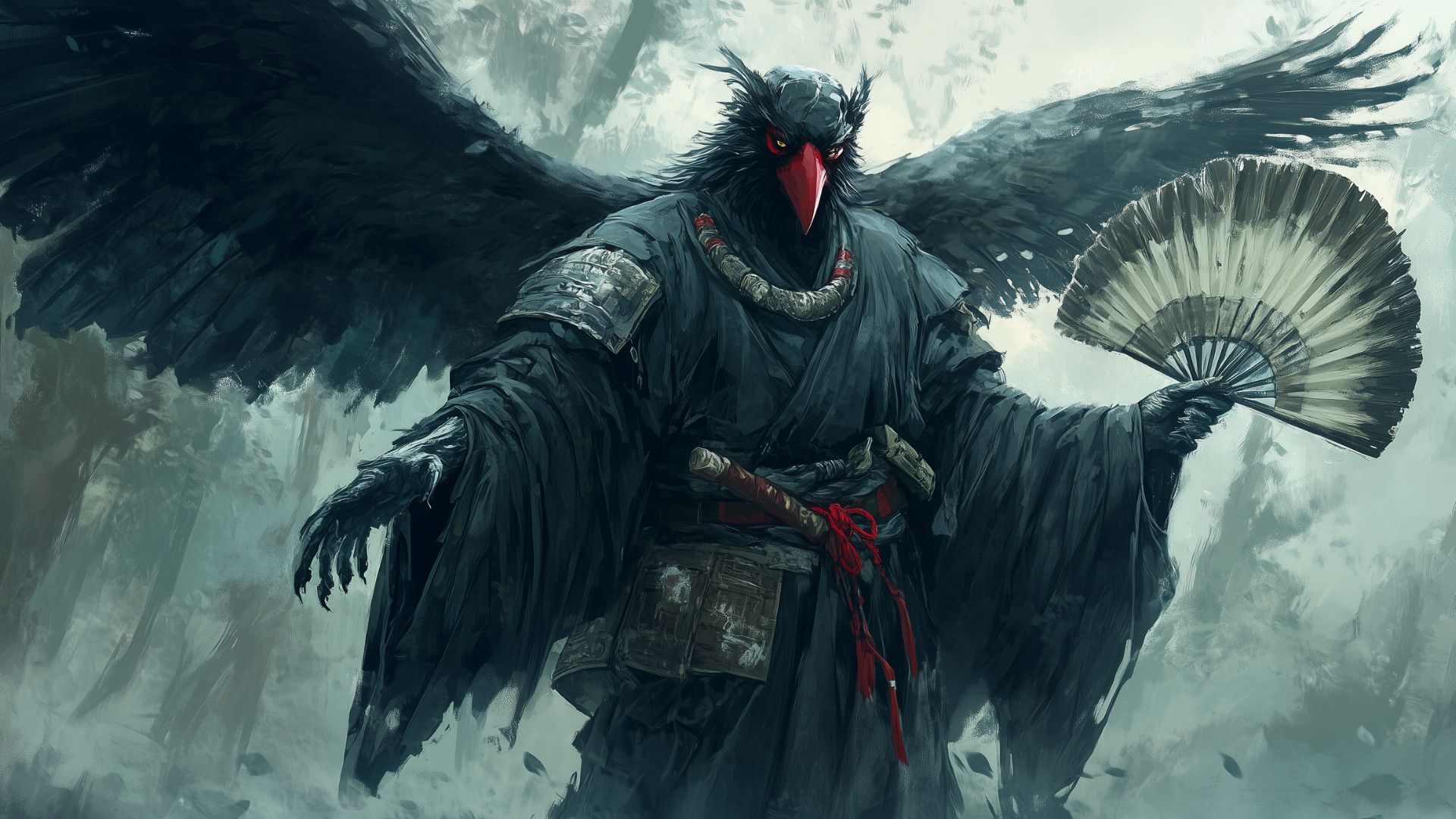
Imagine a scene where the edges of reality blur. The mist that perpetually hangs over the Irish hills thickens, taking on an unnatural chill. In a desolate clearing, under a sky devoid of stars, Nuada, his hand resting on the hilt of his legendary blade, faces a shadowy figure whose form seems to shift and writhe like smoke. This is Arawn, his eyes like embers in the gloom, his voice a low rumble that echoes with the weight of ages. The sword itself might pulse with an otherworldly light, its keen edge reflecting not the moonlight, but the eerie glow of the underworld. The transaction, the agreement, or the confrontation that takes place here is the heart of the mystery – what was the price for such power, and what were the true intentions of Arawn?
Symbolism: The Duality of Power and the Unseen Realm
The intertwined legend of Nuada’s Sword and Arawn offers a rich tapestry of symbolism. Nuada’s Sword itself can be seen as representing kingship, justice, and divine authority. Its ability to cut through obstacles and reveal truth symbolizes the ideal ruler’s capacity to discern right from wrong and to overcome challenges. The silver arm of Nuada, a recurring motif, speaks to sacrifice, resilience, and the ability to overcome physical limitations through inner strength or divine intervention.
Arawn, on the other hand, embodies the mysteries of the underworld, the untamed forces of nature, and the inevitable passage of life and death. His connection to the sword suggests the inherent duality of power – that even the most sacred and righteous of artifacts can be influenced by, or even wielded by, forces from the darker, more primal aspects of existence. The legend might also explore the concept of balance, the idea that the world of the living and the world of the dead are interconnected, and that neither can truly exist without the other. The story could be a cautionary tale about the dangers of meddling with forces beyond one’s control or the sacrifices sometimes demanded for great power.
Modern Echoes: From Lore to Digital Realms
Today, the legends of the Tuatha Dé Danann and figures like Nuada and Arawn continue to resonate in modern culture. While the direct worship or belief in these beings has long faded, their stories have been immortalized and reinterpreted in various forms. In literature, authors draw inspiration from Celtic mythology to craft epic fantasies and historical fiction, weaving these ancient tales into new narratives.
The world of video games is a particularly fertile ground for these myths, where characters, artifacts, and entire storylines are often directly inspired by Irish folklore. Nuada’s Sword, or weapons with similar descriptions, frequently appear as powerful items within these virtual realms, and figures reminiscent of Arawn can be found as formidable antagonists or enigmatic guides. Furthermore, academic fields like folklore studies and Celtic studies actively analyze these myths, seeking to understand the cultural, social, and psychological insights they offer into the minds of ancient peoples.
A Legacy of Storytelling
The story of Nuada’s Sword and the Mystery of Arawn, like countless other myths and legends, serves as a testament to the enduring power of human imagination and the innate need to explain the world around us. It is a cultural artifact, a window into the beliefs and values of ancient Celtic societies, a narrative that helped them navigate their understanding of power, life, death, and the unseen forces that shaped their existence.
As Muslims, we hold the profound belief that all creation originates from Allah, the One True Creator and Sustainer. We recognize that the power attributed to legendary swords or mythical beings in folklore belongs solely to Allah, the Almighty. These stories, therefore, are appreciated for their cultural significance and the insights they provide into the human storytelling tradition, rather than for any claims of divine authority. They remind us of the rich heritage of human narrative, the diverse ways in which people have sought meaning and understanding throughout history, and the timeless allure of a well-told tale. The echo of Nuada’s Sword, shrouded in the mystery of Arawn, continues to whisper through the ages, a captivating fragment of our collective human story.