fufufafa
Across the windswept landscapes of ancient Ireland, where mist clung to emerald hills and the roar of the sea was a constant companion, stories were woven into the very fabric of life. These were not mere tales for amusement, but profound narratives passed down through generations, attempting to explain the world, its wonders, and its fears. Among these enduring legends, the figure of the Morrigan, a complex entity often associated with fate, war, and sovereignty, emerges, intertwined with the formidable presence of the Eternal Mountain. This is a traditional story, a product of the imagination and worldview of ancient Celtic peoples, offering a glimpse into their understanding of the forces that shaped their existence.
The era in which these stories took root was one deeply connected to the natural world. Life for the early Celts was a constant negotiation with the elements. Their societies were often tribal, with chieftains leading their people through cycles of peace and conflict, prosperity and hardship. They viewed the world as imbued with spirit, a place where the veil between the mortal and the supernatural was thin. The land itself was sacred, its features imbued with ancient power, and the cycles of nature – the changing seasons, the fertility of the earth, the ferocity of storms – were seen as manifestations of unseen forces. Within this context, the Eternal Mountain would have stood not just as a geographical landmark, but as a sentinel, a place where the earth met the sky, a potent symbol of permanence and immense power.
The Morrigan, in these ancient tales, is not a single, easily defined entity. She is often depicted as a trio of goddesses, or as a shape-shifting figure, frequently appearing as a raven, a crow, or a banshee. Her attributes are multifaceted: she can be a harbinger of death, a weaver of destiny, a fierce protector of her people, and a potent symbol of the land’s sovereignty. Her appearance is often accompanied by omens, a flash of black wings against a turbulent sky, a chilling cry carried on the wind. She represents the wild, untamed aspects of existence, the inevitable cycle of life and death, and the power that lies dormant within the earth and its people. The raven, her favored form, is a creature of intelligence and mystery, often seen as a messenger between worlds, a creature that witnesses all and understands much.
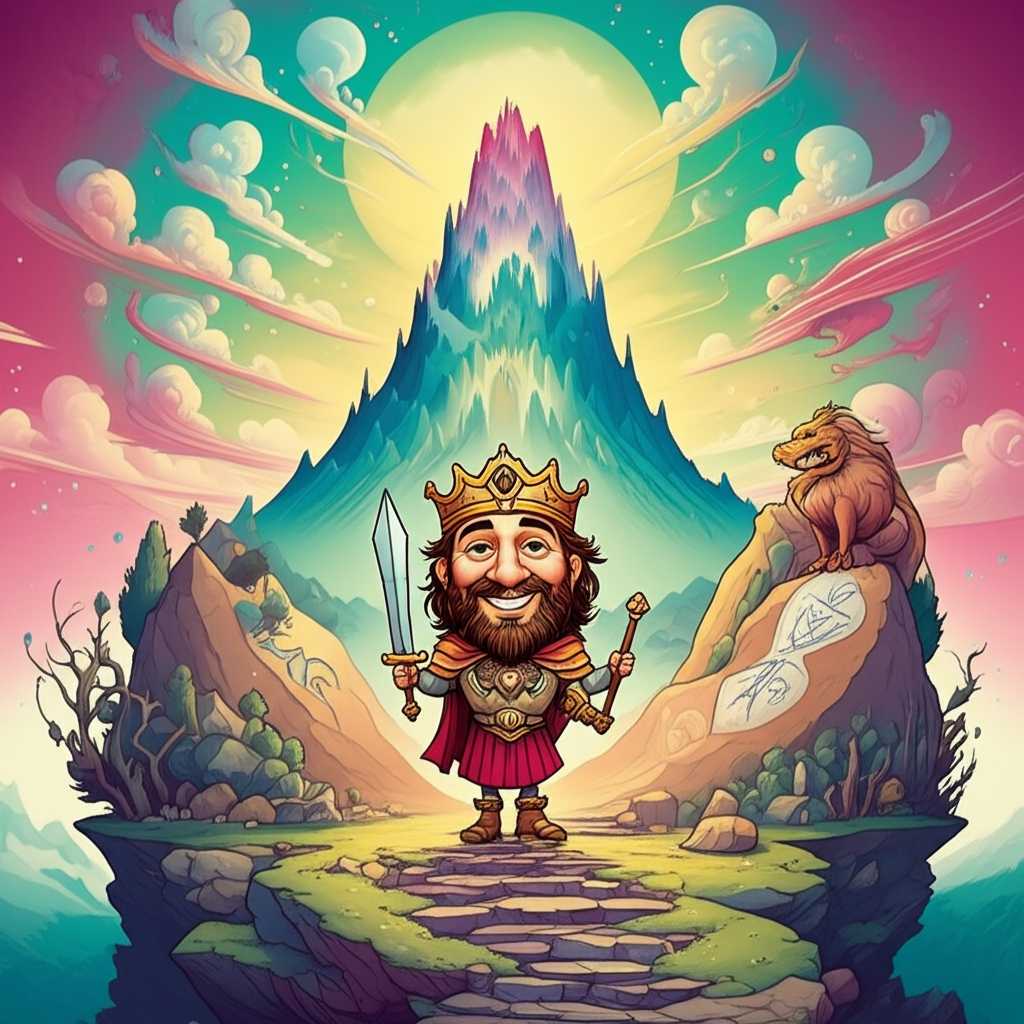
The tale of the Morrigan and the Eternal Mountain often speaks of a profound, ancient connection. Imagine, if you will, the rugged peaks of the Eternal Mountain, its stony slopes reaching towards the heavens, perpetually cloaked in clouds. For centuries, it had stood as an unyielding presence, a silent witness to the ebb and flow of human history. The people who lived in its shadow looked upon it with awe and a touch of trepidation. They believed that within its depths lay the very essence of the land, its strength, its resilience, and its secrets.
One persistent narrative tells of the Morrigan, in her raven form, being intrinsically bound to this colossal peak. It is said that she was not merely an inhabitant of the mountain, but its very guardian, her spirit intertwined with its ancient stones. When times were dire for the Celtic tribes, when invaders threatened their lands or famine stalked their villages, it was to the Eternal Mountain that whispers of desperation were carried. It was believed that the Morrigan, perched high upon its summit, her dark eyes surveying the world below, would hear their plight.
The story often describes her descent from the mountain not as a simple flight, but as a powerful emergence. The wind would whip around the peak, the clouds would swirl, and then, a shadow would detach itself from the rocky face – the Morrigan, in her raven form, or sometimes as a warrior woman clad in dark hues, her presence radiating an undeniable authority. She would appear on the battlefield, her cries of encouragement or her chilling pronouncements of doom echoing through the fray. Her involvement was never about simple victory; it was about the fate of the land, the assertion of its inherent right to exist, and the testing of its people’s courage and resolve.
Some versions of the tale suggest that the mountain itself possessed a conscious awareness, and the Morrigan was its voice, its will made manifest. The very stones of the Eternal Mountain were said to hold the memories of ages, the triumphs and tragedies of countless generations. The Morrigan’s presence was a constant reminder of this deep, enduring heritage, a testament to the land’s ability to endure and to regenerate, much like the cycles of nature.
The symbolism embedded within this narrative is rich and varied. The Eternal Mountain represents permanence, stability, and the raw, untamed power of nature. It embodies the deep connection the ancient Celts felt to their homeland, a connection that transcended mere ownership and reached into the spiritual realm. The Morrigan, with her association with fate and war, represents the volatile, unpredictable forces that shaped human lives. She can be seen as a personification of the harsh realities of life – the inevitability of conflict, the fragility of peace, and the ultimate dominion of death. Her shape-shifting nature suggests the ever-changing circumstances of life and the ability to adapt and overcome. Furthermore, her role as a sovereign entity can be interpreted as a representation of the spirit of the land itself, fiercely protective of its people and its integrity.
In the modern world, these ancient stories continue to resonate, albeit in transformed ways. The Morrigan, as a powerful, enigmatic female figure, has found a place in contemporary literature, fantasy games, and even as a symbol in certain neopagan traditions. She is explored as a complex deity, a representation of the dark feminine, and a figure of primal power. The concept of the Eternal Mountain, too, persists as a potent archetype, symbolizing enduring strength, unattainable goals, or the sacred spaces that inspire awe and introspection. These stories, stripped of their original religious context, are now appreciated for their narrative richness, their exploration of universal themes, and their contribution to our understanding of human imagination.
In conclusion, the tale of the Morrigan and the Eternal Mountain is a captivating narrative that offers a window into the rich tapestry of ancient Irish mythology and folklore. It is a traditional story, a product of the imaginative minds of people who sought to understand their world through potent symbolism and compelling narratives. As Muslims, we recognize that only Allah (God) is the true Creator and Sustainer of all existence, the ultimate power behind all things. These ancient stories, while devoid of divine truth, hold significant cultural and historical value. They speak to the enduring human need to tell stories, to connect with the natural world, and to grapple with the mysteries of life, death, and destiny. They are a testament to the power of human imagination and the enduring legacy of cultural heritage, reminding us of the diverse ways in which people have sought meaning and understanding throughout history.