fufufafa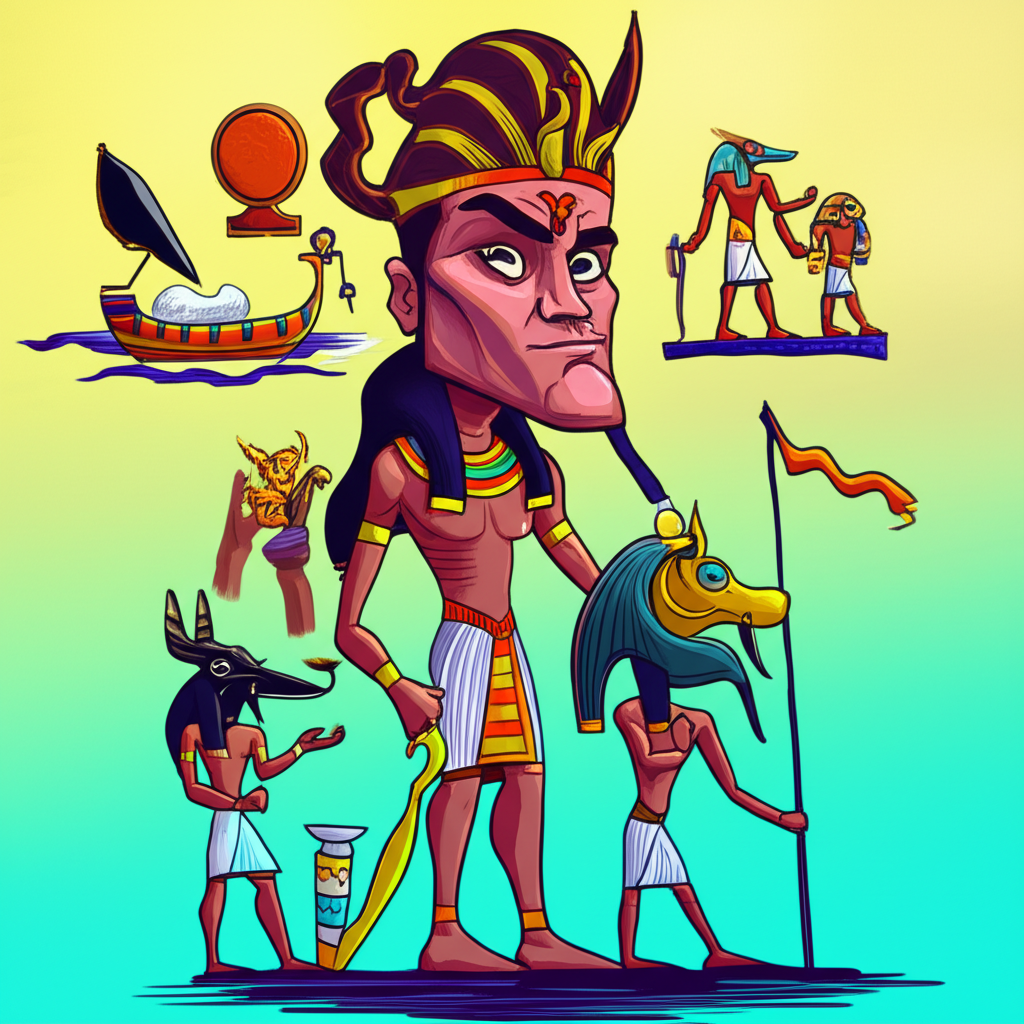
The sands of time, sculpted by the relentless sun and the life-giving waters of the Nile, cradle within them tales of ancient Egypt, a civilization that grappled with the mysteries of life, death, and rebirth through vivid and enduring myths. Among these narratives, the story of Osiris, his tragic demise, and the machinations of his brother, Set, stands as a cornerstone of Egyptian cosmology, a profound exploration of cosmic order, chaos, and the enduring hope for renewal. This is not a chronicle of divine beings to be worshipped, but a traditional story, woven from the collective imagination of an ancient people seeking to understand their world.
Origins and Cultural Background: Life and Death Under the Egyptian Sun
The myth of Osiris and Set emerged from the heart of ancient Egyptian society, a civilization profoundly shaped by its geography and its understanding of the cosmos. Flourishing for millennia along the fertile banks of the Nile River, the Egyptians viewed the world as a delicate balance between opposing forces. The annual inundation of the Nile, bringing life-giving silt and sustenance, was a powerful symbol of cyclical renewal, a stark contrast to the arid, life-threatening desert that lay beyond. This duality permeated their worldview: order (Ma’at) versus chaos, light versus darkness, life versus death.
Their society was agrarian, deeply reliant on the predictable rhythm of the seasons and the river. This dependence fostered a reverence for natural cycles, which they often personified in their deities. The pharaoh was seen as the earthly embodiment of divine order, responsible for maintaining Ma’at, a concept encompassing truth, justice, balance, and cosmic harmony. Death was not an end but a transition, a journey to an afterlife where the deceased would be judged and, if worthy, continue their existence in a blessed realm. It was within this framework of cyclical existence and the constant struggle between order and chaos that the myth of Osiris and Set took root.
The Figures of the Myth: Brothers and Adversaries
At the heart of this drama are two brothers, Osiris and Set, figures imbued with potent symbolic attributes.
Osiris: Often depicted as a regal, mummified pharaoh, Osiris represents kingship, fertility, the afterlife, and the regenerative power of the Nile. His green or black skin symbolizes fertility and rebirth, while his mummy wrappings signify his passage into the realm of the dead and his eventual resurrection. He is the benevolent ruler, the bringer of civilization, teaching humanity agriculture and law. His presence is associated with order and abundance.
Set: In contrast, Set is portrayed as a powerful, often fearsome, figure. His exact animal form is debated, but he is frequently represented by the "Set animal," a creature with a distinctive curved snout, erect ears, and a forked tail. He is the god of chaos, deserts, storms, violence, and foreign lands. His very essence embodies disruption and disorder. He is the embodiment of that which threatens the established order, the untamed forces that lurk beyond the civilized world. His actions are driven by ambition and envy, making him a potent symbol of the darker aspects of existence.
The Narrative Retelling: The Envy of Set and the Dismemberment of Osiris
The tale begins with Osiris, the wise and beloved king of Egypt, ruling justly and bringing prosperity to his land. He had brought the arts of agriculture and governance to humanity, ushering in an era of peace and plenty. His reign, however, was marred by the envious gaze of his younger brother, Set. Driven by a consuming jealousy of Osiris’s power and popularity, Set harbored a deep resentment.
One of the most potent versions of the myth recounts a grand feast hosted by Osiris. In his cunning, Set commissioned a magnificent chest, exquisitely crafted and inlaid with precious materials, declaring that it would be a gift to whoever fit inside perfectly. One by one, the guests tried the chest, but none were a perfect match. Then, Osiris, trusting his brother, stepped inside. As soon as Osiris settled within, Set and his accomplices slammed the lid shut, sealing the king within. With a cruel triumph, Set had the chest, with Osiris trapped inside, cast into the Nile.
The river, the lifeblood of Egypt, carried the sealed chest downstream, eventually washing it ashore on the distant land of Byblos. Isis, the devoted wife and sister of Osiris, was beside herself with grief and determination. She embarked on a perilous journey, a testament to her unwavering love and her quest to restore her husband and the cosmic order. After much searching, she discovered the chest, still containing the lifeless body of Osiris, entwined with a tree that had grown around it, its branches reaching towards the heavens.
Isis managed to bring Osiris’s body back to Egypt, intending to perform the necessary rites for his passage into the afterlife. However, Set, in his relentless malice, discovered his brother’s return. In a fit of rage and to further obliterate Osiris from existence, he dismembered the body into fourteen pieces, scattering them throughout the land of Egypt.
This act of extreme violence plunged Egypt into a state of disarray. The balance of Ma’at was severely disrupted, and the land faced uncertainty. Yet, Isis, aided by her sister Nephthys and other sympathetic deities, embarked on an even more arduous quest. She scoured the land, painstakingly gathering each fragmented piece of Osiris’s body. Her sorrow was immense, but her resolve was unwavering.
Through her potent magic and devotion, Isis managed to reassemble Osiris’s body, save for one missing piece. She then performed the ritualistic act of resuscitation, bringing Osiris back to a semblance of life, enough for them to conceive their son, Horus. Osiris, however, could no longer reign as king of the living. He became the ruler of the Duat, the Egyptian underworld, presiding over the judgment of the dead.
Symbolism and Meaning: The Cosmic Struggle for Renewal
To the ancient Egyptians, this myth was far more than a simple tale of betrayal and murder. It was a profound allegory for the fundamental forces that shaped their existence:
- The Cycle of Life, Death, and Rebirth: The dismemberment and reassembly of Osiris mirrored the agricultural cycle – the death of the sown seed, its decay in the earth, and its eventual rebirth as a new plant. It also represented the death of the sun at night and its glorious return each dawn. The Nile’s annual flood, bringing life after a period of drought, was another powerful parallel.
- Order vs. Chaos (Ma’at vs. Isfet): Set embodied Isfet, the primal force of chaos and disorder that constantly threatened to overwhelm Ma’at, the principle of cosmic balance and righteousness. Osiris, even in his death and resurrection, represented the triumph of order, albeit in a transformed state.
- Kingship and Succession: The myth established a divine lineage for kingship. Horus, the son of Osiris and Isis, would eventually avenge his father and rightful claim to the throne, becoming the archetype of the legitimate pharaoh who maintained order and protected Egypt from chaos.
- The Power of Love and Devotion: Isis’s tireless quest to find and reassemble Osiris demonstrated the enduring power of love, loyalty, and unwavering determination in the face of insurmountable odds. Her magic and resilience were vital to restoring cosmic balance.
- The Afterlife: Osiris’s transition to the underworld established him as the judge of the dead, a figure who ensured a just transition for souls. This reinforced the Egyptian belief in a structured afterlife and the importance of living a righteous life.
Modern Perspective: Echoes in Culture
While the religious beliefs surrounding Osiris and Set have faded with time, their story continues to resonate in modern culture. The themes of betrayal, resurrection, and the struggle between good and evil are universal, making the Osiris myth a rich source of inspiration.
In literature, the archetypal figures of the noble king, the envious usurper, and the devoted wife appear in countless narratives. In films and video games, elements of Egyptian mythology, including the powerful imagery of gods and their struggles, are frequently incorporated, offering visually compelling backdrops and compelling character dynamics. The symbolic weight of Osiris’s death and rebirth has also been explored in philosophical and psychological contexts, as a metaphor for personal transformation and overcoming adversity. Cultural studies scholars continue to analyze the myth for insights into ancient Egyptian societal values, religious practices, and their understanding of the human condition.
Conclusion: A Tapestry of Imagination
The myth of Set and the journey of Osiris is a testament to the enduring power of human imagination and the ancient Egyptians’ profound attempts to comprehend the mysteries of existence. It is a cultural narrative, woven from threads of observation, fear, hope, and a deep understanding of the natural world.
As Muslims, we recognize that only Allah is the true Creator and Sustainer of all that exists. These ancient stories, while rich in cultural and historical significance, are understood as human interpretations and imaginative constructs from a bygone era. They offer us a glimpse into the minds of those who came before, allowing us to appreciate the diversity of human storytelling traditions and the enduring quest for meaning that connects us across time. The echoes of the Nile, carrying the tale of Osiris and Set, serve as a reminder of the vast tapestry of human heritage, a heritage built on stories, dreams, and the eternal human endeavor to understand our place in the universe.