fufufafa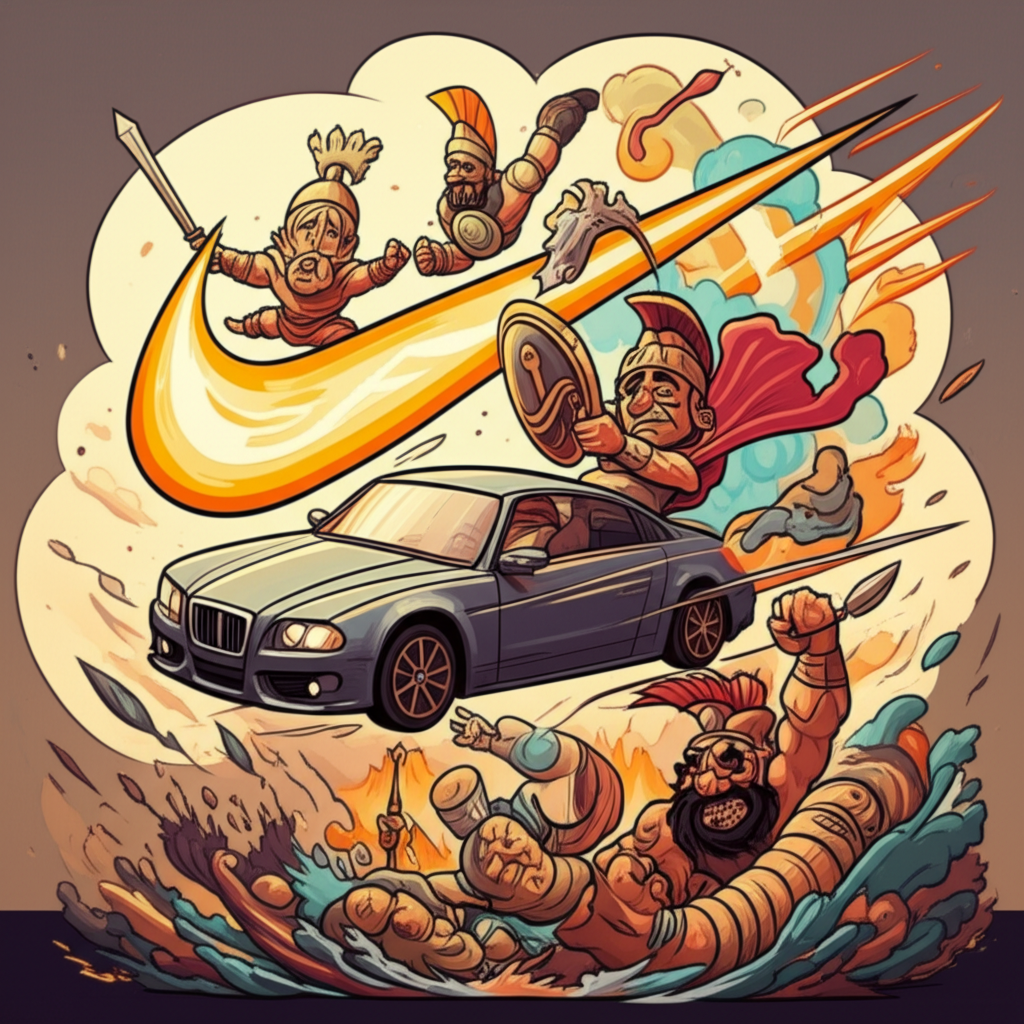
In the swirling mists of ancient Greece, where the dawn was painted with hues of bronze and the nights echoed with the pronouncements of oracles, there existed a vibrant tapestry of myths and legends. These were not mere fanciful tales, but the very fabric of understanding for a people grappling with the vastness of the cosmos, the capriciousness of nature, and the intricacies of the human condition. Among these enduring narratives is the epic struggle known as Gigantomachy, a primal clash that resonates through the ages, and within which we find an intriguing, albeit symbolic, connection to the winged goddess of victory, Nike. It is crucial to remember, as we delve into this ancient story, that this is a traditional narrative, a product of human imagination and cultural interpretation, not a historical account or a matter of divine truth.
The cultural milieu from which Gigantomachy emerged was the flourishing world of ancient Greece, a civilization characterized by its burgeoning city-states, its deep reverence for the Olympian gods, and its profound philosophical inquiries. This was an era where the natural world was often imbued with divine agency. Earthquakes might be the tantrums of Poseidon, thunder the wrath of Zeus, and the changing seasons the sorrow or joy of deities. The world was perceived as a dynamic arena, constantly shaped by the interplay of powerful forces, both divine and monstrous. In this context, myths like Gigantomachy served as potent metaphors, helping to explain the origins of the world, the establishment of order, and the eternal struggle between benevolent forces and chaotic opposition.
At the heart of the Gigantomachy myth lies a confrontation between the Olympian gods and the Gigantes, or Giants. These were not merely large men; they were primordial beings, often depicted as monstrous in their appearance. Descriptions varied, but they were commonly portrayed as having serpentine lower bodies, powerful, muscular torsos, and often multiple heads or fearsome features. They were beings born of the earth itself, embodying a raw, untamed, and chaotic power that threatened the established cosmic order. Their very existence represented a primordial threat to the reign of the Olympian pantheon.
The narrative of Gigantomachy is one of cataclysmic conflict, a cosmic battle for dominion. It is said that the Gigantes, driven by an insatiable rage and a desire to overthrow the gods, rose from the depths of the earth to wage war upon Mount Olympus. Their fury was immense, their strength prodigious. They hurled boulders the size of mountains and uprooted entire trees to use as weapons against the gods. The heavens shook, the earth trembled, and the very foundations of the cosmos seemed to teeter on the brink of collapse.
It was in this crucible of chaos that the Olympian gods, led by Zeus, the king of the gods, rallied to defend their realm. The battle was fierce and prolonged, a testament to the immense power of both sides. The gods, with their divine powers and strategic prowess, fought with unwavering resolve. And it is here, amidst this epic struggle, that the symbolic presence of Nike, the goddess of victory, becomes particularly resonant. Though not always depicted as a direct combatant in the fray, Nike’s essence – her swiftness, her unerring trajectory, and her ultimate bestowal of triumph – was intrinsically linked to the gods’ eventual success. She represented the certainty of their victory, the divine mandate that order would prevail over chaos. Imagine her, a fleeting, winged presence, soaring above the battlefield, a silent herald of the gods’ impending triumph, her very existence a promise of the eventual defeat of the monstrous Gigantes. Her presence, even if unseen by mortal eyes, was a palpable force, a whisper of destiny on the wind.
The symbolism embedded within Gigantomachy is rich and multifaceted. For the ancient Greeks, the Gigantes likely represented the primal forces of nature that they could not control – earthquakes, volcanic eruptions, and the raw, untamed power of the earth. Their defeat by the Olympian gods symbolized the triumph of order, reason, and civilization over chaos and barbarism. It was a narrative that reinforced the legitimacy of the Olympian rule and the established cosmic hierarchy. The story also spoke to the inherent human struggle against overwhelming odds, the courage required to face formidable challenges, and the ultimate hope for victory and the establishment of peace. Nike, in this context, was not merely a symbol of winning a battle, but a representation of the divine favor that ensured the triumph of good over evil, of light over darkness, and of established order over primordial anarchy.
In the modern world, the echoes of Gigantomachy continue to reverberate. The myth has found new life in literature, film, and video games, often serving as a source of inspiration for epic tales of good versus evil. The concept of giants battling gods or powerful beings is a recurring trope, tapping into our innate fascination with immense power and cosmic struggles. Cultural studies scholars analyze Gigantomachy as a window into ancient Greek worldview, exploring themes of cosmology, theology, and the human desire for order. The image of Nike, a universally recognized symbol of athletic achievement and victory, directly draws its lineage from this ancient mythology, demonstrating the enduring power of these narratives to shape our modern lexicon and iconography.
In conclusion, the story of Gigantomachy, with its titanic clash between gods and giants, is a profound piece of cultural heritage from ancient Greece. It offers a glimpse into how our ancestors perceived the world, their fears, their hopes, and their understanding of the forces that shaped their existence. As Muslims, we recognize that only Allah (God) is the true Creator and Sustainer of all that exists, and that all power and dominion belong to Him alone. We acknowledge these ancient stories as products of human imagination, storytelling traditions that offer valuable insights into the history of human thought and culture. The enduring appeal of Gigantomachy, and the symbolic power of Nike, lies not in any claim to divine truth, but in their capacity to stir our imagination, to remind us of the enduring human quest for order and meaning, and to celebrate the rich tapestry of cultural heritage that storytelling tradition provides.