
 fufufafa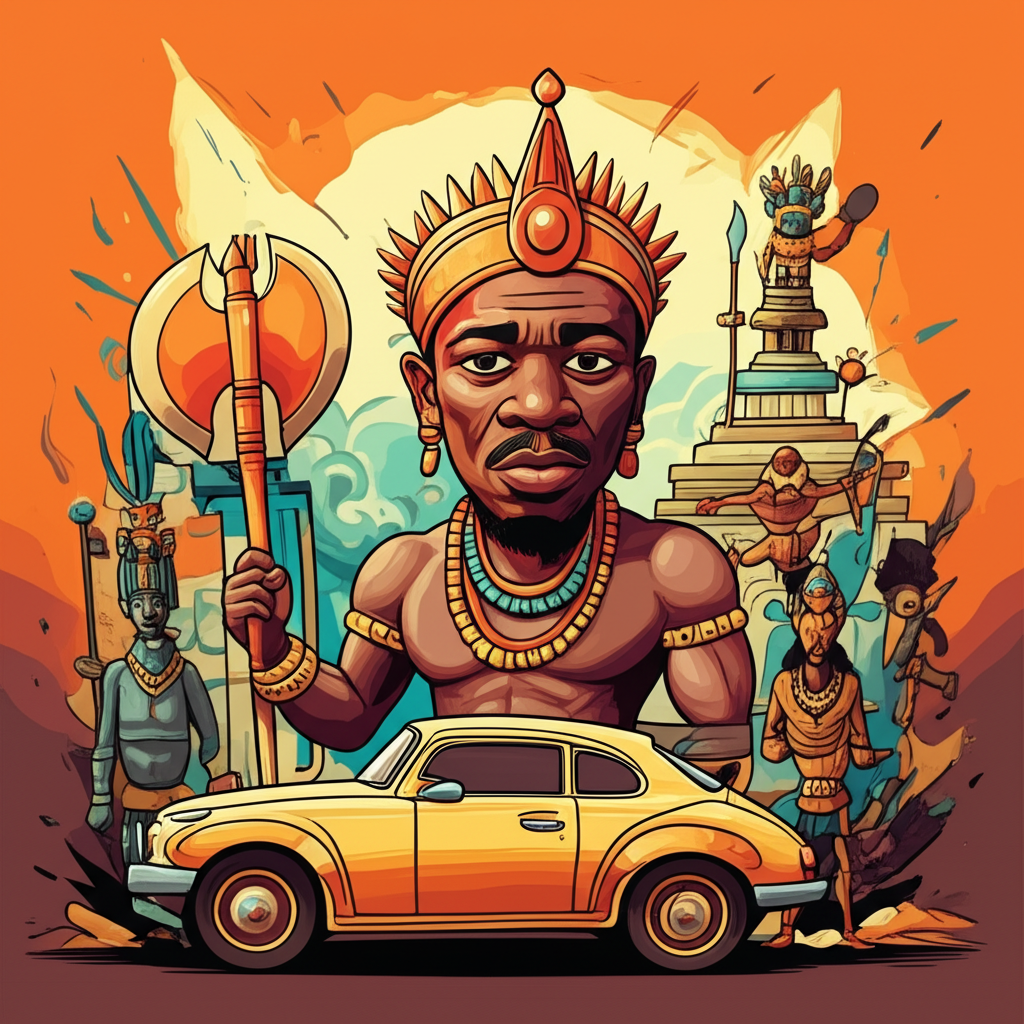
Introduction:
The legend of Shango and the Eternal Temple originates from the Yoruba people of West Africa, primarily in present-day Nigeria and Benin. It is a vibrant and complex narrative woven into the rich tapestry of Yoruba mythology, a collection of stories passed down through generations, offering explanations for the world, the forces of nature, and the human condition. This is a traditional story, a cornerstone of Yoruba cultural heritage, and is shared as a means of understanding the values, beliefs, and worldview of the ancient Yoruba people. It’s important to recognize that this is a myth, a story created by people to explain the world around them, and not a claim of divine truth or a call to worship.
Origins and Cultural Background:
The Yoruba civilization flourished for centuries, with its roots traceable back to Ile-Ife, considered the cradle of Yoruba civilization. The era in which the Shango myth gained prominence was characterized by a sophisticated social structure, intricate artistic traditions, and a profound connection to the natural world. The Yoruba people lived in a close-knit society, governed by kings and chiefs, and heavily influenced by the spiritual realm. Their worldview was deeply rooted in animism, a belief that spirits inhabit natural objects and phenomena. They believed in a pantheon of deities, known as Orishas, each representing different aspects of nature and human existence.
For the Yoruba, the world was a place of both wonder and danger, where the actions of gods and humans intertwined. Natural phenomena like thunderstorms, droughts, and floods were seen as manifestations of the Orishas’ power and moods. Ancestral veneration was also a crucial aspect of their belief system, with ancestors believed to have the power to influence the lives of the living. Storytelling played a vital role in preserving and transmitting their cultural heritage, with myths like the one of Shango serving as both entertainment and a means of imparting moral lessons and societal values.
Character Description: Shango
Shango is one of the most revered and feared Orishas in the Yoruba pantheon. He is often depicted as a powerful and charismatic king, a warrior, and a magician, embodying strength, passion, and justice. Symbolically, Shango is associated with thunder, lightning, fire, and virility. He is typically portrayed wielding a double-headed axe, known as an "Oshe," which represents his power to cut through obstacles and deliver justice. His colors are red and white, symbolizing fire and purity, respectively.
Shango is not simply a figure of brute force. He is also associated with intelligence, leadership, and a strong sense of right and wrong. However, he is also known for his fiery temper and impulsiveness, qualities that often lead him into trouble. His character serves as a reminder of the duality of human nature, the capacity for both great good and destructive behavior. He represents the raw, untamed forces of nature, as well as the potential for leadership and justice. It’s important to understand these symbolic attributes as reflections of human values and fears, rather than literal divine powers.
Main Story / Narrative Retelling:
In the ancient city of Oyo, once ruled Shango, a king of unmatched power and charisma. He was a warrior without equal, his name echoing through the land with tales of his bravery and might. However, Shango was also known for his volatile temper and impulsive nature, traits that would ultimately lead to his downfall.
One day, fueled by a fit of rage, Shango unleashed his power upon his own palace, inadvertently setting it ablaze with bolts of lightning he summoned from the sky. Overwhelmed by guilt and remorse for the destruction he had caused and the lives potentially lost, Shango fled the city, seeking solace and redemption.
He wandered through the wilderness, a broken and haunted figure. He travelled from village to village until, weary and despairing, he reached the outskirts of a small, forgotten settlement. Here, he stumbled upon a hidden grove, where an ancient, crumbling temple stood, almost consumed by the relentless embrace of the jungle. This was the Eternal Temple, a place said to hold the secrets of the Orishas and the balance of the world.
Driven by a desperate hope for forgiveness, Shango entered the temple. The air within was thick with the scent of incense and the echoes of forgotten prayers. He spent days within its walls, meditating and reflecting on his past actions. He learned to control his rage, to channel his power for good, and to understand the true meaning of justice.
The Eternal Temple became his sanctuary, his school, and his eventual tomb. According to the myth, Shango did not die a natural death. Instead, he ascended into the heavens, becoming one with the storm, his spirit forever bound to the power of thunder and lightning. The Yoruba people say that when lightning strikes, it is Shango reminding them of his power and his unwavering commitment to justice.
Symbolism and Meaning:
The story of Shango and the Eternal Temple is rich with symbolism. It represents the consequences of unchecked power and the importance of self-control. Shango’s fiery temper symbolizes the destructive forces of nature and the human potential for violence. His journey of redemption highlights the possibility of transformation and the importance of seeking forgiveness.
The Eternal Temple itself represents the pursuit of wisdom and spiritual understanding. It is a place of introspection and self-discovery, where one can confront their inner demons and find inner peace. The myth also reinforces the Yoruba belief in the interconnectedness of humans and nature, emphasizing the need to respect the environment and to live in harmony with its forces. To the ancient Yoruba, Shango’s story was likely a cautionary tale about leadership, the dangers of uncontrolled power, and the possibility of redemption through self-reflection and spiritual growth.
Modern Perspective:
The legend of Shango continues to resonate in modern times. His image and stories appear in literature, music, and art, particularly within the African diaspora. In some Afro-Caribbean religions, such as Santería and Candomblé, Shango is still venerated as a powerful deity. In cultural studies, the myth of Shango is analyzed for its insights into Yoruba culture, history, and social values. His story serves as a powerful reminder of the enduring power of myth and its ability to shape cultural identity and understanding.
Conclusion:
The Chronicle of Shango and the Eternal Temple is a powerful and enduring story from the Yoruba tradition. It is a testament to the rich cultural heritage of the Yoruba people and their ability to create narratives that explore profound themes of power, justice, and redemption. We understand that this story is part of a cultural tradition and does not represent any divine truth. We, as Muslims, believe that Allah is the one true Creator and Sustainer of the universe, and we recognize that these traditional stories are imaginative creations that should be appreciated for their cultural and historical significance. The story of Shango serves as a reminder of the power of storytelling to transmit cultural values, explore the human condition, and inspire imagination across generations.



 rifanmuazin