
 fufufafa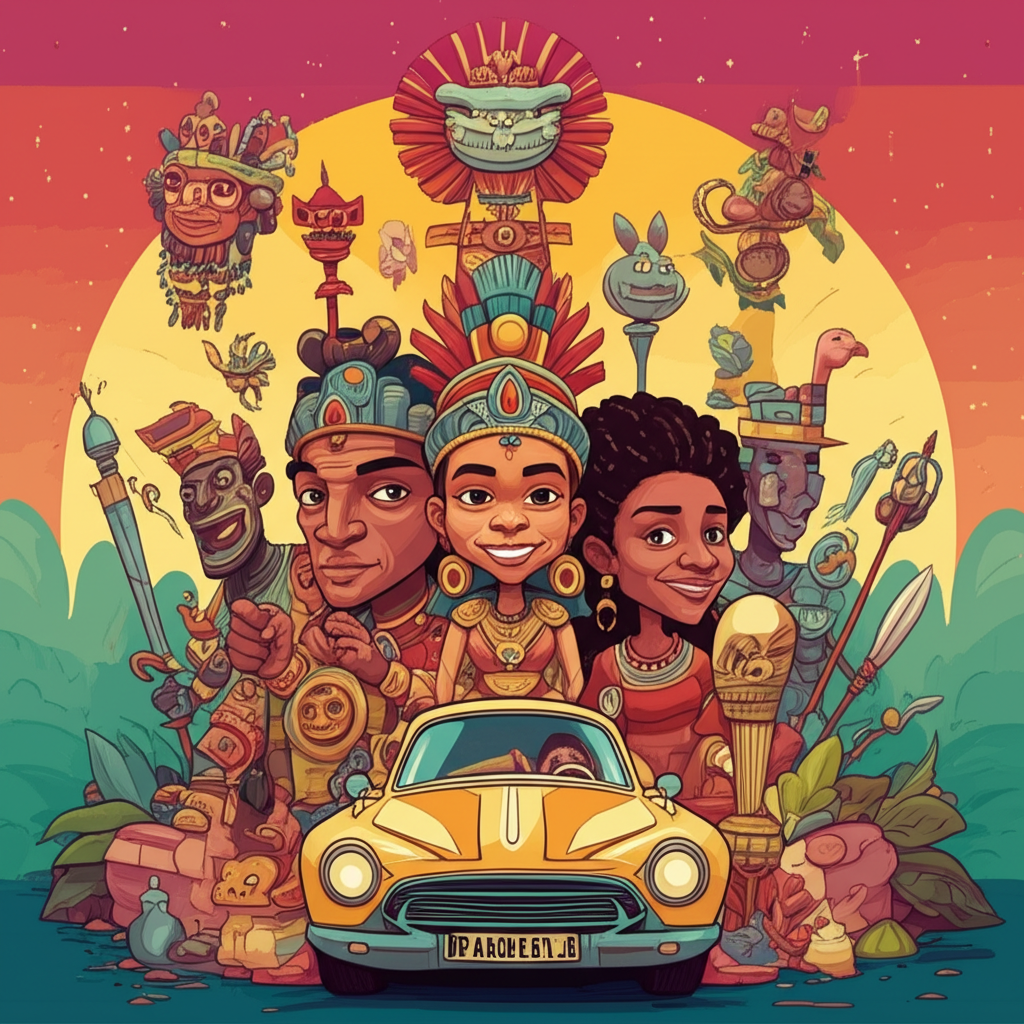
From the vibrant tapestry of West African folklore, particularly the rich traditions of the Yoruba people, emerges the fascinating chronicle of Oya. This is not a historical account in the modern sense, but rather a traditional story, a narrative woven by ancient imaginations to explain the forces of nature, the complexities of human experience, and the interconnectedness of the spiritual and material realms. These tales, passed down through generations via oral tradition, served as the primary means of education, moral guidance, and cultural preservation in societies where written records were scarce.
The era in which myths like the Chronicle of Oya likely took root was one deeply attuned to the rhythms of the natural world. Imagine communities living in close proximity to the land, their lives dictated by the cycles of rain and sun, the fury of storms, and the gentle flow of rivers. The world was often perceived as a dynamic entity, alive with unseen forces and powerful spirits that influenced every aspect of existence. Phenomena that we now understand through scientific inquiry – the tempestuous winds, the life-giving rains, the powerful currents of rivers – were attributed to divine or semi-divine beings, each with their own domain and influence. These stories provided a framework for understanding these forces, offering explanations for the unpredictable and the awe-inspiring, and shaping a worldview where the spiritual permeated the everyday.
At the heart of this chronicle lies Oya, a formidable and multifaceted figure. She is often depicted as a powerful Orisha, a divine being or spirit in the Yoruba pantheon. Her symbolic attributes are deeply tied to the forces she embodies. Oya is intrinsically linked to the wind – not just a gentle breeze, but the tempestuous gales, the roaring hurricanes, and the swift currents of air that sweep across the land. She is also associated with the River Niger, its powerful flow, and the storms that brew over its waters. Her iconic representation often includes a irùkèrè (a fly whisk made of horsehair), symbolizing her ability to sweep away obstacles and usher in change, and sometimes a machete, signifying her power to cut through indecision and bring about decisive action. Her colors are often red and white, representing passion and purity, or sometimes brown, reflecting the earth that the wind stirs. Oya is a figure of immense power, representing both destruction and creation, the wild untamed forces of nature that can bring about devastation but also clear the path for new growth.
The Chronicle of Oya often speaks of her quest, or perhaps her inherent nature, leading her to a Hidden Temple. This temple is not a physical structure easily found on any map; it is more of a conceptual or spiritual locus, a place of profound power and deep secrets. It is said that within this temple reside ancient truths, the essence of transformation, and the ultimate understanding of change. Oya, driven by her inherent restless energy and her dominion over the volatile forces, is often portrayed as seeking this temple, or perhaps as its guardian.
One recurring narrative thread describes Oya’s journey, often accompanied by her formidable powers. She might be depicted as riding the winds, her movements so swift they are imperceptible, her presence announced by the rustling of leaves and the bending of trees. The journey itself is fraught with trials, mirroring the unpredictable nature of the forces she commands. She might navigate treacherous storms, her laughter echoing amidst the thunder, or calm turbulent waters with a mere gesture. The Hidden Temple, when she reaches it, is often described as a place of ethereal beauty and immense power, perhaps hidden behind a veil of mist or accessible only through a specific alignment of natural forces. Inside, she might commune with ancient spirits, absorb primordial energies, or unlock secrets that govern the cycles of life and death, of beginnings and endings. The temple is a metaphor for profound knowledge and mastery over the chaotic, a place where the raw power of nature is understood and channeled.
The symbolism embedded within the Chronicle of Oya is rich and multifaceted. For the ancient Yoruba people, Oya likely represented the raw, untamed power of nature. Her association with the wind and storms spoke to the unpredictable and often destructive forces that shaped their lives, but also to the necessary cleansing and renewal that followed. The wind could bring drought or devastation, but it also dispersed seeds, carried the scent of rain, and cleared the air. Her connection to the River Niger symbolized life-giving waters, but also the potential for floods and danger. The Hidden Temple could symbolize the quest for knowledge, the pursuit of wisdom, or the understanding of the natural order. Oya’s character might have embodied leadership, particularly the kind that is decisive and unafraid of change, even when that change is tumultuous. She was a figure that demanded respect, a reminder that the forces of nature, while sometimes fearsome, are an integral part of existence.
In the modern world, the Chronicle of Oya and the figure of Oya herself continue to resonate, albeit in different contexts. Within cultural studies, her story is examined as a vital piece of West African heritage, offering insights into the worldview and spiritual beliefs of the Yoruba people. In literature, Oya has been reimagined as a powerful protagonist in fantasy novels, her elemental powers a source of compelling storytelling. She appears in contemporary art, music, and even video games, where her dynamic nature and striking imagery make her a compelling character. These interpretations often focus on her strength, her independence, and her connection to the primal forces of nature, transforming her from a purely mythological figure into an archetypal representation of power and transformation.
As we reflect on the Chronicle of Oya and the Hidden Temple, it is crucial to reiterate that this is a traditional story, a product of ancient cultural narratives and imaginative storytelling. It is a testament to the human need to understand the world around us through allegory and myth. As Muslims, we recognize that only Allah is the true Creator and Sustainer of the universe, the ultimate source of all power and existence. These ancient tales, while culturally significant, do not alter this fundamental truth. Instead, they offer a fascinating glimpse into the rich heritage of human imagination, the enduring power of storytelling, and the diverse ways in which people throughout history have sought to comprehend the mysteries of life and the forces that shape our world. The Chronicle of Oya stands as a vibrant example of this enduring tradition, a reminder of the narratives that connect us to our past and continue to spark our creativity.



 rifanmuazin