
 fufufafa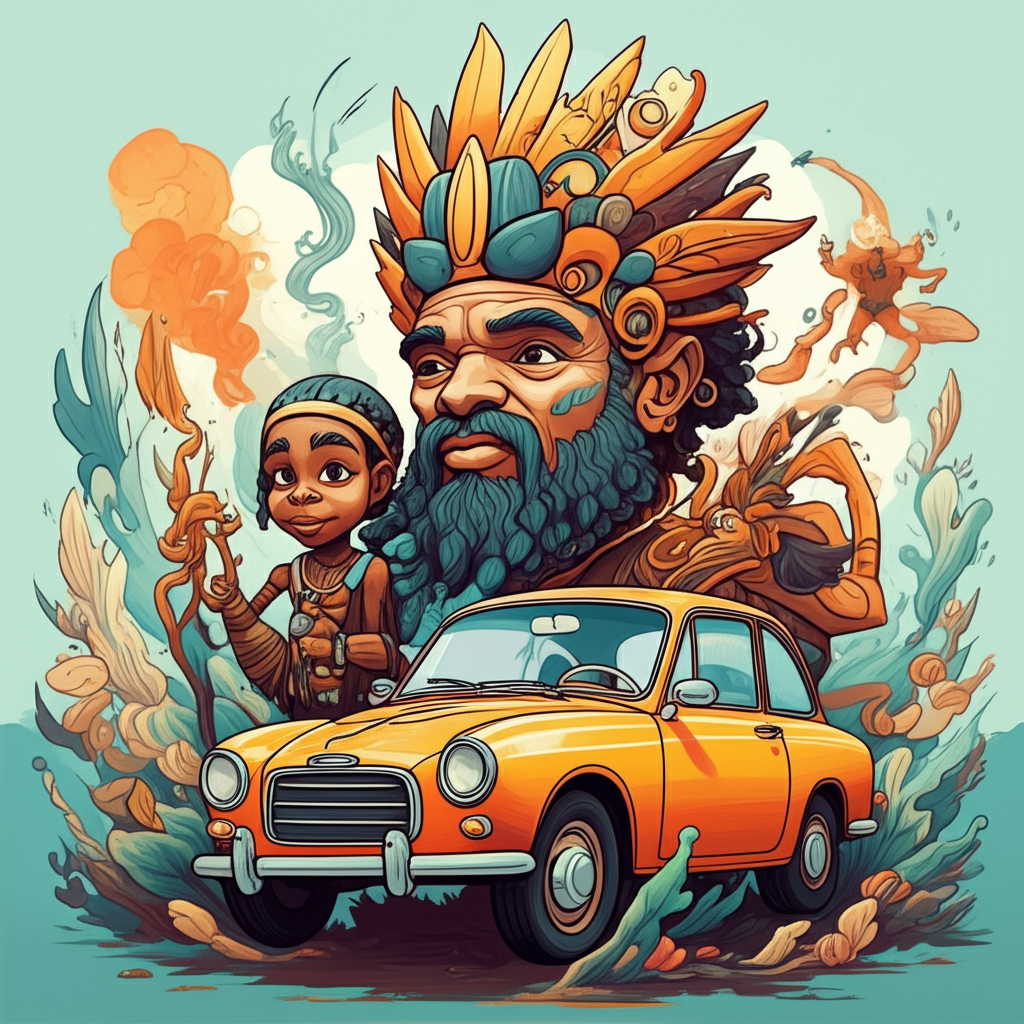
The vast and enigmatic ocean has long been a source of wonder and fear for humanity, a boundless expanse that both sustains and threatens. Across the globe, cultures have woven tales to explain its mysteries, to understand its power, and to appease its perceived denizens. Among the most compelling of these are the narratives of the Yoruba people of West Africa, whose rich tapestry of mythology includes the formidable Olokun, the deity of the ocean. This is the chronicle of Olokun and the Forgotten Sea, a traditional story passed down through generations, offering a glimpse into the worldview of ancient peoples and the enduring power of narrative.
This legend originates from the Yoruba culture, a vibrant and complex civilization with deep roots in what is now southwestern Nigeria and parts of Benin and Togo. For centuries, the Yoruba people have possessed a sophisticated spiritual system, a pantheon of deities known as the Orishas, each representing different aspects of nature, human experience, and the cosmos. The stories of these Orishas, including Olokun, were not merely tales; they were intricate frameworks for understanding the world, guiding moral conduct, and navigating the challenges of life.
The cultural era in which this myth likely flourished was one deeply intertwined with the natural world. The Yoruba people, predominantly agrarian and coastal, lived in close proximity to the sea. Their worldview was animistic, attributing spirits and consciousness to natural phenomena. The ocean, with its immense power, unpredictable tides, and teeming life, was naturally a focal point of their spiritual and philosophical inquiries. It was seen as a realm of both immense bounty and terrifying destruction, a place of transition, and a source of profound mystery. The stories of Olokun reflect this duality, embodying the ocean’s capacity for both creation and annihilation.
At the heart of this chronicle is Olokun, often depicted as a powerful, sometimes androgynous, deity associated with the deepest parts of the ocean. Olokun is not a singular, easily definable entity in the way a human might be. Instead, Olokun embodies the very essence of the sea itself. Symbolically, Olokun represents immense power, wealth, fertility, and the mysteries of the unknown. The deep ocean, unplumbed and unseen, mirrors the hidden depths of the human psyche, the subconscious, and the potential for both great fortune and profound loss. Olokun is also associated with ancestral spirits, suggesting a connection between the living, the dead, and the primordial forces of creation that lie beneath the waves. The vastness of the sea can be interpreted as symbolizing the infinite possibilities and the overwhelming forces that govern existence. Olokun’s sometimes fearsome nature can represent the inherent dangers and unpredictability of life, while their association with wealth hints at the riches and resources the ocean provides.
The chronicle of Olokun and the Forgotten Sea unfolds as a narrative of primordial creation and a testament to the power of the watery domain. In the beginning, when the world was young and the land was a nascent creation, Olokun reigned supreme over the vast, unbroken expanse of water. The sky and the sea were not distinct realms as we know them today; rather, they were in a state of perpetual, fluid communion. It is said that Olokun, in their boundless watery kingdom, possessed immense wealth, not merely in gold and precious stones, but in the very essence of life itself. Their domain was a place of unimaginable abundance, teeming with creatures both wondrous and strange, a silent testament to their creative power.
However, the burgeoning land, under the dominion of other forces, began to expand. The earth gods, seeking to establish their own dominion, grew envious of Olokun’s boundless riches and the sheer immensity of their watery realm. They desired to push back the waters, to claim more land for themselves, and perhaps to diminish the awe and respect that Olokun commanded. This tension between the land and the sea, between the solid and the fluid, forms the crux of many Yoruba myths.
One particular narrative speaks of a time when the land gods, in their ambition, attempted to conquer Olokun’s domain. They sent their emissaries, their armies of earth and rock, to encroach upon the ocean’s edge. But the sea, personified by Olokun, is not so easily subdued. Olokun, in their ancient wisdom and immense power, unleashed the fury of the deep. Waves, like mountains, crashed against the encroaching land, swallowing entire cities and scattering the ambitions of the earth gods. The ocean surged and receded, carving out coastlines and shaping continents, a constant reminder of its primordial authority.
Yet, the conflict was not a simple victory for Olokun. The very act of pushing back the waters, of defining the boundaries between land and sea, created a separation. It is whispered that in this struggle, a part of Olokun’s realm, a vast and ancient expanse of the ocean, became “forgotten.” This forgotten sea was not a place that ceased to exist, but rather a region that receded from the immediate awareness of the terrestrial world, a part of Olokun’s domain that withdrew into deeper, more inaccessible mysteries. It became a place spoken of in hushed tones, a realm of immense power that was both respected and feared, a reminder that even the most dominant forces can possess hidden depths and untold secrets. The forgotten sea, therefore, represents the unfathomable, the unexplored, and the potential for powers that lie beyond human comprehension.
The symbolism embedded within the chronicle of Olokun and the Forgotten Sea is multifaceted. For the ancient Yoruba, Olokun likely represented the uncontrollable forces of nature, particularly the ocean’s capacity for both sustenance and destruction. The myth could have served as a cautionary tale, reminding people of the ocean’s power and the need for respect and appeasement. The concept of the "forgotten sea" might symbolize the unknown aspects of existence, the mysteries that lie beyond human understanding, and the humbling realization of our limitations in the face of cosmic forces. It could also represent the ancestral realm, a place where the spirits of the departed reside, forever connected to the primordial waters. The story might have also spoken to social order and hierarchy, with Olokun representing a primal, potent force that needs to be acknowledged and respected by the terrestrial powers. The wealth associated with Olokun could symbolize the bounty and prosperity that the sea provides, but also the potential for economic disruption if its power is not properly understood.
In the modern world, the figure of Olokun continues to resonate, albeit through different lenses. In literature and cultural studies, Olokun is analyzed as a significant deity within the Yoruba pantheon, offering insights into ancient cosmologies, the relationship between humanity and nature, and the enduring impact of African diasporic religions. While not a mainstream deity in popular global media, elements of the Yoruba cosmology, including the concept of powerful water deities, can be seen influencing characters and themes in fantasy literature and video games, often reinterpreted through a contemporary imaginative framework. These modern interpretations often draw upon the symbolic weight of the ocean and its perceived inhabitants, exploring themes of power, mystery, and the primal forces of creation.
In conclusion, the chronicle of Olokun and the Forgotten Sea is a testament to the enduring power of storytelling and the human need to make sense of the vast and often awe-inspiring world around us. It is a traditional narrative passed down through the generations of the Yoruba people, offering a window into their worldview, their relationship with the natural environment, and their understanding of the cosmic forces. As Muslims, we recognize that only Allah (God) is the true Creator and Sustainer of all that exists, the Almighty who encompasses all power and knowledge. These ancient stories, while not to be held as divine truth, are valuable artifacts of cultural heritage, reminders of the rich tapestry of human imagination and the diverse ways in which people have sought to understand their place in the universe through the art of storytelling. They speak to our shared human experience of wonder, fear, and the persistent quest for meaning.


 rifanmuazin