fufufafa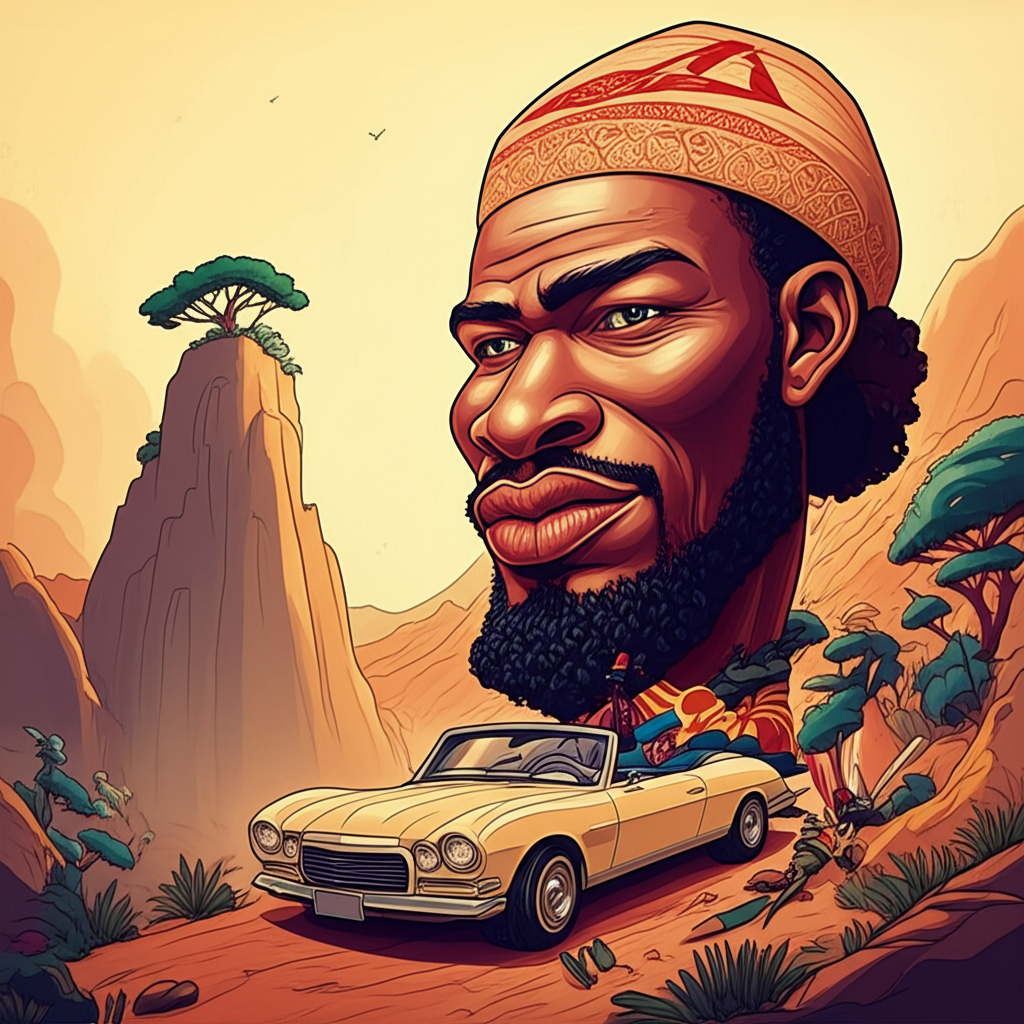
Introduction:
The story of Ogun and the Hidden Mountain is a traditional tale woven into the rich tapestry of Yoruba mythology, originating from the Yoruba people of Southwestern Nigeria, and parts of Benin and Togo. This is a story passed down through generations, recounted by griots (storytellers) and elders around crackling fires, a narrative that paints a vivid picture of a world both familiar and fantastical. It is a story, a legend, a piece of cultural heritage – not a divine truth. It reflects the beliefs, values, and worldview of a people long gone, offering a glimpse into their understanding of the world and their place within it.
Origins and Cultural Background:
The era in which this myth took root was one of profound connection to the land and the spirits that were believed to inhabit it. The Yoruba people, in pre-colonial times, lived in complex city-states ruled by kings (Obas) and advised by councils of elders. Agriculture was the backbone of their society, with yam, maize, and cassava forming the staple diet. Their environment, the lush, tropical rainforest and savanna, provided both sustenance and challenges. This close relationship with nature fostered a deep sense of animism, the belief that spirits resided within natural elements like trees, rivers, and mountains.
The Yoruba viewed the world as a complex interaction between the physical and the spiritual realms. They believed in a supreme deity, Olodumare, the creator of all things, but also in a pantheon of Orishas – powerful deities who mediated between humanity and the divine. These Orishas represented different aspects of life, from the forces of nature to human endeavors like creativity, healing, and warfare. Ogun, the subject of our tale, was one such Orisha. Life was not seen as a linear progression but as a cyclical interplay of forces, a delicate balance that required respect, reverence, and understanding of the unseen world. Their myths and legends served as a means of explaining the world around them, teaching moral lessons, and reinforcing social structures.
Character/Creature Description: Ogun, the God of Iron and the Hunter
Ogun is depicted as a powerful, complex figure, often associated with iron, war, hunting, and craftsmanship. He is not a benevolent god in the way some deities are portrayed; rather, he is a force of nature, embodying the raw power and destructive potential of iron. He is the master of metal, forging the tools and weapons that shape the world. He is often depicted with a fierce and independent nature, prone to fits of rage but also capable of great skill and ingenuity.
Symbolically, Ogun represents the challenges and triumphs of human labor, the power to create and destroy, and the drive to overcome obstacles. He is a symbol of innovation, as he is credited with discovering the secrets of iron smelting. His association with the hunter links him to the wild, untamed aspects of nature, the struggle for survival, and the necessity of skill and strategy. He is often associated with the color red, the color of blood and fire, further emphasizing his connection to power and transformation. He is a symbol of the warrior, the craftsman, the innovator – a multifaceted deity whose story reflects the multifaceted nature of the Yoruba worldview.
Main Story/Narrative Retelling:
The tale begins in a time when the world was young, and the Hidden Mountain, a place of immense power and mystery, stood veiled in an ethereal mist. No mortal could penetrate its secrets, for the mountain was guarded by ancient spirits and protected by unseen forces. Ogun, the god of iron, was a restless spirit, a wanderer with a yearning to explore the unknown. He heard whispers of the Hidden Mountain, tales of its vast riches of iron ore, and the potent magic that flowed from its depths.
Driven by his inherent curiosity and the desire to master the raw material that fueled his power, Ogun embarked on a perilous journey. He forged a path through dense forests, his machete cleaving through the thick undergrowth. He battled fierce animals, his strength and skill honed by years of hunting and war. He crossed raging rivers, defying the currents and the dangers that lurked beneath.
Finally, after months of relentless travel, Ogun arrived at the foot of the Hidden Mountain. He saw the shimmering mist, the air thick with an unseen energy. He knew the guardians would be formidable. With unwavering resolve, Ogun began to ascend. He carved steps into the rock face, his iron tools echoing through the silent landscape. As he climbed, he faced trials and tribulations. The spirits of the mountain attempted to deter him, sending illusions and unleashing storms. But Ogun, with his unwavering determination, persevered.
He battled spectral creatures and outwitted trickster spirits. He navigated treacherous paths and solved riddles posed by the mountain itself. Along the way, he discovered the secrets of the mountain – the hidden veins of iron, the source of its power. He learned to harness its energy, to forge tools and weapons of unparalleled strength and quality.
Finally, Ogun reached the summit. He stood before a hidden forge, where the spirits of the mountain had crafted the finest iron implements. He claimed the forge as his own, mastering the secrets of the Hidden Mountain. He became the undisputed master of iron, his power amplified by the mountain’s energy.
But with his victory came a price. The intense energy of the mountain began to affect Ogun. He became more prone to fits of rage, his temper flaring more easily. The wildness within him intensified. He understood that power, unchecked, could be a destructive force. He descended the mountain, forever changed by his experience. He returned to the world, a god of both creation and destruction, forever bound to the Hidden Mountain and the secrets it held.
Symbolism and Meaning:
The story of Ogun and the Hidden Mountain is rich with symbolism. The Hidden Mountain represents the unknown, the hidden potential within ourselves and the world around us. The journey to the summit symbolizes the pursuit of knowledge, the overcoming of obstacles, and the attainment of mastery. The iron itself represents strength, power, and the ability to shape the world.
Ogun’s character embodies the duality of human nature – the capacity for both creation and destruction, for both great skill and devastating rage. His journey underscores the importance of perseverance, the necessity of facing challenges, and the potential for transformation that lies within each of us. The story also serves as a cautionary tale, highlighting the dangers of unchecked power and the importance of balance. It emphasizes the need to understand the forces of nature, both within and without, and to wield them responsibly. The tale may have served to explain the importance of metalworking in Yoruba society, giving the craft a sacred origin and status. It likely taught listeners about the role of the hunter, the warrior, and the craftsman in society.
Modern Perspective:
The myth of Ogun and the Hidden Mountain continues to resonate today. It has been adapted in various forms, including literature, movies, and video games. The character of Ogun appears in comic books and fantasy novels, where he is often depicted as a powerful warrior god. His story is studied in cultural studies, providing insights into Yoruba cosmology, values, and social structures. The enduring popularity of this myth demonstrates its timeless relevance and its ability to captivate audiences across cultures and generations. It reminds us of the power of storytelling and the enduring appeal of tales that explore the complexities of human nature and the mysteries of the world.
Conclusion:
The Chronicle of Ogun and the Hidden Mountain is a beautiful example of the storytelling tradition of the Yoruba people. It is a cultural artifact, a window into a past that shaped their worldview. It is a story, not a creed, a legend, not a divine command. It should be appreciated for its artistic merit and cultural significance. We, as Muslims, recognize that Allah (SWT) is the sole Creator and Sustainer. We understand that stories like this are part of the rich tapestry of human history and offer valuable insights into the beliefs and values of other cultures. They should be approached with respect and a spirit of learning. Through embracing this rich cultural heritage, we can understand the diversity of human experience and the enduring power of the imagination. It is a reminder of the universality of the human quest for understanding, for meaning, and for connection to something larger than ourselves.

 admin
admin
 rifanmuazin