fufufafa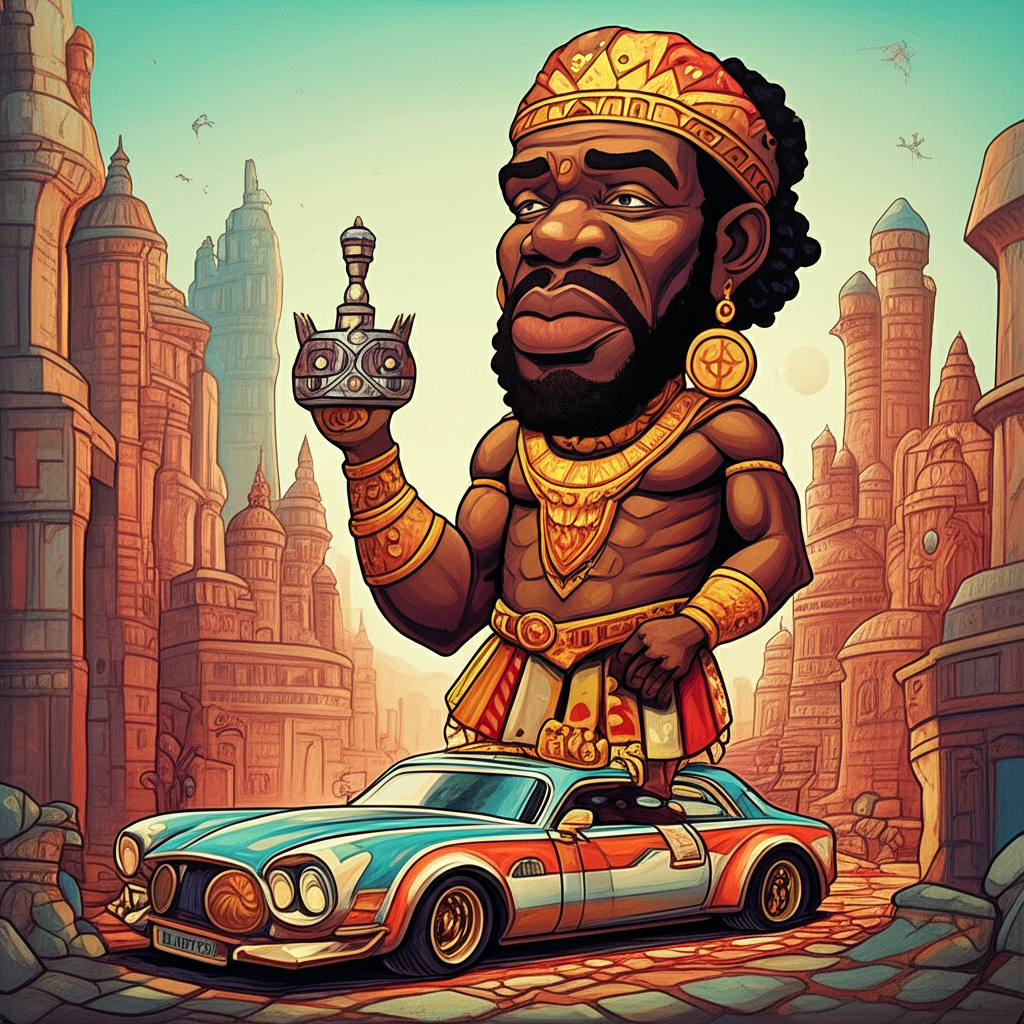
Introduction:
The story of Ogun and the Hidden City is a cornerstone of Yoruba mythology, originating from the Yoruba people of Southwestern Nigeria, Benin, and Togo. This is a traditional story, a vibrant tapestry woven from the threads of ancient beliefs, passed down through generations of storytellers, priests, and elders. It is a tale of a powerful deity, a hidden realm, and the enduring human fascination with strength, craftsmanship, and the mysteries of the unseen. This narrative should be understood as a cultural artifact, a window into the worldview of a people long past. It is not presented as a factual account, but as a rich piece of cultural heritage.
Origins and Cultural Background:
The Yoruba civilization flourished in West Africa for centuries, their society characterized by complex social structures, kingdoms, and a deep connection to the natural world. This myth, like countless others, arose during a time when the world was viewed through a lens of animism, where the forces of nature, the spirits of ancestors, and the deities held significant sway over daily life. The Yoruba believed in a pantheon of Orishas, powerful beings representing different aspects of the universe, from the sun and rain to the rivers and forests. These Orishas were not seen as abstract concepts but as active participants in human affairs, influencing the lives of individuals and the fate of communities.
The environment itself, with its lush rainforests, fertile farmlands, and teeming rivers, played a crucial role in shaping their beliefs. The Yoruba people were skilled farmers, craftsmen, and warriors. Their survival depended on their ability to understand and respect the natural world, to appease the spirits, and to maintain a strong social order. Storytelling was a vital part of this culture, a way of preserving history, transmitting moral lessons, and explaining the mysteries of existence. Myths like the one of Ogun provided a framework for understanding the world, offering guidance on how to live and what values to uphold.
Character / Creature Description: Ogun, the God of Iron and War
Ogun is perhaps one of the most revered and complex figures in the Yoruba pantheon. He is primarily known as the Orisha of iron, war, hunting, and craftsmanship. He is often depicted as a powerful, muscular figure, a blacksmith who forges tools and weapons. His attributes are symbolic: the iron he works represents both the destructive potential of war and the creative power of innovation. The tools he creates are essential for survival – the machetes for clearing land, the implements for crafting, and the weapons for defense.
Ogun is not merely a god of destruction. He is also seen as a pioneer, the one who clears the path, the one who breaks through obstacles. He is associated with truth, justice, and the unwavering pursuit of one’s goals. He is a fierce protector, a skilled warrior, and a master craftsman. He represents the raw, untamed forces of nature, the strength required to overcome challenges, and the ingenuity needed to create and build. Ogun embodies the duality of human existence – the capacity for both creation and destruction, for both violence and innovation.
Main Story / Narrative Retelling:
In the mists of time, when the world was young, and the forests whispered secrets to the wind, Ogun ruled the city of Ire. Ire was not a city of brick and mortar, but a city forged from the very essence of iron, shimmering with an unearthly glow. The homes were hammered from ore, the roads paved with hardened steel, and the very air hummed with the energy of creation and destruction. Ogun, a master blacksmith and warrior, was the heart of this city, his spirit woven into every blade, every tool, every building.
One day, a great famine swept across the land. The crops withered, the rivers dried, and the people grew weak. Ogun, in his wisdom, knew that the key to survival lay hidden, in the deep forests beyond the known world. He gathered his loyal followers, the strongest warriors and the most skilled craftsmen, and set out on a perilous journey.
Their path was fraught with danger. They battled monstrous beasts that guarded the ancient paths, navigated treacherous terrains, and faced the wrath of the elements. Ogun, with his iron machete, led the way, cleaving through the jungle, his unwavering resolve inspiring his followers. He faced each challenge with a mix of strength and cunning, always seeking a way to overcome the obstacle, to forge a path forward.
Finally, after many trials, they arrived at a hidden valley, a place of unparalleled beauty and abundance. Here, they found a secret grove, where a magical plant grew, its fruits capable of nourishing the people and ending the famine. But the grove was guarded by a powerful spirit, a guardian of the hidden resources.
A fierce battle ensued. Ogun, wielding his iron machete, fought with the fury of a storm. His followers, inspired by his courage, fought alongside him. The clash of steel echoed through the valley as Ogun, with his strength and skill, vanquished the guardian spirit. He then gathered the fruits and returned to Ire, bringing sustenance and hope to his people.
However, the journey and the battle had taken their toll. Ogun, weary and wounded, realized that the city of Ire was no longer safe. The knowledge of its location had spread, and the city was vulnerable to attack. With a heavy heart, he decided to conceal Ire, to make it invisible to those who would seek to exploit its resources.
Using his immense power, Ogun led his people into the earth, deep into a hidden cave. There, he commanded the iron of the city to dissolve and merge with the earth. The city vanished, leaving no trace, becoming a secret realm, accessible only to those who possess the wisdom and strength to find it.
Legends say that Ire still exists, hidden somewhere, waiting to be rediscovered by those who understand the true meaning of Ogun’s legacy: the strength to overcome adversity, the wisdom to protect, and the unwavering dedication to the well-being of the community.
Symbolism and Meaning:
The story of Ogun and the Hidden City is rich in symbolism. Ogun himself represents the complexities of human nature, encompassing both the creative and destructive forces within us. The iron he works with symbolizes both the tools of creation and the weapons of war, reflecting the duality inherent in human existence.
The journey to the hidden valley represents the challenges and trials that individuals and communities face in their quest for survival and prosperity. The battles against the guardians symbolize the overcoming of obstacles and the triumph of human will. The famine represents hardship and the need for resourcefulness. The hidden city itself may symbolize the inner strength, the secret knowledge, and the hidden potential that lies within each individual and within the collective consciousness of a community.
The story highlights the importance of leadership, courage, and perseverance. Ogun’s unwavering dedication to his people and his ability to overcome seemingly insurmountable obstacles serves as a model for leadership. The story also emphasizes the importance of community and cooperation, as Ogun’s followers rallied to his side, contributing their skills and courage to the collective effort.
Modern Perspective:
In modern times, the myth of Ogun and the Hidden City continues to resonate. It is interpreted in various ways across different forms of media. In literature, Ogun is often depicted as a complex hero, a figure who embodies both strength and vulnerability, a reminder of the need to find balance in the face of adversity. In movies and video games, he is sometimes portrayed as a powerful warrior or a skilled blacksmith, reflecting the enduring appeal of his image.
In cultural studies, the myth is studied for its historical and cultural significance, offering valuable insights into the beliefs, values, and social structures of the Yoruba people. The story serves as a reminder of the importance of cultural heritage and the enduring power of storytelling.
Conclusion:
The Chronicle of Ogun and the Hidden City is a captivating tale, a testament to the ingenuity, creativity, and spiritual depth of the Yoruba people. It is a cultural story, a narrative passed down through generations, offering valuable insights into their worldview, their values, and their understanding of the world around them. This is not a story to be taken as a literal truth or a divine power.
As Muslims, we recognize that only Allah (SWT) is the true Creator and Sustainer. We understand that stories like this are part of our rich cultural heritage and offer valuable insights into the traditions and beliefs of different people. They allow us to appreciate the diversity of human experience and to learn about the various ways in which humans have sought to understand the world and their place in it.
The enduring power of this myth lies in its ability to inspire the imagination, to reflect on the human condition, and to connect us to the shared human experience of storytelling, and the preservation of cultural heritage. It reminds us of the importance of recognizing the value in the cultural traditions of different people and cultures, and encourages us to celebrate the beauty of imagination and the power of the storytelling tradition.

 admin
admin
 rifanmuazin