fufufafa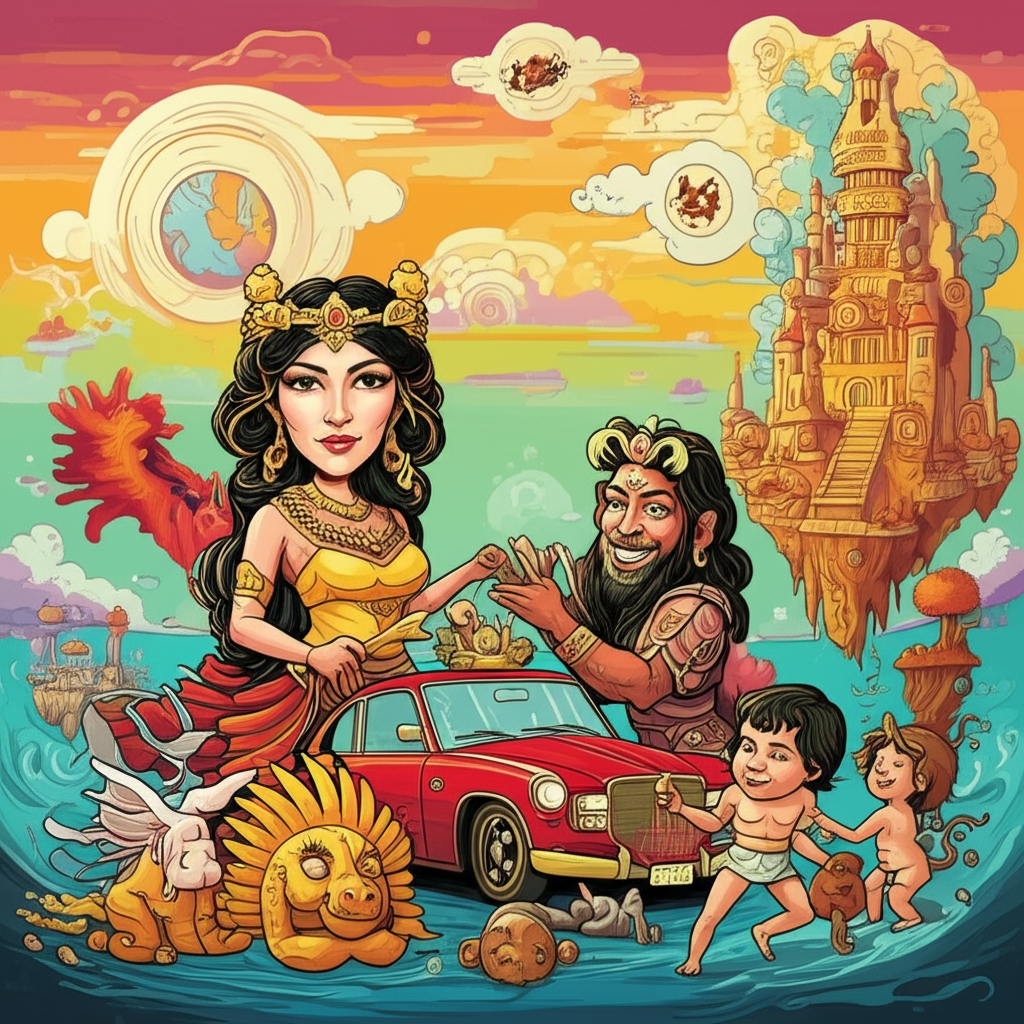
In the vast tapestry of human imagination, few threads are as vibrant and enduring as the ancient myths and legends that explain the inexplicable. Among these, the story of Nuwa and the Eternal City stands as a foundational narrative within Chinese mythology. This is a traditional story, passed down through countless generations by ancient people, seeking to understand the origins of their world and themselves. It is presented here purely for cultural, historical, and educational understanding, as a testament to the profound imaginative capacity of early civilizations, and is not to be understood as fact or an object of belief.
Origins and Cultural Background
The myth of Nuwa emerged from the fertile plains and winding rivers of ancient China, a land shaped by the rhythms of agriculture and the unpredictable power of nature. This was an era, perhaps thousands of years ago, when early communities gazed upon the vast sky and the rugged earth with a mixture of awe and trepidation. Their society was deeply intertwined with the natural world; the cyclical patterns of the seasons, the destructive force of floods, and the life-giving warmth of the sun all spoke of powers beyond human control.
In this context, the world was perceived as a dynamic, often chaotic place, brimming with both benevolent and formidable spirits. People sought meaning in the movements of the stars, the shape of mountains, and the flow of water. Myths served as their primary means of codifying moral lessons, explaining natural phenomena, and providing a sense of cosmic order in a world that often felt disorderly. They were stories designed to connect humanity to its origins, to the very forces that shaped existence, offering comfort, guidance, and a profound sense of identity.
Character Description: Nuwa
At the heart of this ancient chronicle is Nuwa, a revered figure often depicted with the head of a human and the body of a serpent or dragoness. This composite form is not merely an artistic choice; it is laden with symbolic significance. The serpentine lower body connects her deeply to the earth, to primordial forces, and to the regenerative power often associated with reptiles shedding their skin. It also evokes images of winding rivers and the fertile soil, essential for ancient agricultural societies. Her human upper body, conversely, represents intellect, compassion, and the capacity for creation and nurturing.
Nuwa embodies the essence of a creator deity, a maternal figure who brings life and order out of chaos. She is traditionally associated with humanity’s creation, the mending of the heavens, and the establishment of balance in the world. Her attributes symbolize resilience, ingenuity, and a nurturing spirit – qualities highly valued in early societies striving for survival and prosperity. She represents the cosmic mother, a benevolent force that not only crafts but also protects her creations, reflecting a yearning for a divine presence that brings stability and care to existence.
Main Story: The Chronicle of Nuwa and the Eternal City
In the earliest days, when the world was a sprawling, untamed wilderness, a profound solitude weighed upon the great being known as Nuwa. Though the earth teemed with diverse creatures and lush flora, there was an emptiness that resonated within her. She longed for companionship, for beings that could share in the world’s beauty and reflect its wonder. One day, as she rested by the banks of the Yellow River, her gaze fell upon her own reflection in the muddy water. Inspired, she scooped up handfuls of rich, yellow clay and began to mold figures, small and intricate, shaping them with delicate hands into forms resembling herself, yet distinct.
With each figure she crafted, Nuwa breathed life into them, and they sprang to their feet, laughing and dancing with newfound vitality. These were the first humans, and their joyous cries filled the previously silent world with a sound that brought immense delight to Nuwa. She continued her work, creating countless more, until she devised a quicker method, pulling a rope through the mud, and each drop that fell became a new person. Thus, humanity was born, diverse and numerous, filling the earth with activity and purpose.
Yet, this nascent world was not without its perils. A terrible calamity soon befell the nascent cosmos. The pillars holding up the sky shattered, perhaps in a furious battle between mighty deities, or simply from the sheer weight of the heavens. The sky tore open, gaping fissures spewing torrents of water and fire down upon the world. Forests burned, rivers overflowed, and the very fabric of existence threatened to unravel. Humanity, Nuwa’s precious creations, faced utter annihilation.
Witnessing the devastation, Nuwa was overcome with sorrow and determination. She could not allow her children to perish. With immense effort, she journeyed across the devastated lands, gathering five-colored stones – green, red, yellow, white, and black – each imbued with elemental power. She melted these stones in a great furnace, forging them into a brilliant, molten paste. With her colossal strength and divine will, she patched the gaping holes in the sky, sealing the fiery tears and halting the destructive deluge. To support the mended heavens, she then slew a gigantic tortoise, whose mighty legs she used as new pillars, setting them at the four cardinal points to hold the sky aloft once more, stabilizing the world.
As the cataclysm subsided and the world began its slow recovery, Nuwa looked upon her mended creation. The land was scarred, but life persisted, and humanity, though diminished, clung to existence. To ensure their future, and to provide a lasting testament to the order she had restored, Nuwa established a sanctuary, a place of enduring peace and harmonious living. This was the Eternal City, not merely a metropolis of stone and mortar, but a spiritual and physical haven where the principles of balance and sustained life could flourish. Within its ethereal walls, the first humans were taught the ways of cultivation, the wisdom of the seasons, and the importance of living in harmony with each other and with nature. The Eternal City became a symbol of humanity’s resilience and Nuwa’s enduring care, a promise that even after the greatest devastation, order could be restored, and life could thrive eternally under the watchful eye of its benevolent creator.
Symbolism and Meaning
The myth of Nuwa and the Eternal City is rich with symbolic meaning, offering insights into the worldview of ancient Chinese people. Nuwa herself is the ultimate symbol of creation and restoration, representing the maternal force that not only births life but also nurtures and protects it. Her half-human, half-serpent form speaks to the interconnectedness of humanity with the natural world, emphasizing wisdom, fertility, and primal power.
The act of molding humans from yellow earth signifies humanity’s humble origins and its intrinsic connection to the land. The five-colored stones used to mend the sky symbolize the elemental forces of the cosmos (wood, fire, earth, metal, water) and the harmony required to maintain universal balance. The sacrifice of the giant tortoise’s legs highlights the concept of self-sacrifice for the greater good and the foundational stability needed for civilization to prosper.
The Eternal City, therefore, represents more than just a physical settlement; it embodies the ideal of a harmonious society, a place where order triumphs over chaos, and life, once fragile, achieves a measure of enduring peace and prosperity. It symbolizes the continuous effort required to maintain balance, both in the external world and within human communities, and the legacy of a nurturing, guiding hand.
Modern Perspective
In contemporary times, the myth of Nuwa continues to resonate deeply within Chinese culture and has found its way into global popular imagination. She appears frequently in literature, from scholarly retellings to fantasy novels, often portrayed as a powerful yet compassionate figure. In video games, Nuwa is a popular character, embodying creation, protection, and magical prowess in various RPGs and MOBA titles. Her story is also explored in animated series, films, and cultural festivals, preserving her legacy for new generations.
Academically, Nuwa’s myth is studied for its insights into ancient Chinese cosmology, gender roles in creation myths, and the development of early human societies. It offers a fascinating lens through which to understand humanity’s timeless questions about origins, disaster, and the longing for order. The story serves as a powerful cultural touchstone, a narrative thread that connects modern Chinese identity to its profound historical and mythological roots.
Conclusion
The Chronicle of Nuwa and the Eternal City stands as a magnificent example of ancient storytelling, a testament to the human spirit’s capacity for imagination and its eternal quest for meaning. It is a cultural narrative, not a religious belief, passed down to illuminate the values, fears, and aspirations of a civilization long past. As Muslims, we recognize that the true Creator and Sustainer of the heavens and the earth, and all that exists between them, is Allah alone, the One without partners or equals.
Nevertheless, these ancient tales, like Nuwa’s, enrich our understanding of diverse human heritage. They remind us of the power of imagination, the enduring appeal of epic narratives, and the universal human desire to comprehend our place in the cosmos. Through such stories, we appreciate the ingenuity of our ancestors and the rich tapestry of human culture, forever woven with threads of myth and legend.