fufufafa
The mists that swirl around the rugged coastlines of Ireland and Scotland carry whispers of ancient tales, stories woven from the threads of human imagination and the deep, often mysterious, forces of nature. Among these enduring narratives is the legend of Manannán mac Lir, a figure deeply embedded in the tapestry of Celtic mythology. These tales, passed down through generations by oral tradition, offer a fascinating glimpse into how ancient peoples sought to understand their world, their place within it, and the vast, untamed powers they perceived around them.
The era in which these myths took root was one where the natural world held an awe-inspiring sway over human lives. For the early Celts, life was intrinsically linked to the sea, the land, and the ever-changing sky. Their societies, often agrarian and seafaring, were deeply attuned to the rhythms of the seasons, the unpredictable fury of storms, and the bounty or scarcity that nature provided. In such an environment, where the forces of life and death felt immediate and powerful, it was natural for them to attribute agency and personality to these forces. The divine and the mortal realms were not always distinct; rather, they were seen as interconnected, with spirits, gods, and mythical beings interacting with the human world. This was a worldview where the unseen was as potent as the seen, and where stories served as a vital mechanism for explaining the unexplainable, teaching moral lessons, and preserving cultural identity.
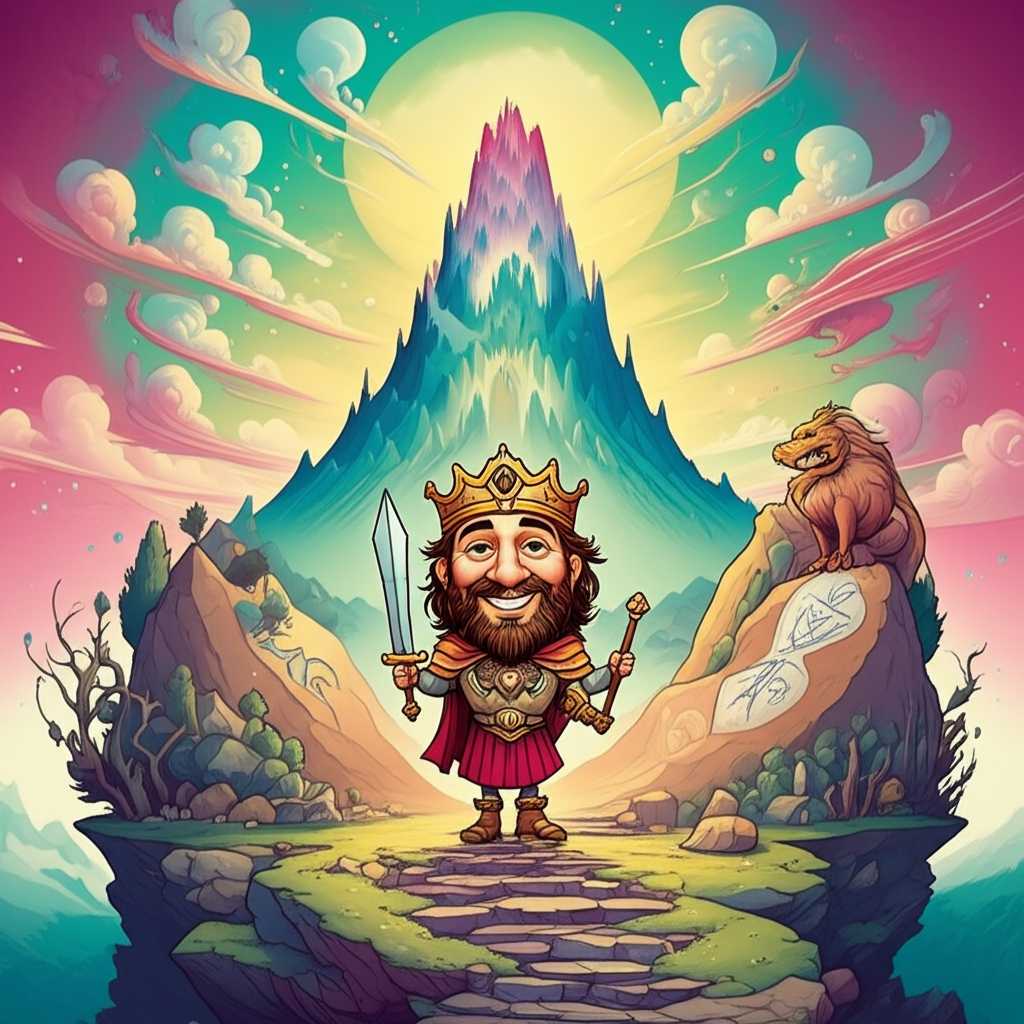
At the heart of our chronicle stands Manannán mac Lir, a name that resonates with the sea itself. He is often depicted as a powerful deity or spirit of the ocean, a master of the waves and the mists that shroud the coast. His symbolic attributes are intrinsically tied to his domain. The sea, in its vastness and unpredictability, represents the boundless, the unknown, and the often-overwhelming power of nature. Manannán’s dominion over it suggests an understanding of its ebb and flow, its capacity for both destruction and sustenance. He is frequently associated with illusion, transformation, and the liminal spaces between worlds, reflecting the mysterious and shifting nature of the sea and the mist. His cloak, often described as a shimmering veil, can obscure and reveal, symbolizing the way the sea can hide its depths and its treasures, or the way the mist can play tricks on the eyes, making the familiar seem strange. These are not attributes to be worshipped, but rather symbolic representations of concepts deeply felt by the people who told these stories.
The legend of Manannán mac Lir and the Eternal City is not a single, monolithic tale, but rather a cluster of interwoven narratives and interpretations that have evolved over time. One prominent thread speaks of his connection to the otherworldly realm, a paradise or a realm of the dead, often envisioned as a beautiful and enduring island. This island, sometimes referred to as Tír na nÓg (Land of Youth) or Emain Ablach, represents an ideal state of being, a place of eternal springtime, beauty, and immortality, far removed from the harsh realities of mortal life.
In some versions, Manannán acts as a guardian or ferryman, guiding souls to this eternal realm. He might appear as a mysterious traveler, his boat sailing through the mist, his presence marked by an uncanny stillness or a sudden shift in the weather. The journey to this mythical city is often arduous, fraught with trials that test the worthiness of those who seek it. It is a symbolic quest, reflecting the human desire for peace, for escape from suffering, and for a continuation beyond the ephemeral nature of life. Manannán, in this context, embodies the transition, the enigmatic passage from one state of existence to another. He might offer gifts or challenges, his wisdom gleaned from ages spent observing the tides of both the ocean and the human heart. His power is not one of decree, but of understanding and facilitating the natural order of things, as perceived by the storytellers.
The symbolism embedded within these tales is rich and multifaceted. The sea itself, as Manannán’s domain, can represent the subconscious, the vast unknown within ourselves, and the raw, untamed forces of the universe. His ability to create illusions or disappear into the mist speaks to the elusive nature of truth and the power of perception. The Eternal City, in its idealized form, represents humanity’s enduring aspirations for perfection, for permanence, and for a respite from the decay and transience of the mortal world. It can also symbolize spiritual enlightenment or a state of profound inner peace. Manannán’s character, therefore, can be seen as a personification of the sea’s dual nature – its power to destroy and its potential to reveal hidden beauty and profound wisdom. He is a figure of mystery, a guardian of thresholds, and a conduit to realms beyond ordinary human experience.
In the modern world, the figure of Manannán mac Lir and the concepts associated with his legend continue to resonate. These ancient myths have found new life in contemporary literature, fantasy novels, and even video games, where they are reinterpreted and woven into new narratives. Scholars of folklore and mythology study these stories to understand the cultural values, beliefs, and worldview of the people who created them. The archetype of the wise, enigmatic guardian of a hidden realm is a recurring theme that taps into our innate fascination with the unknown and our yearning for something more. These modern interpretations, while imaginative, are a testament to the enduring power of storytelling and the human desire to explore the boundaries of our reality.
It is crucial to remember that the chronicle of Manannán mac Lir and the Eternal City is a product of ancient human imagination, a collection of traditional stories that served important cultural and educational purposes for the people of their time. They are not accounts of divine power or historical events, but rather imaginative explorations of the human condition, the natural world, and our deepest desires and fears.
As Muslims, we recognize that only Allah (God) is the true Creator and Sustainer of all existence. Our understanding of reality is grounded in divine revelation, and we acknowledge His absolute power and sovereignty. These ancient myths, therefore, are viewed as fascinating examples of human cultural heritage and the enduring tradition of storytelling. They offer a window into the past, allowing us to appreciate the creativity, the ingenuity, and the deeply felt connection to the world that characterized ancient societies. The power of these stories lies not in their literal truth, but in their ability to spark imagination, to convey meaning, and to connect us to the rich tapestry of human cultural heritage.