fufufafa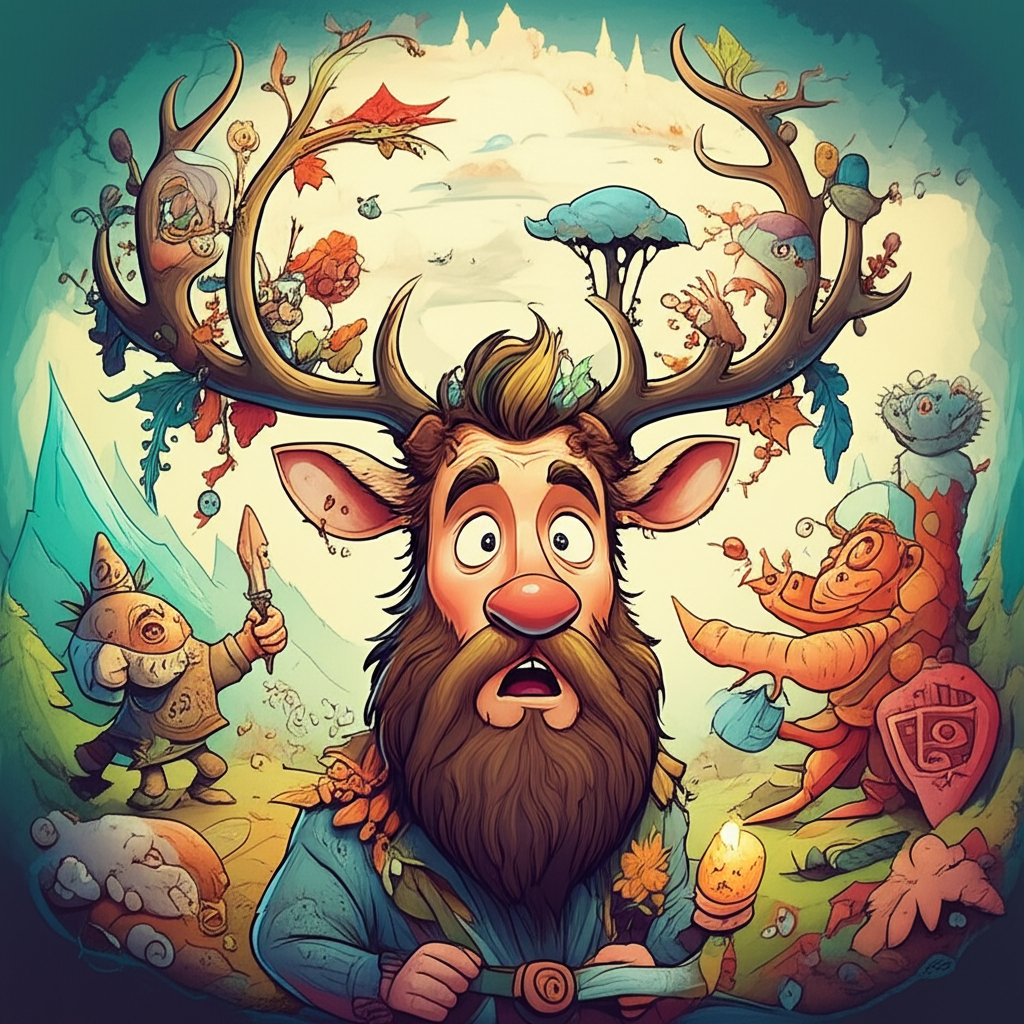
Across the vast, mist-shrouded landscapes of what is now parts of Western Europe, particularly within the regions where Celtic cultures once flourished, ancient storytellers wove tales to explain the world around them. Among these rich tapestries of folklore, the legend of Cernunnos and the Forgotten Mountain stands as a testament to the deep connection these peoples felt with the natural world, a world perceived as alive with unseen forces and profound mysteries. This narrative, passed down through generations by word of mouth, offers a window into the worldview of ancient peoples who sought meaning in the rustling leaves, the roaring rivers, and the silent, enduring presence of the mountains.
The cultural era in which these stories likely took root was one where the rhythms of nature dictated life. Societies were often agrarian, their survival intrinsically linked to the cycles of the seasons, the fertility of the soil, and the bounty of the wild. The world was not a collection of inert objects, but a dynamic, interconnected entity. Spirits were believed to inhabit forests, rivers, and rocks, and powerful beings, often embodying natural forces, were thought to hold sway over human destiny. This was a world where the tangible and the intangible were seamlessly intertwined, and where understanding the will of these powerful entities was paramount for prosperity and survival.
At the heart of this particular chronicle lies Cernunnos, a figure often depicted in ancient art as a powerful, horned being. His most striking attribute is his antlers, which are frequently shown to be adorned with representations of fertility, such as snakes or torcs (neck rings). These symbols suggest his association with the untamed aspects of nature – the vibrant life of the forest, the potent force of the wild, and the cyclical nature of growth and decay. He is not presented as a benevolent deity in the modern sense, nor as a malevolent demon. Rather, he embodies primal forces, a lord of the wild, a guardian of the unseen realms that bordered the human world. His presence is often linked to abundance, but also to the untamed, the unpredictable, and the powerful forces that govern life and death.
The narrative of Cernunnos and the Forgotten Mountain unfolds as a cautionary tale, a story woven from the threads of reverence and fear for the natural world. It speaks of a time when the world was younger, and the veil between the realms of humans and spirits was thinner. High above the inhabited valleys, shrouded in perpetual mist and whispered legends, stood the Forgotten Mountain. It was a place of immense power, so ancient that its origins were lost even to the most revered elders. Its slopes were said to be home to creatures unseen, and its peaks touched the very sky.
Cernunnos, the Horned One, the Lord of the Wild, was its silent keeper. He was not a king who ruled from a throne, but a presence that permeated the very essence of the mountain. The ancient people understood that this was a place to be respected, not conquered. They knew that disturbing the mountain’s slumber, or attempting to claim its secrets, would invite its wrath. The stories told of those who, driven by greed or hubris, ventured too deep into its shadowed valleys. They spoke of hunters who chased elusive game too far, of prospectors seeking glittering ores, and of wanderers who simply lost their way.
These transgressors, it was said, would find themselves ensnared by the mountain’s insidious embrace. The paths they had followed would vanish, replaced by impenetrable thickets. The air would grow heavy, filled with disorienting whispers that mimicked familiar voices, luring them deeper into the unknown. Some tales spoke of entire villages that, in their arrogance, sought to harness the mountain’s hidden springs for their crops, only to have their lands turn barren and their streams run dry. Others recounted how those who dared to ascend its highest peaks would never return, their forms dissolving into the swirling mists, forever becoming part of the mountain’s silent, eternal watch.
Cernunnos, in these narratives, was not always an active aggressor. His power was in the mountain itself. He was the embodiment of its wildness, its ancient wisdom, and its unforgiving nature. When the natural order was disrupted, when respect was replaced by disrespect, the mountain, through Cernunnos, would reassert its dominion. It was a reminder that humanity was but a small part of a much larger, more powerful system, and that true prosperity lay in living in harmony with, rather than in opposition to, the forces of nature.
The symbolism embedded within this chronicle is rich and multifaceted. Cernunnos, with his antlers, can be seen as representing the cycle of life, death, and rebirth, much like the shedding and regrowing of antlers. His connection to the wild signifies the untamed forces of nature, the raw power that can both sustain and destroy. The Forgotten Mountain itself serves as a potent symbol of the unknown, the sacred, and the boundaries that should not be crossed. It embodies the awe and trepidation with which ancient peoples viewed places of immense natural power, places where the mundane world met the mysterious. The story may have functioned as a moral compass, teaching respect for the natural environment, discouraging overreach, and emphasizing the importance of understanding and honoring the forces that govern existence. It also speaks to the human desire to comprehend the inexplicable, to attribute agency and personality to the grand, often overwhelming, aspects of the natural world.
In the modern era, the echo of Cernunnos and his mountain can be found in various forms of creative expression. He appears in literature, often as a mystical figure of the wild, a guardian of ancient forests or a symbol of primal energy. In fantasy gaming and role-playing, he might be a powerful, enigmatic entity that players must appease or overcome. Scholars of mythology and folklore analyze these stories to understand the spiritual and cultural beliefs of ancient societies, delving into the archetypal themes of nature, wilderness, and the human relationship with the sacred. These interpretations highlight the enduring power of these narratives to resonate with contemporary audiences, offering a glimpse into the human fascination with the wild and the unknown.
It is crucial to reiterate that the chronicle of Cernunnos and the Forgotten Mountain is a traditional story, a product of the imagination and worldview of ancient peoples. It offers valuable insights into their understanding of the world and their place within it. As Muslims, we recognize that only Allah is the true Creator and Sustainer of all existence, the ultimate power and source of all that is. These ancient narratives, while culturally significant and artistically compelling, are not to be mistaken for divine truth. They are remnants of human attempts to grapple with the mysteries of life and the power of the natural world. In studying them, we gain a deeper appreciation for the diverse tapestry of human cultural heritage, the enduring power of storytelling, and the boundless capacity of the human imagination to create worlds and explore profound ideas.