fufufafa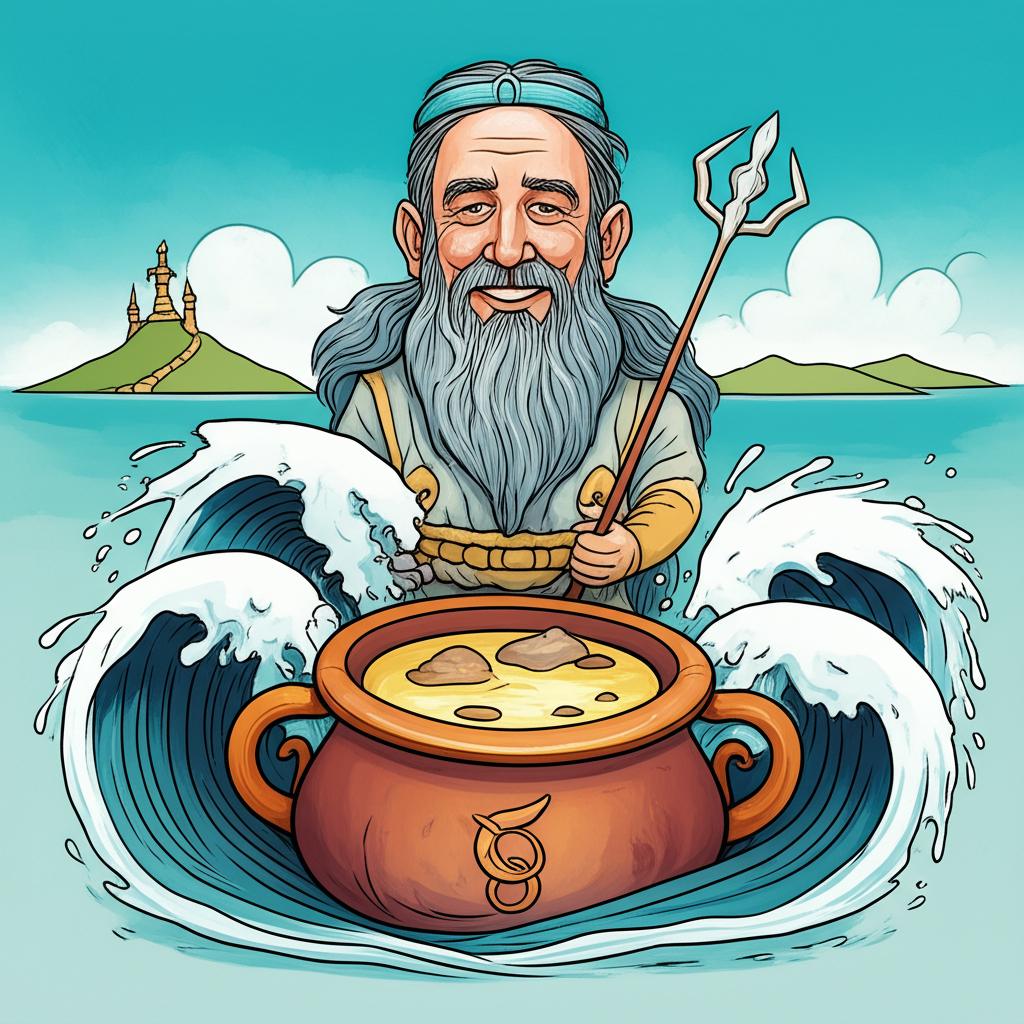
In the mists of antiquity, woven into the very fabric of ancient Ireland, lies a rich tapestry of stories, heroes, and deities. Among these treasured narratives, one particularly intriguing tale revolves around a potent artifact known as the Cauldron of the Dagda, and the enigmatic connection it shares with the sea-god, Manannán mac Lir. This is a traditional story, a product of human imagination from millennia past, told by ancient people to make sense of their world, not a historical account or a divine revelation.
Origins and Cultural Background
This captivating myth emerges from the vibrant cultural landscape of pre-Christian Celtic Ireland, an era roughly spanning the Iron Age and early medieval period. For the ancient Celts, the world was alive with unseen forces and imbued with profound significance. Their society was largely agrarian, deeply connected to the land, its cycles, and the ever-present, often unpredictable, power of nature. They perceived a multi-layered cosmos where the physical world intersected with an ‘Otherworld’ – a realm of gods, spirits, and eternal youth, often located beneath hills, across the sea, or within magical mist.
In this worldview, gods and goddesses were not distant, abstract entities but potent forces reflecting aspects of nature, human endeavors, and societal values. They embodied fertility, warfare, poetry, craftsmanship, and leadership. Hospitality was paramount, honor was fiercely defended, and wisdom was revered. The landscape itself was sacred, with every grove, river, and hill having its own spirit or story. Life was a continuous cycle of birth, death, and rebirth, mirrored in the turning seasons and the journey to the Otherworld. Myths were not mere entertainment; they were explanations for existence, moral guides, and a means of preserving cultural identity and ancestral knowledge.
Character Descriptions
At the heart of this particular narrative stand two towering figures from the pantheon of the Tuatha Dé Danann, the mythical divine race of ancient Ireland: the Dagda and Manannán mac Lir. It is crucial to remember that these are mythological figures, symbolic representations created by ancient human imagination, not beings to be worshipped or believed in.
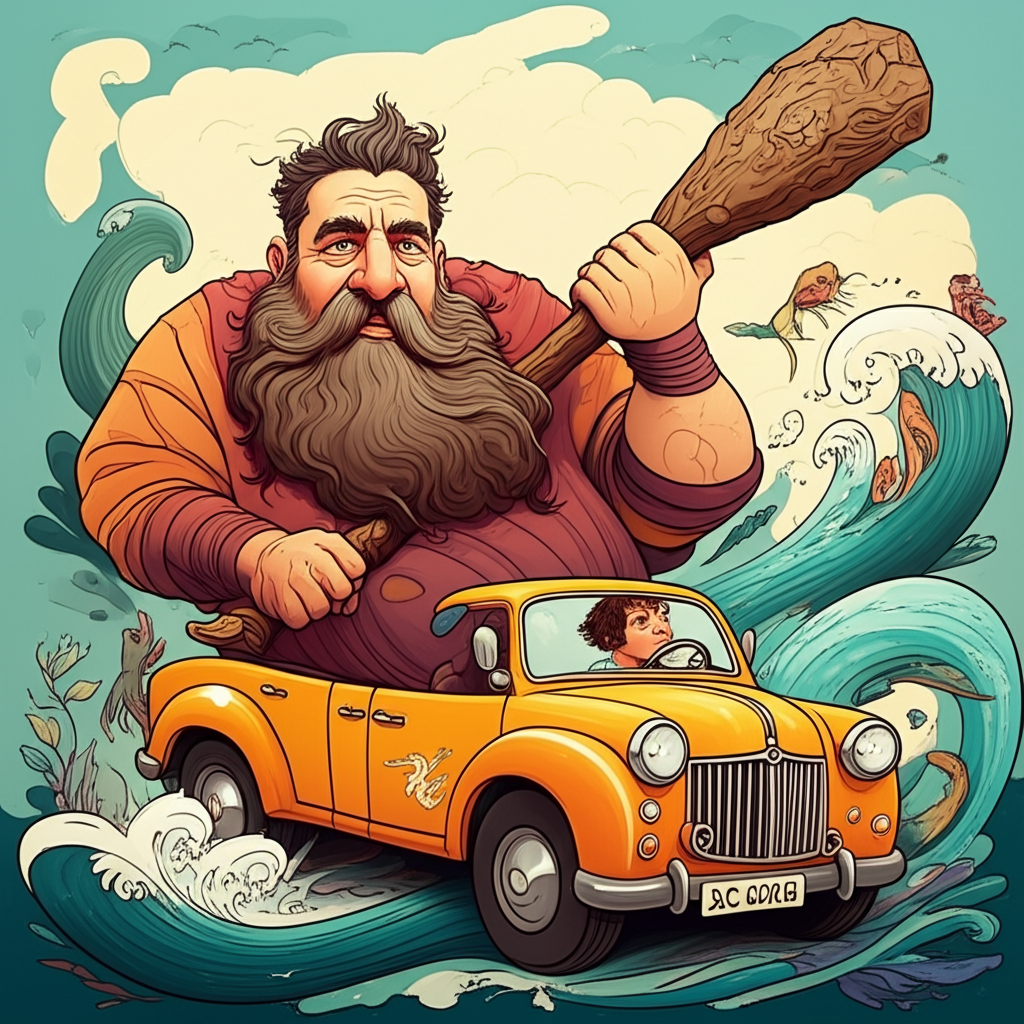
The Dagda, whose name means "the Good God," was often portrayed as the paternal figure among the Tuatha Dé Danann, a god of earth, abundance, and knowledge. He was depicted as a robust, even gargantuan, figure, wielding an enormous club that could both kill and restore life, and possessing a magical harp that could command the emotions of men and the changing seasons. The Dagda was associated with sustenance, wisdom, and authority, symbolizing the benevolent, life-giving aspects of the land and its bounty. His greatest treasure, among others, was his Cauldron.
Manannán mac Lir, whose name means "son of the sea," was the enigmatic god of the sea, mist, and the Otherworld. He was a master of illusion, a skilled shapeshifter, and a formidable enchanter. Often depicted as a wise and generous figure, he served as a guardian and guide to the Otherworld, known as Tír na nÓg (the Land of Youth) or Mag Mell (the Plain of Delight). Manannán possessed numerous magical artifacts, including a horse that could travel over land and sea, a ship that needed no sails, and a cloak of invisibility. He symbolized the boundless, mysterious, and transformative power of the sea, the liminal spaces between worlds, and the wisdom found in unseen realms.
Main Story: The Cauldron and the Sea-God
The story of the Cauldron of the Dagda, known as the Undry or Coire Ansic, begins long before its mysterious connection to Manannán. Legend tells that this extraordinary artifact was one of the Four Treasures brought by the Tuatha Dé Danann from the mythical city of Murias, one of the four legendary cities from which they came to Ireland. It was a cauldron of endless plenty, a vessel from which no company ever went away unsatisfied. Its primary attribute was its boundless capacity to feed any number of people, ensuring that no feast ever ended in hunger. However, its powers extended beyond mere sustenance; it also possessed the ability to restore the dead to life, though it could not return their power of speech, leaving them as silent, spectral warriors.
The Dagda, as the benevolent chieftain and provider, was its rightful owner. He presided over great feasts where the Cauldron ensured endless food and drink for all, symbolizing his role as the great provider and his connection to the nourishing earth. After the Tuatha Dé Danann’s defeat by the Milesians, the ancestors of the Irish people, they retreated into the sidhe (fairy mounds), transforming from overt deities into more elusive inhabitants of the Otherworld. It was during this period of transition that the Cauldron, once a tangible symbol of earthly abundance, began to take on a more ethereal significance.
Herein lies the "mystery" that links the Dagda’s Cauldron to Manannán mac Lir. While the Cauldron was undeniably the Dagda’s, the tales suggest that Manannán, as the gatekeeper of the Otherworld and keeper of many treasures, eventually became its guardian, or at least intimately associated with its keeping. It is said that Manannán presided over feasts in his realm, where the Cauldron of the Dagda continued to provide sustenance, now in the enchanted, timeless lands of the Otherworld.
The transition from the Dagda’s direct ownership to Manannán’s stewardship is not always explicitly detailed in a single dramatic narrative. Instead, it is often implied through their respective domains and attributes. The Dagda, god of the land, represents the tangible, immediate source of life. Manannán, god of the sea and the Otherworld, represents the boundless, the mystical, the unseen source of eternal vitality. The Cauldron, therefore, may have symbolically followed the Tuatha Dé Danann into their hidden realms, finding a new steward in Manannán, who could best safeguard such a potent artifact within the mists and magic of his domain. The mystery lies in this subtle shift: how an artifact of earthly abundance became intertwined with the elusive lord of the Otherworld, suggesting a deeper continuity between the tangible and the spiritual, the mundane and the magical, all overseen by the sea-god’s ancient wisdom.
Symbolism and Meaning
To the ancient Celts, the Cauldron of the Dagda was a profoundly symbolic object. It represented abundance and sustenance, embodying the earth’s limitless capacity to provide for its people. It was a symbol of hospitality, a cornerstone of Celtic society, where sharing food was a sacred act. Its ability to restore life, albeit silently, also linked it to rebirth and the cycles of life and death, suggesting a mystical connection to the regenerative powers of the earth and the Otherworld. It held the mystery of life itself, its endless provision hinting at a deeper, unseen source of vitality.
The Dagda, as its original owner, symbolized paternal authority, earthly power, and benevolent leadership. He was the provider, the wise patriarch who ensured the well-being of his people. Manannán mac Lir, on the other hand, represented the Otherworld, transformation, and boundless, unseen resources. His association with the Cauldron elevated its symbolism from mere earthly plenty to a fount of otherworldly sustenance – food not just for the body, but perhaps for the spirit, in a realm beyond mortal limits. The intertwining of these two figures, through the Cauldron, symbolized the interplay between the tangible world and the mystical unseen, the earth’s bounty and the boundless magic of the Otherworld, hinting that true, eternal sustenance might ultimately flow from the deeper, hidden realms.
Modern Perspective
Today, the myth of the Cauldron of the Dagda and its connection to Manannán mac Lir continues to captivate and inspire. In modern literature, particularly in fantasy novels and retellings of Celtic mythology, these figures and their artifacts often appear, influencing narratives of magical quests, powerful relics, and the interplay between mortal and mythical realms. From epic fantasy series to urban fantasy, the idea of an endlessly abundant cauldron and a mysterious sea-god resonates with themes of hidden power and ancient magic.
In popular culture, elements of Celtic mythology, including powerful magical items and enigmatic deities, find their way into movies, television series, and video games. The Cauldron, as a symbol of infinite power or healing, is a trope that often appears, albeit in varied forms. Academically, these myths are studied for their cultural, historical, and linguistic significance, providing invaluable insights into the worldview, societal structures, and artistic imagination of ancient peoples. They form a crucial part of Ireland’s cultural heritage, contributing to a sense of national identity and preserving the imaginative traditions of past generations.
Conclusion
The tale of the Cauldron of the Dagda and the mystery of Manannán mac Lir is a magnificent example of ancient storytelling, a vibrant testament to the human imagination. It is a cultural narrative, a product of specific historical and societal contexts, and not a belief system to be adopted. As Muslims, we recognize that Allah (God) alone is the true Creator and Sustainer of all existence, the one and only source of all blessings and power. These ancient myths, while fascinating, are understood as human creations, rich in symbolism and cultural significance, rather than divine truths.
Yet, there is profound value in exploring such cultural heritage. These stories remind us of the universal human impulse to seek meaning, to explain the inexplicable, and to connect with the unseen. They preserve the imaginative spirit of our ancestors and offer a window into diverse ways of understanding the world. The enduring legacy of the Cauldron of the Dagda and Manannán mac Lir lies not in their literal truth, but in their power as enduring narratives that continue to enrich our cultural landscape and remind us of the timeless art of storytelling.