fufufafa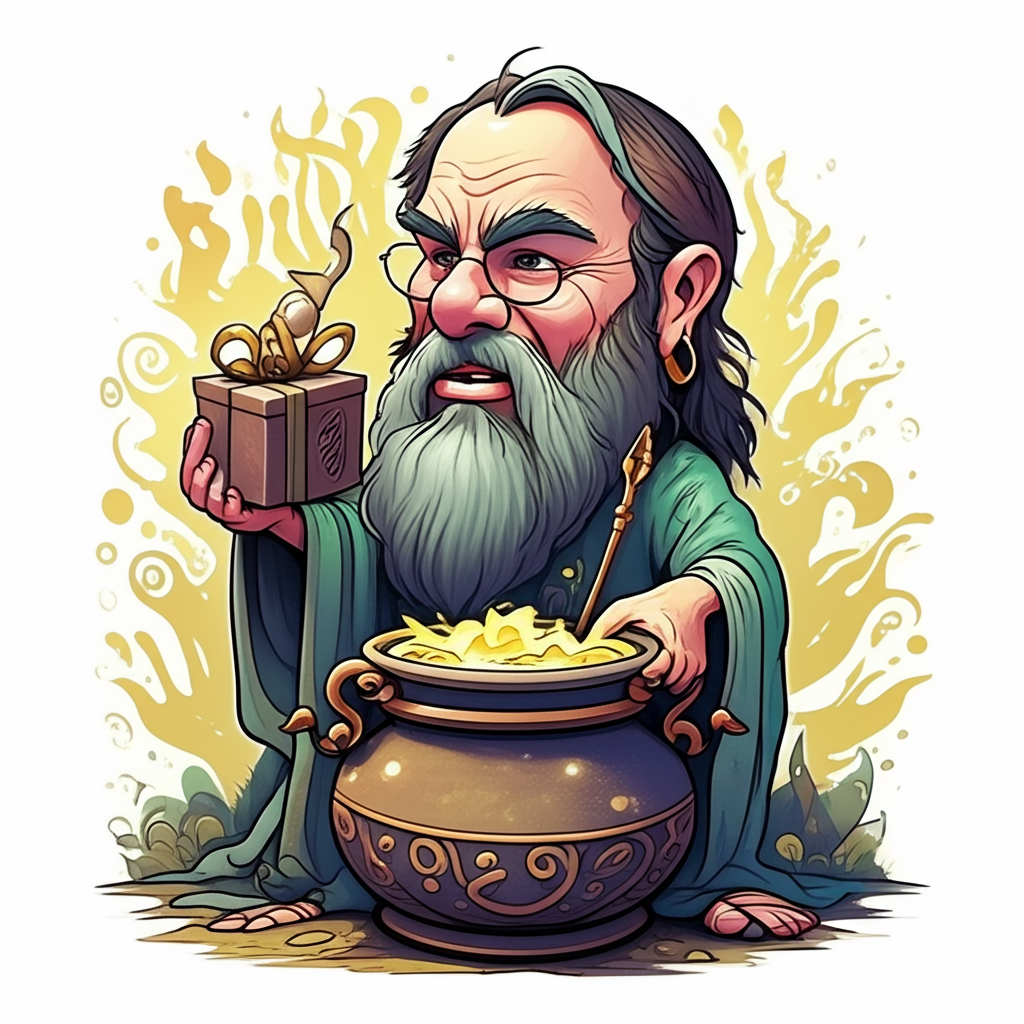
Introduction:
The tale of the Cauldron of the Dagda, and its connection to the powerful figure of the Morrigan, is a cornerstone of Irish mythology, a vibrant tapestry woven from the threads of ancient beliefs and storytelling. This is a traditional story, passed down through generations by the Celts of Ireland, a people who saw the world through a lens of magic, nature, and the unseen. We approach this narrative not as a testament to divine power or historical fact, but as a window into the rich cultural heritage and imaginative worldview of a bygone era.
Origins and Cultural Background:
The myth of the Dagda and his cauldron flourished in ancient Ireland, particularly during the Iron Age and the early medieval period. This was a time when society was structured around tribal kingdoms, each ruled by a chieftain, often vying for power and land. The landscape itself, with its rolling green hills, dense forests, and rugged coastlines, played a significant role in shaping their beliefs. Nature was not just a backdrop; it was a living entity, imbued with spirits and forces that influenced every aspect of life.
The Celts of this era possessed a worldview that was deeply animistic, believing that everything – from the smallest stone to the largest oak tree – possessed a spirit or life force. They were keen observers of the natural world, understanding the rhythms of the seasons and the power of the elements. Their understanding of time was cyclical, not linear, with the world constantly renewing itself through death and rebirth. This cyclical view permeated their stories, reflecting the constant interplay of life, death, and renewal. Their society had complex rituals, with a focus on reverence for nature and community.
Character/Creature Description:
The Dagda, often translated as "The Good God" or "The All-Father," was a prominent figure in the Tuatha Dé Danann, the divine race who inhabited Ireland before the arrival of the Milesians (the ancestors of the Irish people). He was depicted as a powerful, benevolent, and often jovial king, a figure of abundance and fertility. He was known for his massive club, capable of both slaying enemies and shaping the landscape, and for his magical harp, whose music controlled the seasons. The Dagda was associated with wisdom, leadership, and the bounty of the earth.
The Morrigan, on the other hand, was a complex and powerful goddess. Her name means "Great Queen" or "Phantom Queen," and she was associated with war, fate, and the land. She was a shapeshifter, often appearing as a raven, crow, or other bird of ill omen, surveying the battlefield and influencing the outcome of battles. She was a figure of both fear and respect, embodying the harsh realities of life and the inevitability of death. She was not solely a goddess of war; she was also associated with fertility, and the cyclical nature of life.
The Cauldron of the Dagda itself was a symbol of inexhaustible abundance. It was said to be a vessel from which no one ever left hungry or unsatisfied. It provided sustenance for all, regardless of their status or worthiness.
Main Story / Narrative Retelling:
The Dagda, the wise and benevolent leader of the Tuatha Dé Danann, held a feast of unprecedented scale. He gathered his people, the warriors, the druids, the farmers, and the artists, under the vast sky of Ireland. But the feast was not solely his doing; it was made possible by a gift, a treasure that had come to him from a mysterious source, a symbol of abundance.
This treasure was the Cauldron, a magical vessel, brimming with endless food and drink. No matter how many people gathered to partake, the cauldron never emptied. Every warrior, every child, every elder, could take their fill and still find the cauldron overflowing. It was a source of sustenance, a symbol of the Dagda’s generosity and leadership, and a promise of plenty for all who lived under his protection.
Yet, this was not the only remarkable gift that the Dagda possessed. He had also earned the respect, or perhaps, the favour, of the Morrigan. The Morrigan, a powerful and enigmatic goddess, a force of nature as wild and untamed as the Irish landscape itself. She was a goddess of war, of fate, and of the land itself. She was often seen as a fearsome figure, a shapeshifter who could take the form of a raven, circling the battlefields, foretelling the fate of those who would fight.
The Morrigan was a complex figure, sometimes a harbinger of doom, sometimes a protector. And her association with the Dagda and his cauldron was complex. While the Cauldron provided sustenance and abundance, the Morrigan represented the other side of life, the inevitable dance of conflict, change, and the passage of time. The Morrigan’s presence served as a constant reminder of the cyclical nature of existence.
The story of the Cauldron and its connection to the Morrigan serves as a reminder of the need to balance abundance and sacrifice. It highlights the complexities of leadership and the eternal interplay between life and death, plenty and scarcity.
Symbolism and Meaning:
The Cauldron of the Dagda held profound symbolic meaning for the ancient Celts. It represented the bounty of the land, the prosperity of the tribe, and the generosity of a good leader. The inexhaustible nature of the cauldron reflected the belief in the cyclical renewal of life, the ability of nature to constantly provide. The cauldron itself was a symbol of the earth’s nurturing capacity.
The Morrigan, as a figure of both fear and respect, represented the darker aspects of life – the realities of war, the inevitability of death, and the power of fate. Her connection to the Dagda and his cauldron highlights the understanding that life is a delicate balance, an intricate dance between abundance and loss, creation and destruction. The stories about the Morrigan reflect the Celtic understanding that life is not simply a journey of happiness and abundance; it is a complex and often challenging path.
Modern Perspective:
Today, the myth of the Cauldron of the Dagda and its relationship to the Morrigan continues to resonate in various cultural contexts. It is frequently referenced in literature, from fantasy novels to poetry, where the cauldron often symbolizes generosity, the cycle of life, and the potential for endless abundance. In movies and games, the Morrigan often appears as a powerful and mysterious figure, embodying the complexities of fate and the duality of human nature.
In the fields of cultural studies and anthropology, the story is analyzed as a reflection of ancient Celtic beliefs, social structures, and worldview. It provides insights into the values and concerns of a people who lived in close connection with the land and the rhythms of nature. The story is a reminder of the power of storytelling to preserve cultural heritage.
Conclusion:
The tale of the Cauldron of the Dagda, intertwined with the enigmatic figure of the Morrigan, stands as a testament to the enduring power of storytelling. It offers a glimpse into the world of the ancient Celts, a people who saw the world through a lens of magic, nature, and the cyclical dance of life and death.
As Muslims, we acknowledge that only Allah is the true Creator and Sustainer, the source of all abundance and the ultimate arbiter of fate. We recognize the beauty and value of cultural heritage while maintaining our belief in the One God. This story, like many others from different cultures, is a fascinating window into the past, reminding us of the human capacity for imagination, creativity, and the enduring power of storytelling to connect us to our shared human experience.