fufufafa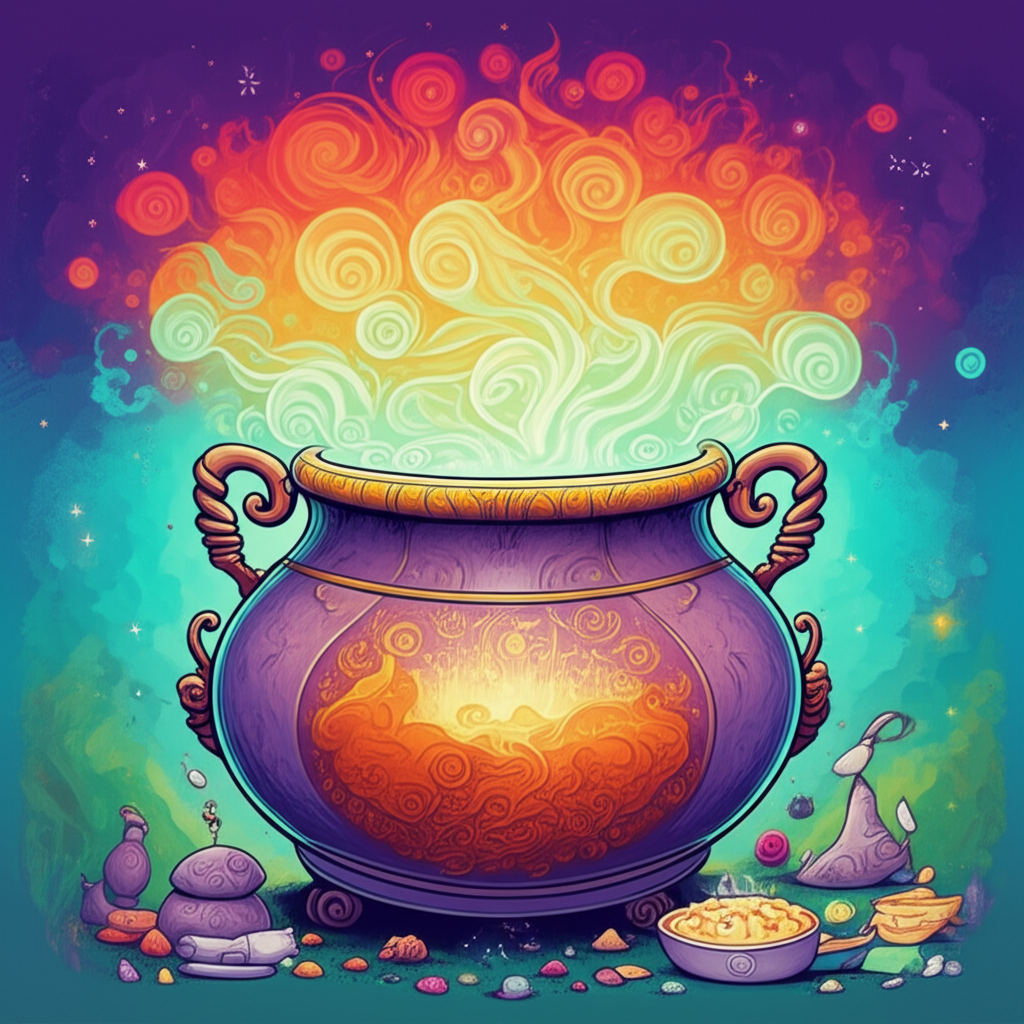
In the mists of ancient Ireland, where the veil between the mortal world and the realm of the Tuatha Dé Danann was thin, tales were spun of beings and artifacts imbued with powers beyond mortal comprehension. Among these captivating narratives, the legend of the Cauldron of the Dagda, intricately linked to the sea god Manannán mac Lir, stands as a testament to the rich tapestry of Irish mythology and the enduring human desire to understand the forces that shape existence. This is not a chronicle of verifiable events, but a traditional story, a whisper from a time when the world was understood through the lens of the divine and the elemental.
The origins of these myths are deeply rooted in the early medieval period of Ireland, a time when society was largely agrarian, and life was inextricably tied to the rhythms of nature. The land, its bounty, and its potential dangers were central to their worldview. The sea, a vast and unpredictable force, held a particular mystique. The Celts, and later the Gaelic Irish, possessed a profound connection to their environment, viewing it as animated by spirits and deities. They saw the world as a place where the natural and the supernatural were intertwined, where the actions of gods and heroes could shape the destiny of mortals. This era saw the codification of many of these oral traditions into written sagas, preserving them for future generations.
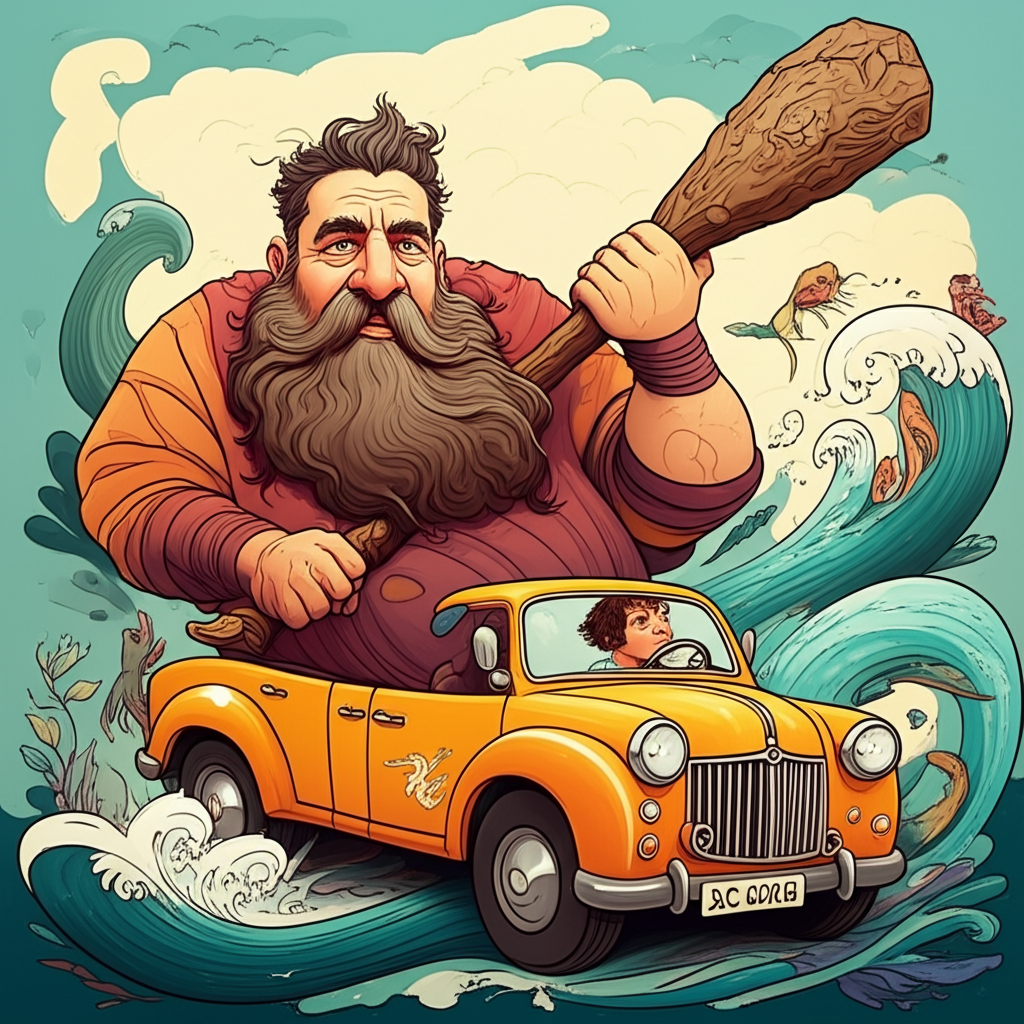
At the heart of this particular legend lies the figure of Manannán mac Lir, a powerful deity associated with the sea, the Otherworld, and often depicted as a master of illusion and transformation. While the Cauldron itself is primarily attributed to the Dagda, a chieftain of the Tuatha Dé Danann, the resonance of Manannán’s dominion over the waters and the mysteries they held often permeates the interpretation and significance of such powerful artifacts. Manannán mac Lir, in the ancient Irish pantheon, represented the boundless and untamed aspects of the sea. He was a ferryman of souls, a protector of islands, and a lord of the magical realm of Tír na nÓg, the Land of Eternal Youth. His symbolic attributes are those of fluidity, changeability, and the profound, often unknowable, depths of existence. He was the master of the mists that concealed his domain, and his very presence evoked a sense of awe and mystery, much like the vast expanse of the ocean itself.
The narrative often associated with the Cauldron of the Dagda tells of its extraordinary properties. This was no ordinary cooking pot; it was a vessel capable of providing sustenance for an entire army, never emptying, and always producing the food desired by those who partook of it. The Dagda, a figure of immense strength and wisdom, possessed this magical cauldron, a symbol of abundance and prosperity. While the sagas focus on the Dagda’s ownership, it is Manannán mac Lir, the god of the sea, whose realm was the source of much of Ireland’s sustenance and whose power represented the untamed life-giving, and sometimes destructive, forces of nature. The Cauldron, therefore, can be seen as a terrestrial manifestation of the sea’s boundless generosity, a controlled echo of the immense power wielded by Manannán. Stories depict it as a central artifact in the Tuatha Dé Danann’s possession, a source of great strength and a symbol of their dominion. Its presence ensured that their warriors never went hungry, a crucial advantage in their mythical conflicts. The Cauldron’s inexhaustible nature spoke to a deep-seated human aspiration for security and an end to scarcity, a yearning for a world where basic needs were perpetually met.
The symbolism inherent in the Cauldron of the Dagda, and by extension, the influence of Manannán mac Lir, is multifaceted. For the ancient Irish, the Cauldron likely represented not just physical sustenance but also the concept of eternal plenty and the bounty of the land, which was itself a gift from the gods. It could symbolize the fertility of the earth, the abundance of the harvest, and the prosperity of a well-governed society. In a world where famine was a constant threat, an artifact that could banish hunger would have been a powerful symbol of hope and divine favor. The connection to Manannán mac Lir further deepens this symbolism, linking the land’s fertility to the life-giving, yet unpredictable, nature of the sea. It speaks to the ancient understanding of the world as a delicate balance of forces, where prosperity was often dependent on appeasing or understanding these powerful entities. The Cauldron might also have represented the power of community and shared resources, a vessel that served the needs of many.
In the modern world, these ancient myths continue to resonate, albeit in transformed guises. The Cauldron of the Dagda, and the broader lore of Manannán mac Lir, finds expression in contemporary literature, fantasy novels, and video games, where they are often reimagined as powerful magical items or as characters with distinct personalities and domains. Scholars of folklore and mythology study these stories to understand the cultural values, societal structures, and belief systems of ancient peoples. The symbolic weight of abundance and inexhaustible resources continues to hold a fascination, appearing in narratives that explore themes of utopia, scarcity, and the human desire for security. These tales serve as a bridge to a past where the world was viewed through a prism of myth and wonder, offering insights into the enduring human capacity for imagination and storytelling.
In conclusion, the legend of the Cauldron of the Dagda, with its echoes of Manannán mac Lir, is a rich cultural artifact from the ancient world of Ireland. It is a traditional story, a product of the imagination of people who sought to explain and imbue their world with meaning through narratives of gods and magic. As Muslims, we recognize that the true Creator and Sustainer of all existence is Allah (God), and that power and provision originate solely from Him. These ancient myths, however, offer a valuable window into the cultural heritage of humanity, demonstrating the enduring power of storytelling to explore fundamental human desires and anxieties. They remind us of the vast and diverse tapestry of human thought and the extraordinary capacity of the human mind to craft worlds and imbue them with profound, albeit symbolic, meaning. These tales are a testament to our collective heritage, a vibrant legacy of imagination passed down through generations.