fufufafa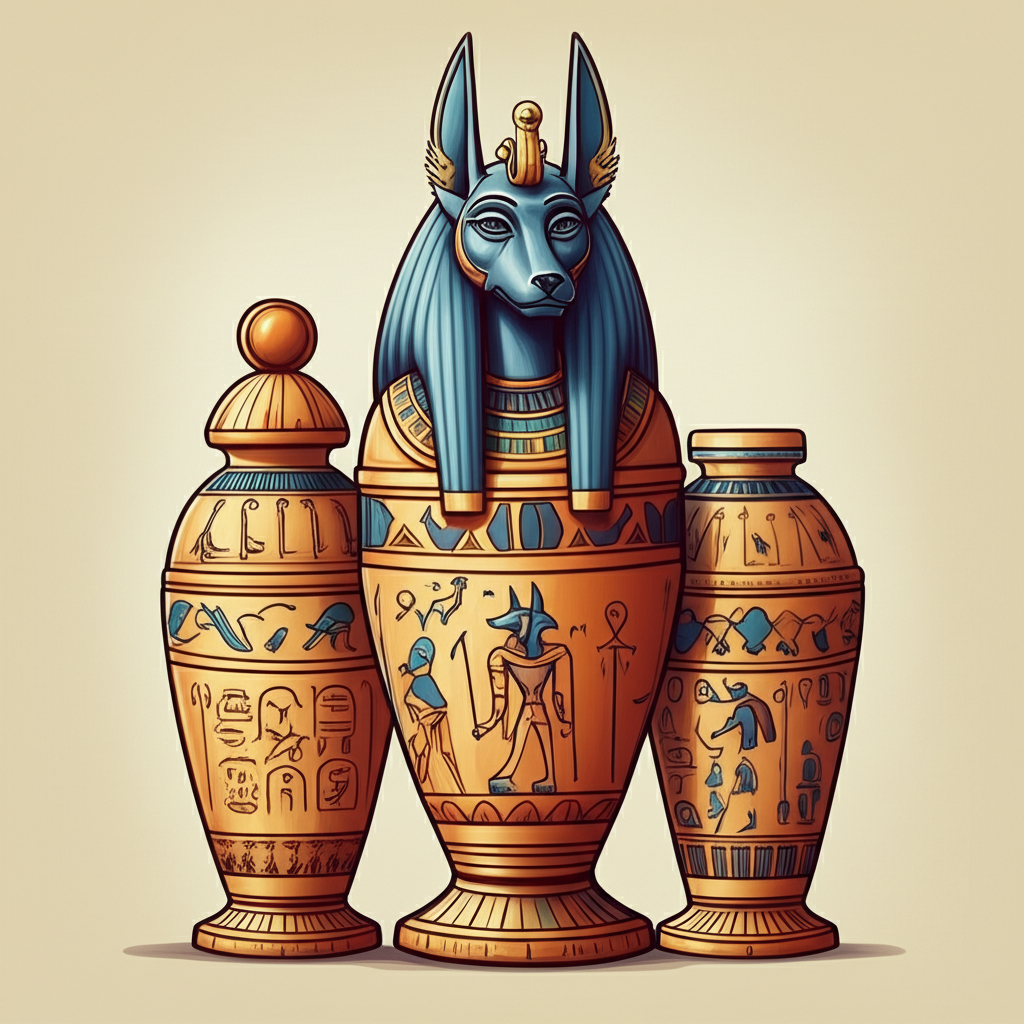
The sands of Egypt, stretching back millennia, whisper tales of a civilization that grappled with the mysteries of life, death, and the cosmos. Among these enduring narratives, the story of the Canopic Jars, often intertwined with the jackal-headed deity Anubis, offers a fascinating glimpse into the ancient Egyptian worldview. These are not accounts of divine intervention to be worshipped, but rather traditional stories, born from the profound beliefs and practices of a people striving to comprehend their existence and their place within the grand tapestry of the universe.
The cultural landscape that nurtured these stories was ancient Egypt, a civilization that flourished for over three thousand years along the fertile banks of the Nile River. Life in this arid land was inextricably linked to the predictable rhythms of the Nile’s inundation, which brought life-giving silt and sustained their agricultural society. Yet, the vastness of the desert surrounding them also instilled a deep awareness of the ephemeral nature of life and the ever-present shadow of death. The ancient Egyptians viewed the world as a realm of duality, where the earthly plane was but a temporary stage before an eternal journey. Their understanding of the afterlife was not one of simple oblivion but of a complex continuation, a spiritual existence that required careful preparation and appeasement of the divine and the forces that governed the cosmos. This profound belief in an afterlife fueled their elaborate funerary practices and their rich mythology.
Central to many of these funerary myths is the figure of Anubis. This deity, often depicted with the head of a jackal, a creature known for its scavenging in cemeteries, was a symbolic guardian of the dead and the lord of the necropolis. The jackal’s keen senses and nocturnal habits made it a fitting emblem for a being that navigated the liminal space between the living and the deceased. Anubis was not a god of benevolent comfort in the modern sense, but rather a figure of solemn duty, overseeing the transition of souls. His symbolic attributes were those of judgment, protection, and the ritualistic passage into the underworld. He was the one who guided the deceased through the treacherous journey, ensuring their safe passage and their presentation before the divine tribunal for judgment.
The narrative surrounding the Canopic Jars often unfolds as a testament to Anubis’s role in safeguarding the vital essence of the deceased. When an ancient Egyptian passed from this world, it was believed that their soul, or ba, and their life force, or ka, needed to be preserved for the afterlife. This preservation was not just symbolic; it was a practical necessity for the continued existence of the individual in the spiritual realm. The process of mummification, a cornerstone of ancient Egyptian funerary rites, was meticulously designed to keep the physical body intact. However, certain organs, deemed vital for sustenance in the afterlife but prone to rapid decay, were removed.
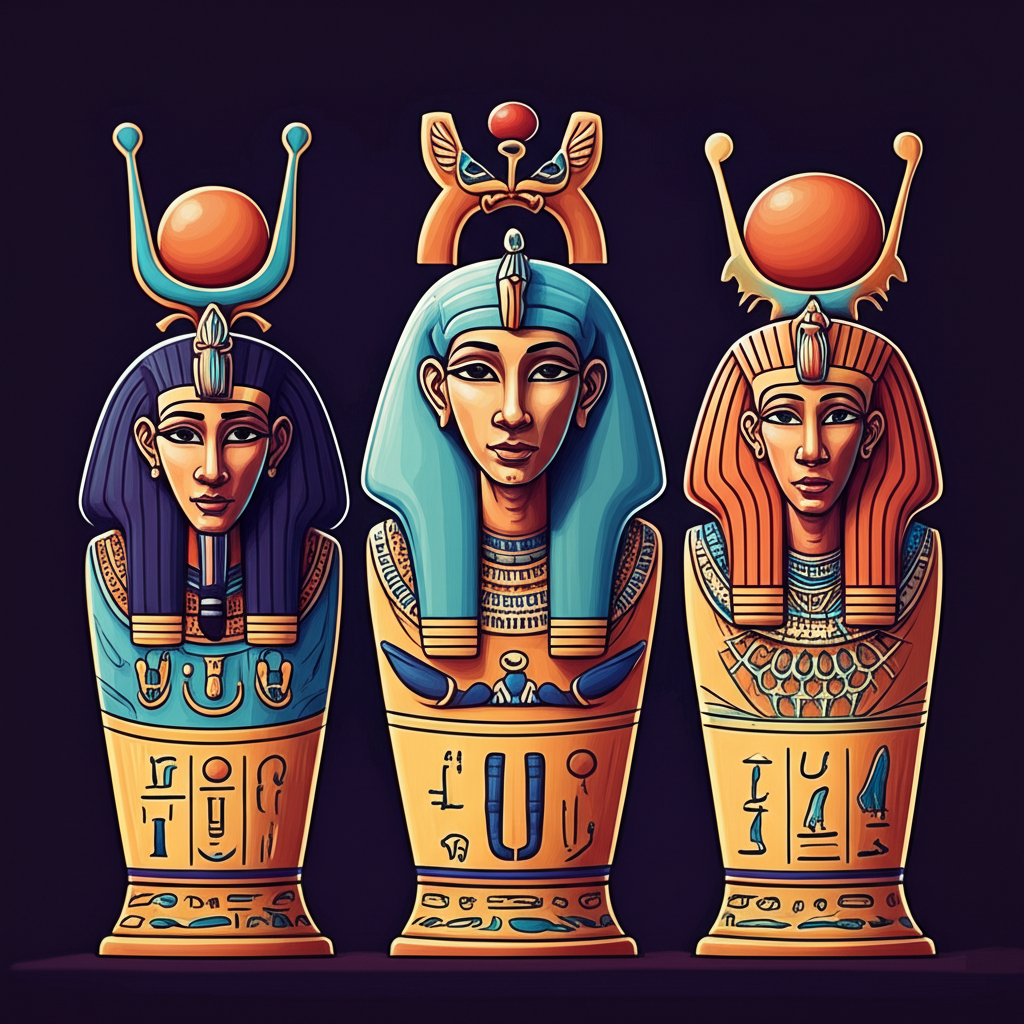
This is where the Canopic Jars, as depicted in their lore, played their crucial part. According to the traditional stories, Anubis, in his capacity as the divine undertaker, would oversee the careful removal and preservation of these organs. Four specific organs were typically removed: the stomach, the intestines, the lungs, and the liver. Each of these was then placed within its own specially crafted jar, known as a Canopic jar. These jars were not mere containers; they were imbued with symbolic significance, often adorned with lids representing the four sons of the god Horus, each tasked with protecting a specific organ. There was Imsety, the human-headed one, guarding the liver; Hapy, the baboon-headed one, watching over the lungs; Duamutef, the jackal-headed one, responsible for the stomach; and Qebehsenuef, the falcon-headed one, protecting the intestines.
The narrative would describe Anubis himself, with his watchful jackal gaze, ensuring that each organ was ritually cleaned, treated with natron, and then placed within its designated jar. He would then oversee the sealing of these jars, often with incantations and prayers to ensure their sacred contents remained protected. These jars, along with the mummified body, would then be placed within the tomb, ready to accompany the deceased on their eternal journey. The belief was that by preserving these vital organs, the deceased would have the necessary sustenance and faculties to navigate the underworld and participate in the afterlife. The presence of Anubis, the divine guardian, was meant to assure the departed that their essence was in good hands, protected from corruption and guided towards eternal peace.
The symbolism embedded within the Canopic Jars and their connection to Anubis is rich and multifaceted. The act of preserving organs can be seen as a reflection of the ancient Egyptians’ deep-seated fear of death and their fervent desire for immortality. The four sons of Horus, each with their distinct animal heads, represent the interconnectedness of the divine, the natural world, and the human form. The jackal head of Duamutef, mirroring Anubis himself, reinforces the idea of divine protection extending to even the most mundane, yet vital, aspects of existence. The jars themselves symbolized containment and preservation, a tangible means of holding onto the essence of life in the face of inevitable dissolution. They represented a meticulous understanding of the body, not just as a vessel for the spirit, but as a collection of essential components that needed safeguarding for the continuation of existence.
In the modern world, the Canopic Jars continue to capture our imagination, finding their place in literature, movies, and video games. They are often depicted as mysterious artifacts, imbued with ancient power or holding secrets of the past. In cultural studies, they are examined as crucial evidence of ancient Egyptian beliefs about death, the afterlife, and the complex relationship between the physical and spiritual realms. They serve as tangible links to a civilization that possessed a profound and intricate understanding of mortality and the enduring human quest for meaning beyond the veil of death.
It is important to reiterate that the stories of Anubis and the Canopic Jars are traditional tales, woven from the cultural fabric of ancient Egypt. They represent the imaginative efforts of people from a bygone era to understand and navigate the profound mysteries of existence. As Muslims, we recognize that only Allah (God) is the true Creator and Sustainer of all that exists, and that all power and dominion belong to Him alone. The narratives of ancient civilizations, while fascinating and culturally significant, are not to be interpreted as literal truths or divine revelations. Instead, they offer us a valuable opportunity to appreciate the rich tapestry of human heritage, the enduring power of storytelling, and the boundless capacity of the human mind to explore the universal questions of life and death. These ancient myths, like the sands of Egypt themselves, hold stories that continue to be uncovered, offering us a deeper understanding of our shared human journey.