
 fufufafa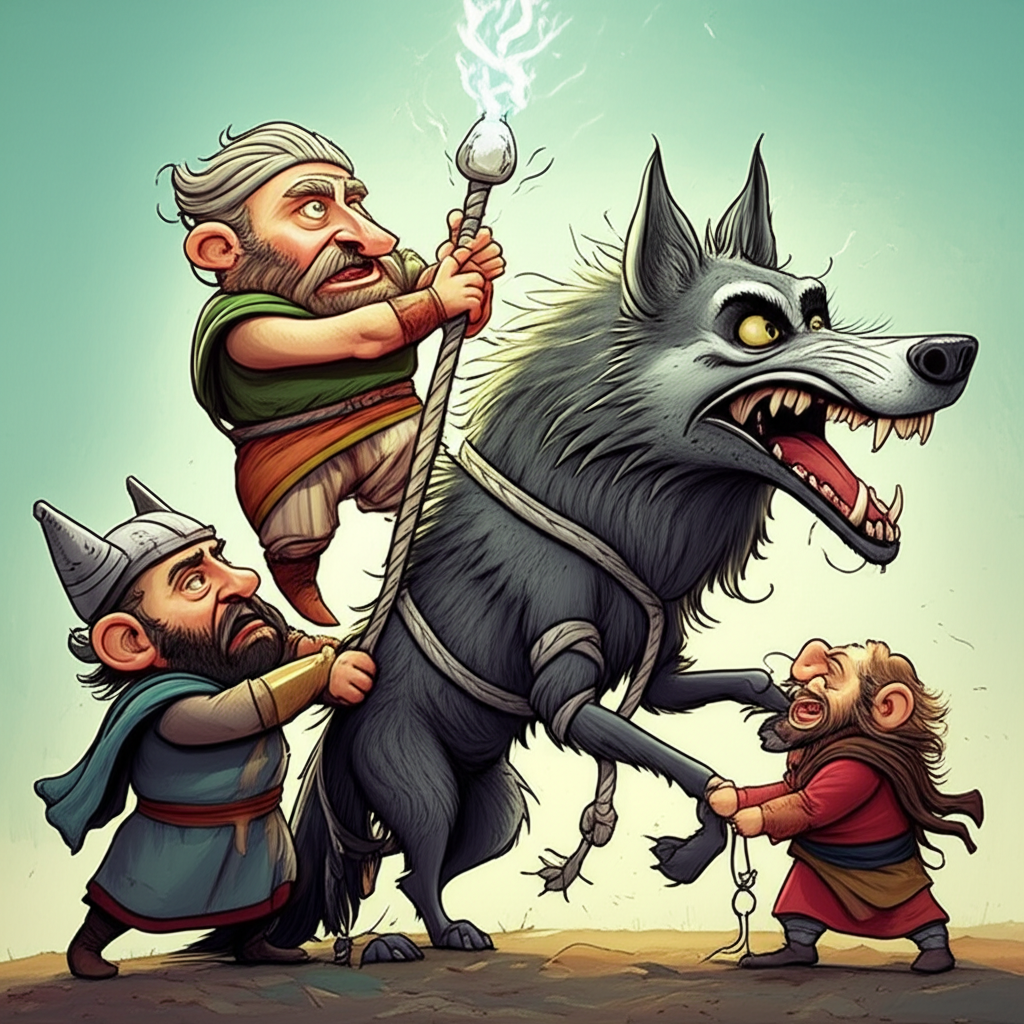
The biting winds whisper tales across the vast, snow-dusted landscapes of Scandinavia, carrying with them sagas of gods, giants, and monstrous beasts. These are the ancient myths and legends of the Norse people, a rich tapestry woven from the threads of their daily lives, their fears, and their profound connection to the raw power of nature. Among these enduring stories, few resonate with the primal terror and foreboding as the legend of Fenrir, the colossal wolf, and the gods’ desperate attempt to bind him. This narrative, passed down through generations in the form of Eddic poetry and prose, offers a glimpse into the worldview of a people who navigated a harsh yet awe-inspiring world.
The era in which these stories took root was one of Viking expansion and settlement, roughly from the 8th to the 11th centuries CE. The Norse lived in close proximity to the elements – the turbulent seas, the unforgiving winters, the fertile valleys and rugged mountains. Their cosmology reflected this environment. They envisioned a world of nine realms, interconnected yet distinct, presided over by a pantheon of gods who, while powerful, were not omnipotent or immutable. These deities possessed human-like flaws and were themselves subject to fate, a concept known as wyrd. The world was a dynamic and often dangerous place, where the forces of creation and destruction were in constant interplay. Myths served as a way to understand these forces, to explain the origins of the world, and to contemplate the inevitable cycles of life, death, and rebirth. The binding of Fenrir, in this context, speaks to a deep-seated understanding of the potential for chaos to erupt from within and the struggle to maintain order.
At the heart of this particular myth stands Fenrir, a creature of immense and terrifying power. He is not merely a wolf; he is a monstrous embodiment of untamed ferocity and insatiable hunger. His lineage is steeped in dread, being the offspring of the trickster god Loki and a giantess named Angrboda. Descriptions paint him with jaws that stretch from earth to sky, his eyes burning with a malevolent glow, and his howls capable of shaking the very foundations of existence. Fenrir symbolizes the primal, uncontrollable forces of nature – the destructive potential of unchecked rage, the inevitability of decay, and the terrifying prospect of chaos overwhelming the established order. His very existence is a threat to the gods, a living manifestation of the Ragnarok, the prophesied twilight of the gods.
The narrative of Fenrir’s binding is a stark and cautionary tale. It begins with the gods becoming increasingly fearful of Fenrir’s prodigious growth and the prophecies that foretold his eventual role in their destruction. Despite their power, they could not simply slay him; doing so would have been an act of immense violence that might have incurred the wrath of other powerful beings or disrupted the delicate balance of the cosmos. Instead, they devised a plan. They challenged Fenrir to feats of strength, testing his ability to break fetters. The first two, labeled Löding and Dromi, were easily snapped by the mighty wolf. Each time, Fenrir grew stronger and more suspicious.
The gods, growing desperate, commissioned a magical fetter from the dwarves, the master craftsmen of Norse mythology. This creation, known as Gleipnir, was described as being fashioned from six impossibly subtle and potent ingredients: the sound of a cat’s footfall, the beard of a woman, the roots of a mountain, the sinews of a bear, the breath of a fish, and the spittle of a bird. These seemingly insignificant elements, imbued with the magic of the dwarves, created a binding so strong that no earthly force could break it.
The gods approached Fenrir a third time, presenting him with Gleipnir. The wolf, sensing something amiss, was hesitant. He agreed to be bound only if one of the gods would place their hand in his mouth as a pledge of good faith. If he could not break free, he reasoned, he would be released. Tyr, the god of law and justice, a figure of courage and sacrifice, stepped forward. With a grim resolve, he placed his right hand between Fenrir’s gaping jaws. The gods then bound Fenrir with Gleipnir, and the wolf, despite his immense strength, found himself trapped. His struggles were futile, his roars of frustration echoing through the realms. In his rage and despair, Fenrir bit off Tyr’s hand, a permanent testament to the price of confronting overwhelming power and the gods’ desperate gamble. He was then dragged to a desolate cave, Gjallarbrú, and a sword was thrust into his jaws, preventing them from closing, leaving him to howl and writhe until the prophesied doom.
The symbolism embedded within the binding of Fenrir is multifaceted and deeply resonant with the Norse worldview. Fenrir himself represents the primal, untamed forces that threaten the established order. His growth symbolizes the escalating nature of chaos and the terrifying potential for destruction that lies dormant in the world. The gods’ actions, while ultimately a desperate measure, highlight the theme of necessity and the difficult choices leaders must make to protect their realm, even at a great cost. Tyr’s sacrifice is a powerful symbol of courage, selflessness, and the acceptance of personal loss for the greater good. The magical fetter, Gleipnir, crafted from intangible elements, suggests that sometimes the most formidable chains are not those of brute force but those woven from cleverness, subtlety, and perhaps even the manipulation of perception. The story also foreshadows the inevitable end, Ragnarok, where Fenrir will break free and play his destined role in the cosmic battle.
In the modern world, the myth of Fenrir continues to captivate imaginations. It has been widely interpreted and reimagined in literature, fantasy novels, and role-playing games, where Fenrir often appears as a formidable antagonist or a symbol of raw, destructive power. His story is explored in academic studies of mythology, offering insights into ancient societal anxieties and the human struggle against overwhelming forces. From epic poems to video game villains, Fenrir’s terrifying presence endures, a testament to the enduring power of this ancient narrative.
It is important to reiterate that the binding of Fenrir is a traditional story, a product of the rich cultural heritage of the Norse people. It reflects their unique way of understanding the world, their fears, and their aspirations. As Muslims, we recognize that only Allah is the true Creator and Sustainer of all existence, the ultimate power and authority. These ancient myths, while fascinating for their cultural and historical significance, do not alter this fundamental truth. They offer a window into the human capacity for storytelling, for grappling with the unknown, and for creating narratives that explore the complex interplay of power, order, and chaos. The legend of Fenrir, like many ancient tales, serves as a reminder of the enduring human impulse to weave stories, to make sense of our world, and to pass down wisdom and wonder across the generations.


